International Journal of Agricultural Science and Food Technology
Digital Agriculture Technologies for the Rice Agriculture Industry to Increase Rice Production in Global South Countries
School of Technology, Asia Pacific University (APU), Kuala Lumpur, Malaysia
Author and article information
Cite this as
Ahmed AB, et al. Digital Agriculture Technologies for the Rice Agriculture Industry to Increase Rice Production in Global South Countries. Int J Agric Sc Food Technol. 2026; 12(2): 26-30. Available from: 10.17352/2455-815X.000233
Copyright License
© 2026 Ahmed AB, et al. This is an open-access article distributed under the terms of the Creative Commons Attribution License, which permits unrestricted use, distribution, and reproduction in any medium, provided the original author and source are credited.This paper explores the adoption of digital agriculture technologies within the rice agriculture industry to address rice production issues in the Global South countries. The study utilized the integrative literature review for the survey of related literature from the period 2014-2024 to achieve the objective of the study. The paper retrieved eight (8) primary studies for analysis on digital agriculture technologies adoption in the rice agriculture industry. The paper deduced relevant digital agriculture technologies that increase rice production, such as big data analytics, artificial intelligence, mobile phones, and blockchain technologies. The key challenges of digital agriculture technologies adoption identified included digital literacy, cost of infrastructure, capital, and policies in the Global South countries, notably the West African Regions. Thus, these challenges need to be addressed by creating an enabling environment for the advancement of digital agriculture technologies adoption in Global South countries towards improving rice production.
This paper explores digital agriculture technologies within the rice agriculture industry in the Global South countries with the aim of improving rice production. Digital agriculture technologies adoption in the rice farming industry is stagnant due to challenges, including digital literacy, cost of infrastructure, capital, and policies. This is reflected in poor rice farming practices due to the conventional farming practices over the century, resulting in low rice production [1]. As such, the study provided an integrated literature review of digital agriculture technologies adoption in the rice agriculture industry in Global South countries towards improving rice production, the challenges and associated benefits using primary studies identified between the period of 2014-2014. This study serves as a larger objective in a thesis on the digitalization of the rice agriculture sector towards addressing the issues of rice food production in developing countries.
The rice farming industry has witnessed increasing growth as the demand for rice consumption increases with population growth. Consequently, the need to increase rice yield and production is constrained due to several factors hindering the growth of the rice industry, resulting in high demand and low supply of rice. Additionally, the growing importance of rice becoming the one staple food in the world in the future is inevitable. Hence, the rice agriculture industry requires digital transformation through the use of digital agriculture technologies to address this constraint towards increasing rice yield and production to address the gap. The conditions or factors necessitating the increase in the production of rice have been identified to include land availability, seed varieties, availability of labor, and fertilizer, as shown in Figure 1. These conditions are either limited or cost-demanding for \key stakeholders in the rice value chain.
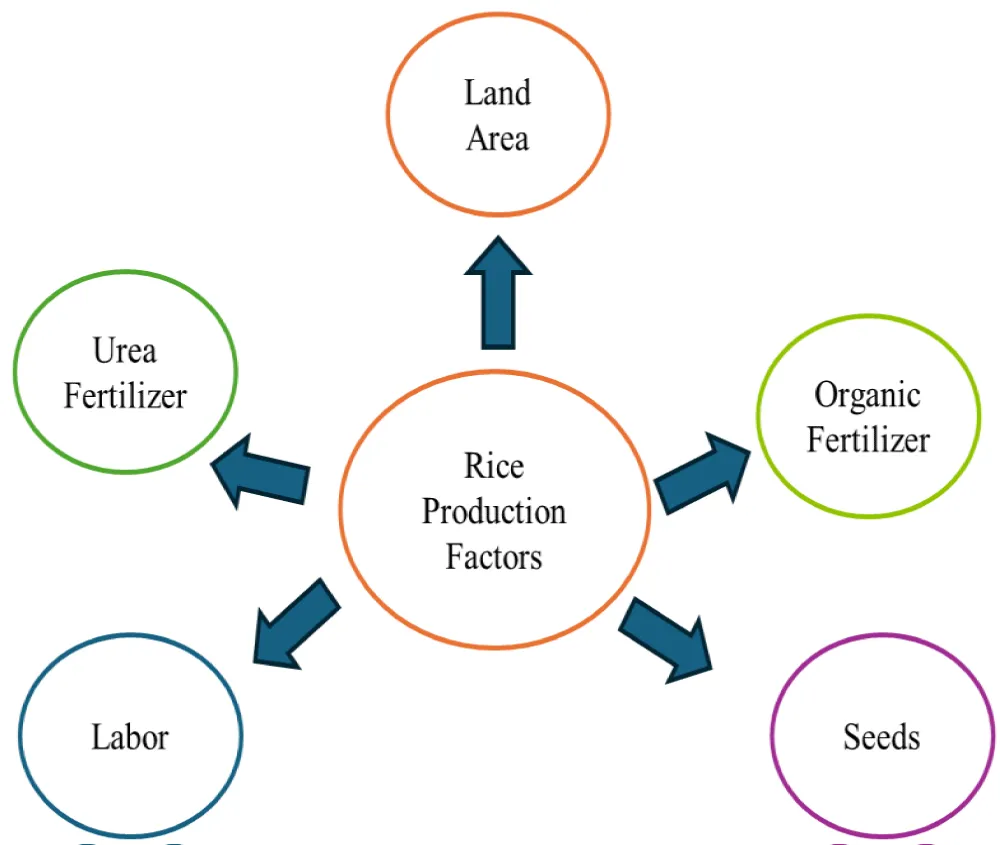
Digital agriculture technologies – rice farming industry
[2] Posit that the adoption of digital agriculture technologies, including sensor technologies, blockchain technologies, and artificial intelligence, plays a significant role in the modernization of rice farming in Global South countries. This is notable in the boost of rice production in the rice agriculture industry due to the adoption of digital agriculture technologies, as shown in Figure 2. The evidence of the impact of these digital agriculture technologies is confirmation of the benefits of transforming from drudgery rice farming practices to modern rice farming.
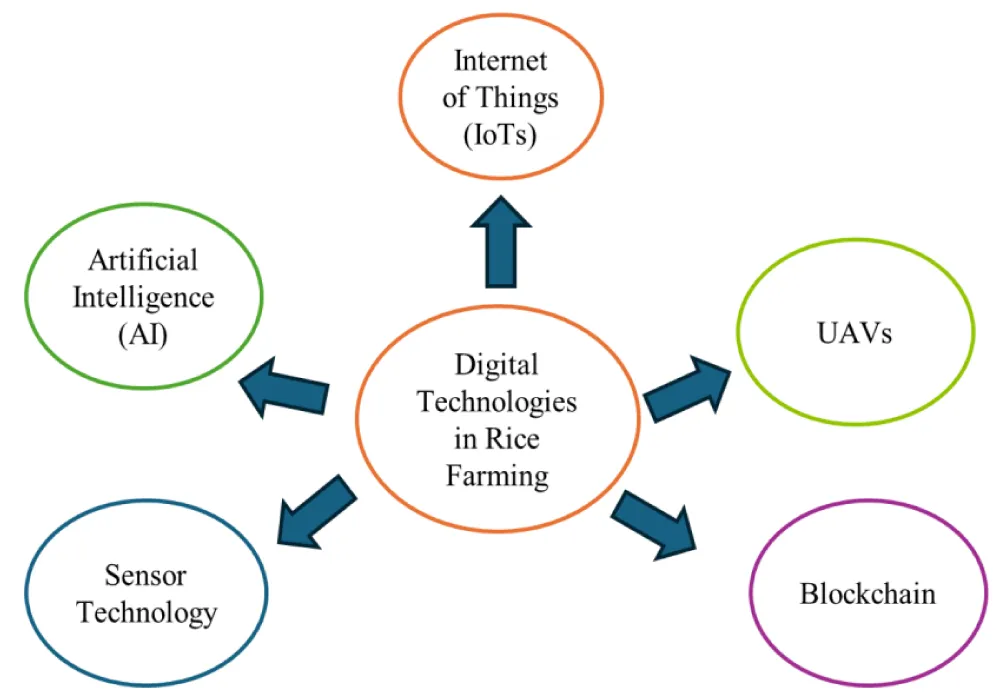
Digital agriculture technologies constraints in the rice farming industry
Despite the benefits associated with digital agriculture technologies adoption in the rice agriculture industry, the implementation of these technologies is constrained by several factors. These constraints are classified into socio-economic and technical constraints that require intervention for the successful adoption and implementation of digital agriculture technologies. The socio-economic constraints are identified as trust, digital gap, amongst others, as shown in Figure 3, while the technical constraints are identified as hardware and network infrastructure, user friendliness, access to smartphones and feature phones, amongst others, in Figure 4.
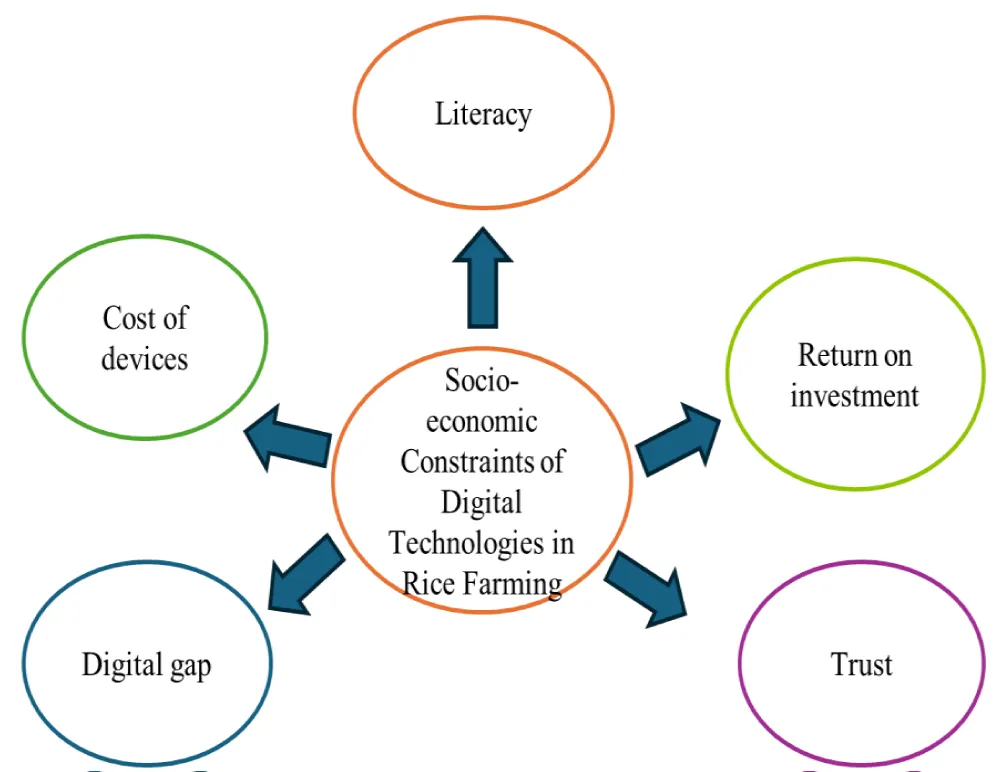
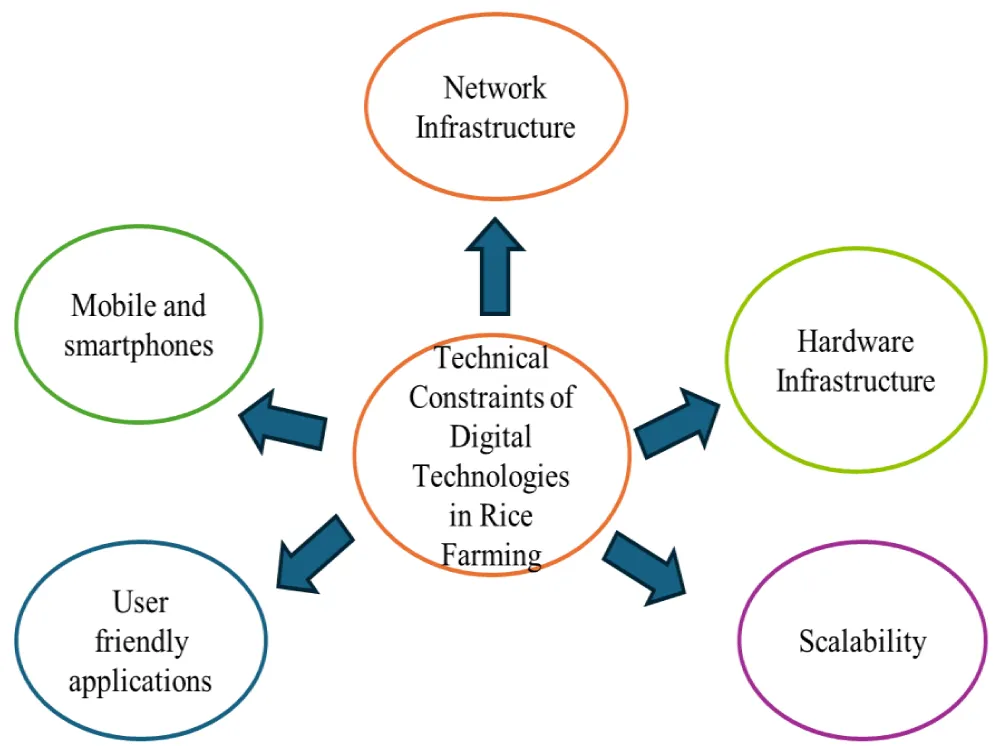
Digital agriculture technologies adoption in the rice agriculture industry
The adoption of digital agriculture technologies is transformational in Africa in the rice agriculture industry, with extensive research conducted in the area on ways to increase rice production and yield. The successful implementation of these technologies is constrained by several factors, despite the benefits that accompany the adoption of these technologies in the rice industry. The use of RiceAdvice as a digital agriculture technology in the rice agriculture sector in the West Africa Region, notably Nigeria, has recorded some gains towards increasing rice food production [3]. Nonetheless, the adoption and implementation of the RiceAdvice technology faced several challenges/constraints, such as the cost of technology, access to smartphone devices, the national rice digital technology policy, and capital investment that derailed the successful implementation of the technology. The result of adopting the RiceAdvice technology demonstrated the capabilities for improvement in rice production, better decision-making, and increased profits for rice farmers after successful adoption and implementation.
[4] Posit an improvement in rice food production with the use of the Agriculture Innovation System (AIS) by Sierra Leone smallholder rice farmers. The adoption and scale-up of the AIS digital technology towards increasing rice food production is challenged by poor internet services, digital literacy, and a poor enabling environment.
[5] Posit that rice farmers use digital agriculture technologies such as sensor technology, blockchain technology, artificial intelligence, and internet of things (IoTs) for monitoring disease and pest infestations in their rice farms to prevent rice yield loss. This is achieved through sensor technology integration into the IoT systems to measure the quantity of moisture and water content in the rice soil moisture for water conservation and management to increase rice production. However, the adoption and scale-up of these technologies is challenged by digital literacy, the cost of infrastructure, capital, and policies affecting rice production. [6] Complemented [5] findings highlighting the capability of measuring the variations in the growth of rice crops using remote sensing technologies to increase rice production in the Global South countries. Similarly, challenges such as capital investment and digital literacy were identified as constraints to scaling up the adoption of the remote sensing technology intervention.
Further, [7] posit that digital agriculture technologies such as big data analytics and sensor technologies are used to measure real-time information on water levels in rice soils, monitoring water consumption, and weather forecast data to plan for the rice farming season. This approach is termed precision water management techniques that use these digital agriculture technologies for soil data analysis of water levels for timely decision making for rice farmers to conserve water, increase rice crop yield, and manage water wastage. The scale-up of these technologies in large rice farm fields is limited by socio-economic and technical constraints of digital agriculture technologies adoption, including the cost of digital technologies and the enabling environment.
Method of study
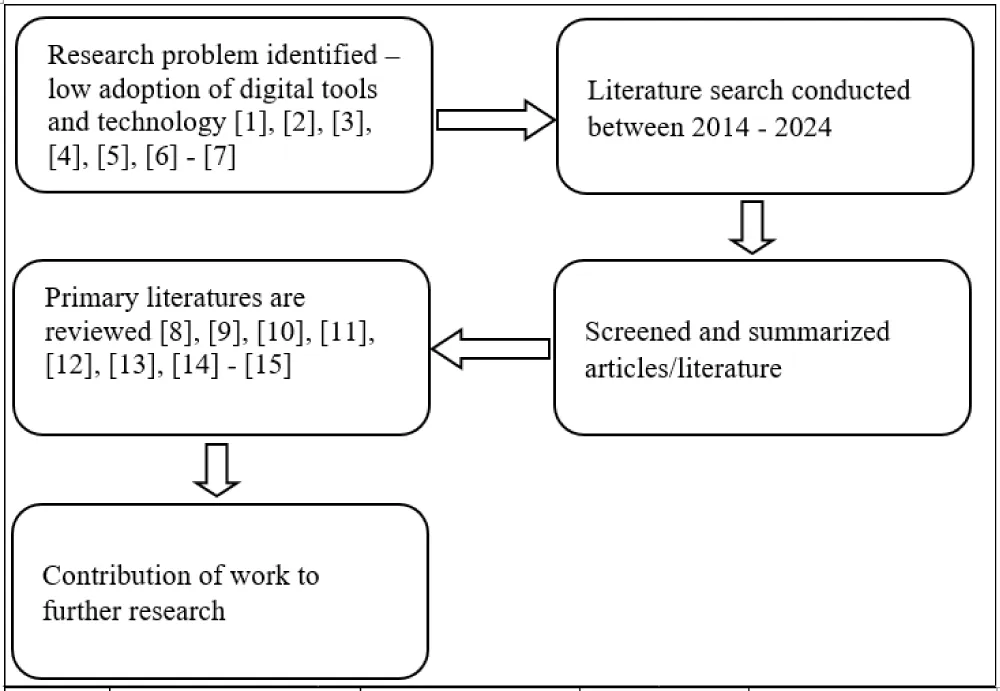
The research study utilized the integrated literature review to analyze the selected primary studies on the use of digital agriculture technologies in the rice agriculture industry in Global South countries within the period 2014-2024. Eight (8) primary studies were selected for analysis and discussion guided by the integrated literature review. The integrated literature review method flowchart in Figure 5 illustrates how literature was screened and summarized. The details of the findings from the deduced primary studies are presented and analysed in Table 1.
Findings and discussions
The selected eight (8) primary studies were adopted using the integrated literature review to examine digital agriculture technologies adoption in Global South countries, the associated challenges, and benefits in the rice agriculture industry to increase rice production. The studies presented evidence of the benefits and constraints associated with the adoption of digital agriculture technologies and proposed some recommendations to mitigate the constraints.
Digital agriculture technologies in the rice agriculture industry
The findings of the selected primary studies presented technologies including blockchain technologies, artificial intelligence, and sensor technologies as widely adopted technologies in Global South countries notably in Asian regions for pest and disease control for rice farmers [8], [9-11]. In contrast, mobile phones are dominantly used for receiving rice agriculture information for decision making in Western Africa, excluding Nigeria, which differs from other West African countries by using more advanced technologies (IoT, Drones) instead of relying on mobile phones [12-15]. The results demonstrate the gap in the adoption and advancement of digital agriculture technologies such as sensor technologies, unmanned aerial vehicles, and blockchain technologies for timely decision-making in developing countries, notably the West African region. This is evidently demonstrated in the challenges/constraints of digital technologies adoption, including digital literacy, cost of infrastructure, capital, and policies [2].
The findings showed a similarity between smallholder rice farmers in the Philippines and Sierra Leone on the use of mobile phones despite being in different regions [9-14]. The mobile phones are used by the smallholder rice farmers to collect and analyze rice information to make informed decisions on the best varieties of rice seed that are climate resistant, such as drought. This demonstrates the importance of technology transfer through the exchange of technology knowledge and practices in the global south countries that can be shared for the common advancement of digital agriculture technologies adoption. Additionally, the results present an opportunity to consider local context in the use of digital agriculture technologies with recourse to the unique constraints of each respective country in the Global South.
Comparative analysis of digital technologies adoption and constraints by regions
For a better outlook of the digital technologies adoption constraint by region, Table 2 presents the various constraints and technologies adopted relative to the regions.
Benefits of digital agriculture technologies in the rice agriculture industry
The findings presented a wide range of benefits and impacts of digital agriculture technologies in the rice agriculture industry. Some of the notable benefits are access to relevant rice agriculture information, linkage to suppliers, digital knowledge and skills, strategy partnerships in the rice value chain, access to services, and access to customers and markets [15]. Similarly, the findings indicate that the adoption of these digital technologies improves rice crop management practices, improves farmers’ capabilities, and decreases production costs [9]. Smallholder rice farmers receive best rice farming practices, such as fertilizer application, weather forecast, input cost, and market information, amongst others, that support timely decision making and rice crop management.
Additionally, the findings from [8] support [10] as the study identifies the use of Artificial Intelligence and drone technology for pest and disease control and weather forecasting. The result is reflected in rice yield, which contributes to boosting quality rice yield and productivity. The success of digital agriculture technologies posited by [8] involves constant capacity building on digital literacy and financial support in advancing the rice farming sector. More critically, blockchain technology presents a platform or channel to create data access, build data trust, transparency, and reliability that is critical for the trust of the rice farmers and other stakeholders in the rice value chain to improve rice food production.
Implementation of digital technologies
This research study is a contribution to a larger deliverable in a thesis on the digitalization of the rice agriculture industry to address the issues of rice production in Global South countries. As such, the realization of the implementation of digital technologies will materialize as the research evolves in the future. The research has demonstrated evidence of gaps for advanced research to identify and recommend unique digital technologies suited to Global South countries while acknowledging their individual constraints and context relative to enabling conditions.
Conclusions
To achieve and address the demands of rice production in the Global South countries, it is important for an enabling environment to be created for digital agriculture technologies adoption regardless of the constraints. The research paper identifies notable digital agriculture technologies adoption in the rice agriculture industry, including big data analytics, blockchain technologies, mobile phones, sensor technologies, artificial intelligence, and Internet of Things (IoTs) that have transformed rice food production. The paper indicates the wide use of digital technologies such as sensing technology, drone technology, and Artificial Intelligence (AI) in Global South countries such as Malaysia, Nigeria, India, and Vietnam. Sierra Leone and the Philippines were identified to adopt mobile phones to access rice farming information for improvement in rice production.
The use of digital technologies in Global South countries is relative with respect to regions. These regions, including the Middle East and Asian region, have advanced in addressing the challenges confronting digital technologies, such as network infrastructure, digital illiteracy, etc., while other regions are making some efforts. As such, further research studies are essential to suggest contextual remedies to mitigate these constraints towards digital agriculture technologies adoption in the Global South countries. This is important to encourage developing countries to be resilient and innovative in addressing these constraints of digital technology adoption towards minimizing rice importation for self-sufficiency in rice production. Thus, this paper examined digital agriculture technologies adoption in Global South countries and achieved the objective of identifying digital technologies adopted in the rice farming sector and the associated impact and benefit to rice production.
- Suswadi, Agung P, Mahananto, Astriyaningsih. The efficiency of use of production factors for rice through mechanization in Sukoharjo. In: IOP Conference Series: Earth and Environmental Science. 2023;1200(1):012037. Available from: https://doi.org/10.1088/1755-1315/1200/1/012037
- Abbasi R, Martinez P, Ahmad R. The digitization of agricultural industry: a systematic literature review on Agriculture 4.0. Heliyon. 2022;8(12):e11301. Available from: https://doi.org/10.1016/j.atech.2022.100042
- Zossou E, Saito K, Assouma-Imorou A, Ahouanton K, Tarfa B. Participatory diagnostic for scaling a decision support tool for rice crop management in northern Nigeria. Dev Pract. 2021;31(1):11-26. Available from: https://doi.org/10.1080/09614524.2020.1770699
- Kamara L, Dorward P, Lalani B, Wauters E. Unpacking the drivers behind the use of the Agricultural Innovation Systems approach: the case of rice research and extension professionals in Sierra Leone. Agric Syst. 2019;176:102673. Available from: https://doi.org/10.1016/j.agsy.2019.102673
- Hassoun A, Marvin H, Bouzembrak Y, Barba FJ, Castagnini JM, Pallarés N, et al. Digital transformation in the agri-food industry: recent applications and the role of the COVID-19 pandemic. Front Sustain Food Syst. 2023;7:1217813. Available from: https://ui.adsabs.harvard.edu/link_gateway/2023FrSFS...717813H/doi:10.3389/fsufs.2023.1217813
- Nduku L, Munghemezulu C, Mashaba-Munghemezulu Z, Kalumba A, Chirima G, Masiza W, et al. Global research trends for unmanned aerial vehicle remote sensing application in wheat crop monitoring. Geomatics. 2023;3(1):115-136. Available from: https://doi.org/10.3390/geomatics3010006?urlappend=%3Futm_source%3Dresearchgate.net%26utm_medium%3Darticle
- Balasundram SK, Shamshiri RR, Sridhara S, Rizan N. The role of digital agriculture in mitigating climate change and ensuring food security: an overview. Sustainability (Basel). 2023;15(6):5325. Available from: https://doi.org/10.3390/su15065325?urlappend=%3Futm_source%3Dresearchgate.net%26utm_medium%3Darticle
- Shanthi P, Bhuvaneshwari G. Role of information technology in the agricultural sector with reference to rice cultivation in India. Webology. 2021;18(6):1-12. Available from: https://www.webology.org/abstract.php?id=2327
- Ambong RM. Methods of rice technology adoption studies in the Philippines and other Asian countries: a systematic review. Res World Agric Econ. 2022;3(2):15-24. Available from: https://doi.org/10.36956/rwae.v3i2.513
- Ibrahim A. The digitalization approach in the paddy sector to achieve the self-sufficiency level in Malaysia. In: E3S Web of Conferences. 2023;440:02004. Available from: https://doi.org/10.1051/e3sconf/202344002004
- Pham V, Diep T, Fock K, Nguyen T. Using the Internet of Things to promote alternate wetting and drying irrigation for rice in Vietnam's Mekong Delta. Agron Sustain Dev. 2021;41(3):43. Available from: https://doi.org/10.1007/s13593-021-00705-z
- Apriyana YS, Rejekiningrum P, Alifia A, Ramadhani F, Darwis V, Fadwiwati A, et al. The transformation of rice crop technology in Indonesia: innovation and sustainable food security. Agronomy. 2023;13(1):1. Available from: https://doi.org/10.3390/agronomy13010001?urlappend=%3Futm_source%3Dresearchgate.net%26utm_medium%3Darticle
- Stuart AM, Pame ARP, Vithoonjit D, Viriyangkura L, Pithuncharurnlap J, Meesang N, et al. The application of best management practices increases the profitability and sustainability of rice farming in the central plains of Thailand. Field Crops Res. 2018;220:78-87. Available from: https://doi.org/10.1016/j.fcr.2017.02.005
- Sala S, Porro A, Lubatti A, Bocchi S. Adoption of ICT products and services among rice farmers in the Northern Province of Sierra Leone. In: Digital Technologies for Agricultural and Rural Development in the Global South. Wallingford (UK): CAB International; 2018. p. 68-76. Available from: https://doi.org/10.1079/9781786393364.0068
- Odewole MO, Sanusi MS, Sunmonu MO, Yerima SY, Mobolaji DA, Olaoye JO. Digitalization of rice value chain in Nigeria with circular economy inclusion for improved productivity: a review. Heliyon. 2024;10:e25000. Available from: https://doi.org/10.1016/j.heliyon.2024.e31611

 Save to Mendeley
Article Alerts
Subscribe to our articles alerts and stay tuned.
 This work is licensed under a Creative Commons Attribution 4.0 International License.