International Journal of Aquaculture and Fishery Sciences
Effects of Aberrant Weather Conditions on Fish Farming Production in Earthen Ponds in Bo District, Southern Sierra Leone
1School of Natural Resources Management, Njala University, Sierra Leone
2Department of Forestry and Wood Science, School of Natural Resources Management, Njala University, Sierra Leone
3Central Agricultural Research Institute (CARI), Suakoko, Bong County, Liberia
Author and article information
Cite this as
Fayiah M, et al. Effects of Aberrant Weather Conditions on Fish Farming Production in Earthen Ponds in Bo District, Southern Sierra Leone. Int J Aquac Fish Sci. 2026; 12(2): 10-16. Available from: 10.17352/2455-8400.000103
Copyright License
© 2026 Fayiah M, et al. This is an open-access article distributed under the terms of the Creative Commons Attribution License, which permits unrestricted use, distribution, and reproduction in any medium, provided the original author and source are credited.Fish farming in earthen ponds plays a vital role in ensuring food security and income generation for communities in Bo District, Southern Sierra Leone. The study assesses the effects of aberrant weather conditions on fish farmers in selected parts of Bo District, Sierra Leone. The study employed the descriptive research design. Both primary and secondary sources of data were used in the study. Kobo Collect was used to collect data for the study. The collected data were exported into the Statistical Package for Social Sciences (SPSS) version 22 for analysis. A sample size of one hundred (100) fish farmers was randomly selected from a target population of one thousand (1000) fish farmers in the study area. About 61% of the respondents were men, while 39% were female. About 40% of the respondents strongly attest that effective water quality management should be done on a weekly basis to increase fish productivity in earthen ponds. The study further discovered that irregular rainfall, intense heat, flooding, and prolonged dry spells are increasingly affecting fishing production in the aquaculture sector. The results also indicate that fish farmers in the study area had adopted multiple adaptation strategies to combat the effects of one thousand aberrant weather conditions. These strategies include improving pond management, quality feed formation, enhancing early harvesting, species diversification, and integrated fish farming, etc. The findings provide insight into how aberrant weather variability disrupts pond ecosystems, alters water quality, and threatens the livelihoods of one thousand rural farmers. The study confirmed that fish farmers will perform better if the above productivity indicators are tackled and improved on by the Ministry of Fisheries and Marine Resources of Sierra Leone. For improved fishpond productivity outcomes, it is recommended that fish farmers endeavor to provide a conducive fish species ecosystem that will enhance quality water management and increase fish productivity in the future.
Aquaculture has emerged as a vital strategy for enhancing food security and livelihoods in Sierra Leone, particularly in rural districts like Bo, where earthen pond fish farming is a common practice. According to research done by Maulu, et al. [1], the sustainability of this sector is increasingly threatened by aberrant weather conditions that disrupt pond ecosystems and fish productivity. Economic evaluations indicate that fish agriculture plays a double role in local economies. It provides a sustainable source of protein that is critical to relieve malnutrition, particularly in a region where traditional fishing activities contribute to the food intake of the population [2].
Boyd [3] emphasized that seasonal variability affects water temperature, dissolved oxygen levels, and nutrient cycling, all critical factors for fish growth and survival. In addition, Gbigbi & Eghagha [4] noted that extreme weather events such as floods can damage pond structures, increase disease outbreaks, and elevate operational costs, thereby reducing overall yield and profitability. The topography of earthen ponds greatly influences water quality in pond management and fish production. In Bo District, Southern Sierra Leone, fish farming in earthen ponds is particularly vulnerable due to limited infrastructure and adaptive capacity. Olapade [5] pointed out that increased precipitation may lead to high-nutrient flow and sedimentation, resulting in eutrophication and decreased oxygen levels in pond waters, which severely deteriorate the well-being of fish populations.
Species such as the Tilapia (Oreochromis niloticus) and the catfish (Clarias gariepinus), commonly cultivated in the region, are generally resistant; however, prolonged exposure to high temperatures can compromise their growth rates and reproduction. The heavy rainfall can lead to sedimentation and increased flow, introducing pollutants and pathogens into mud ponds. This deterioration of water quality not only compromises the health of cultivated species but can also facilitate the dissemination of diseases, further threatening their survival [6].
In addition, the economic implications of climate-related challenges extend to market dynamics. The increase in production cost, stimulated by the need for additional investments in water management systems to address pond conditions, may force the financial resources already limited for fish farmers. Although these challenges are significant, adaptive strategies are emerging among local communities. Farmers are increasingly adopting integrative practices, such as polyculture systems that can improve biodiversity and mitigate the loss of certain species [2]. The least capable of adapting can be locked in a cycle of decreasing returns, which may precipitate migration or diversification to less sustainable subsistence strategies such as overfishing, further threatening local ecosystems [7]. The result of this study will serve as baseline information for future research on the assessment of water retention effects on fish farming productivity.
This study is an attempt to investigate the effects of aberrant weather conditions on fish farming production in earthen ponds in Bo District, Southern Sierra Leone. Thus, this research is carried out to investigate the effects of aberrant weather conditions on fishpond productivity within Bo District, Sierra Leone. By undertaking this study, the prerequisite knowledge gap on the effect of aberrant weather conditions on fish farming in Bo District, Sierra Leone, will be addressed. The study provides valuable insights into the effects of weather conditions on fish farming in southern Sierra Leone, hence helping in advancing the fish farming strategies amidst aberrant weather conditions for the present and next generation.
Methodology
Study area
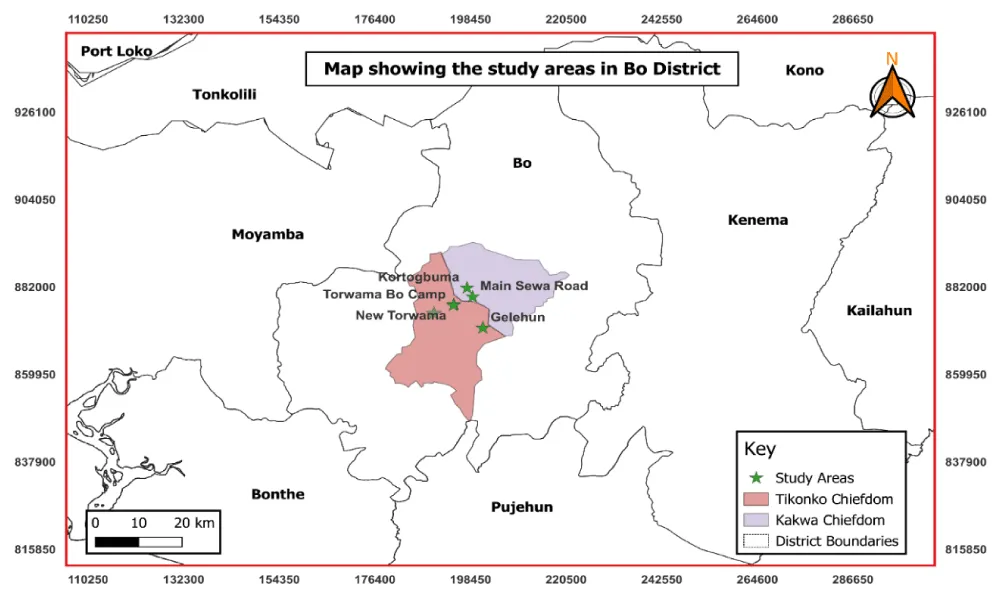
Bo is the capital of the Southern Province and the second-biggest city in Sierra Leone. According to Statistics Sierra Leone, the 2021 Mid-Term Population and Housing Census conducted, there are 223,075 people living in Sierra Leone’s commercial center. The land area of Bo city is approximately 25 Sq. km. Bo is a major urban center situated about 160 miles (250 km) east-southeast of Freetown. The city is distinguished by its wide ethnic composition, which is mostly home to the Mende people. The climate of the Bo district is like any other place in the south: it comprises two main seasons, dry and rainy seasons. The dry season is characterized by the harmattan, a hot, dry wind that blows from the Sahara, and relative humidity may be as high as 90% for considerable periods. It also experiences an upper temperature of 70 °F (mid-20 °C) and a low temperature of about 27 °C in low-lying coastal areas. The study was carried out at the Fisheries outstation in Kotogbuma, Agro Fish Farm in New Town Torwama, Gelehun, Main Sewa Road, and Torwama Bo Campus fisheries pond, all in Bo District, Southern Sierra Leone. The study targeted fish farmers who are actively involved in fish farming. The study area is illustrated in Figure 1 below.
Study design
The study employed the descriptive research design to assess aberrant weather conditions on fish farming in earthen ponds in Bo District, Sierra Leone.
Sample technique and size
The target population of the study was fish farmers. The random sampling technique was adopted in collecting data for this study. This technique is used to select particular fish farmer respondents who are representative of the larger population of fish farmers. The sample size for this study was 100 fish farmers from five communities stationed within Bo District, Southern Sierra Leone.
Data collection
The data was collected using the Kobo Collect tool and later exported into SPSS version 28.
Data analysis
The data for this study were analyzed by the Statistical Package for Social Sciences (SPSS) version 28 and MS Excel. The SPSS software was used for descriptive analysis, while the Microsoft Excel software was used to analyze data using bar and pie charts.
Results and interpretation
The results revealed that 54% of respondents in the table below are in the 21-30 age range, the largest group (Table 1). Also, the same percentage (45%) of respondents fall in the 31-40 age range, the second most represented group. According to the data gathered, there was a strong concentration of respondents in the 21-40 age range, accounting for 99% combined, while those 40 years and older accounted for 1%. This indicated that the survey was deeply biased toward younger adults. Among the targeted respondents, 61% are male, which is the majority, while 39% are female, representing the minority. This shows that there is an imbalance, with males outnumbering females by 22 percentage points. The results further revealed that 25% of respondents are married, compared to 2% divorced. However, 56% of the respondents are single, representing the majority who responded in the survey. In addition, 17% of the respondents are separated.
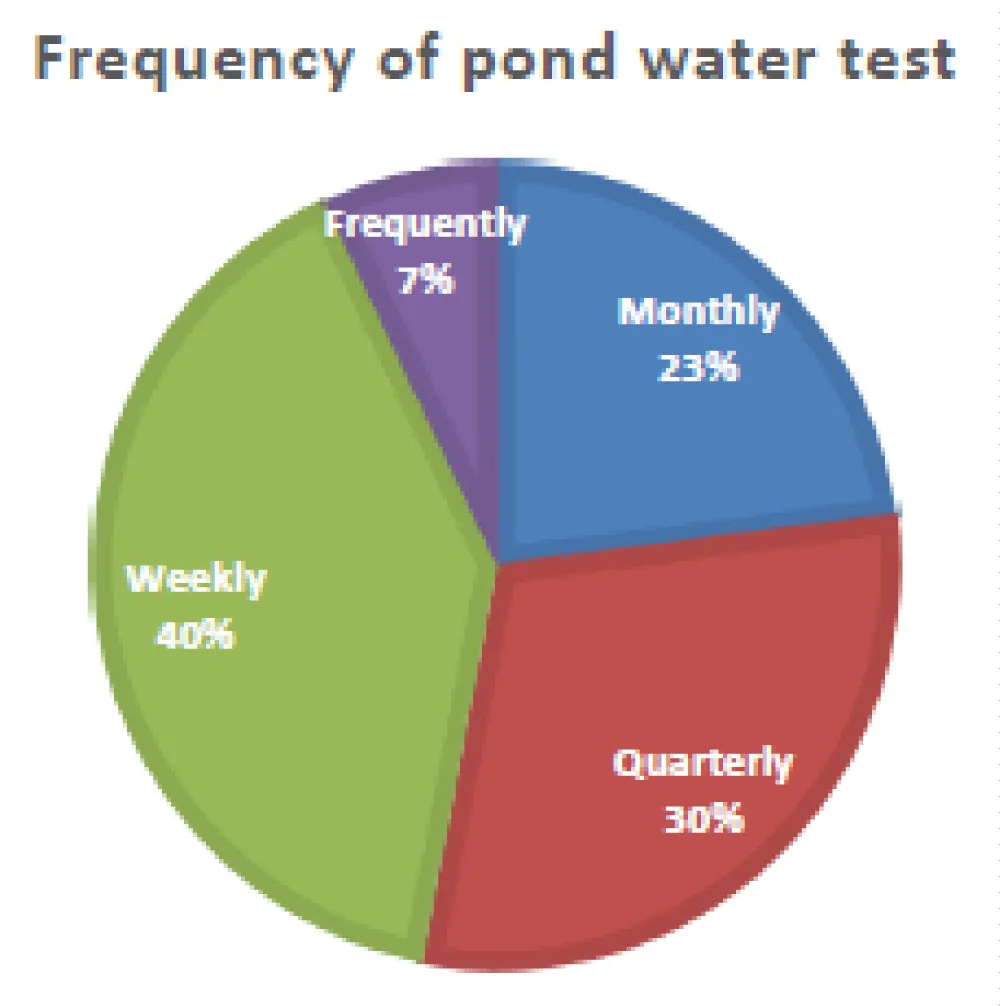
Based on the results provided above, 40% of respondents indicated that the pond water tests are conducted weekly (Figure 2). On one hand, 23% of the respondents stated that the pond water tests are conducted monthly, while 7% of the respondents test water frequently. However, 30% of the respondents indicated that the pond water tests are conducted quarterly. This reflects the different monitoring schedules for how the tests are done. This implies that pond water needs regular testing for better pond productivity.
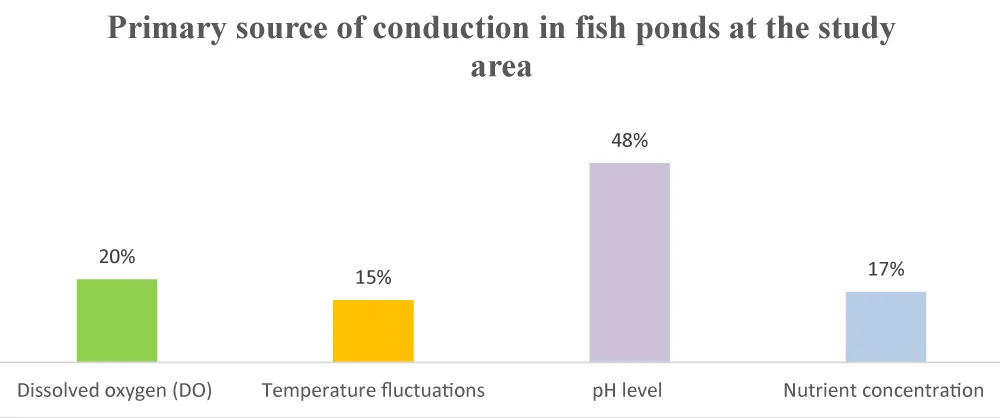
The results above represent the primary source of conduction in the pond, with 48% of the respondents indicating the pH level (Figure 3). In addition, 15% of the respondents stated that temperature fluctuation impacts pond condition. Furthermore, 20% of the respondents indicated that dissolved oxygen is another major condition in the fish ponds. However, 17% of respondents noted that nutrient concentration in the pond contributed immensely to the growth of the fish in the ponds. These results show that pH and dissolved oxygen are critical for conduction in any fish pond management.
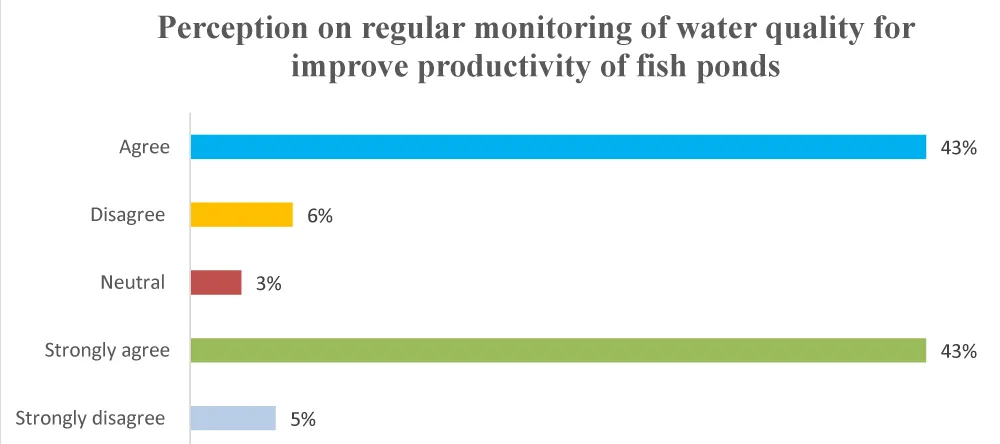
According to the result above, 43% of the respondents agree and strongly agree, respectively, that regular monitoring of water quality is crucial for maintaining productivity in the fishpond (Figure 4). However, 5% of the respondents disagree with regular water quality monitoring. This shows that 86% of respondents strongly agree and consider regular water quality monitoring as vital for maintaining fish pond productivity. The results imply that regular monitoring is crucial for two reasons: water quality improvement and pond productivity.
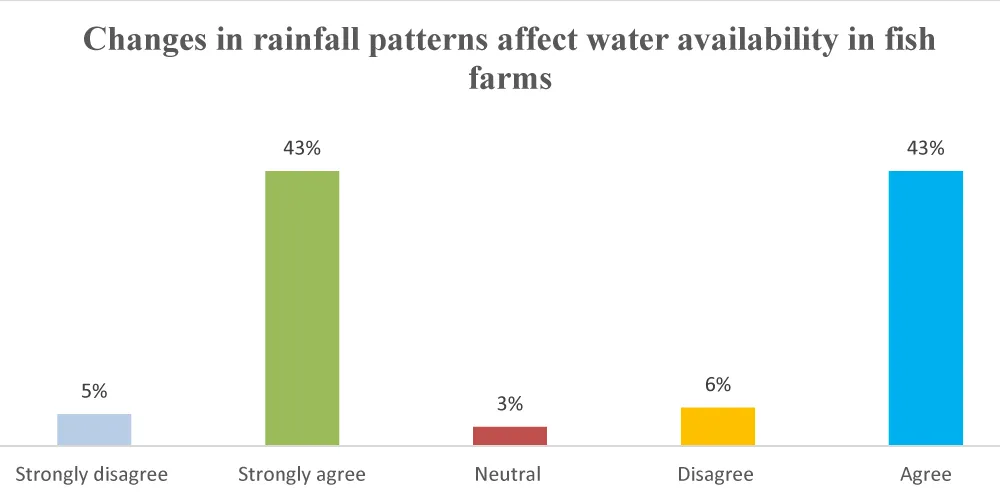
The data above revealed that 43% of the respondents pointed out that changes in rainfall patterns significantly affect water availability in the fish farm (Figure 5). The (5%) of the respondents strongly agree that rainfall variability significantly impacts water availability in fish ponds. The result. Results demonstrate that changes in precipitation patterns affect both the quality and productivity of pond water, including availability.
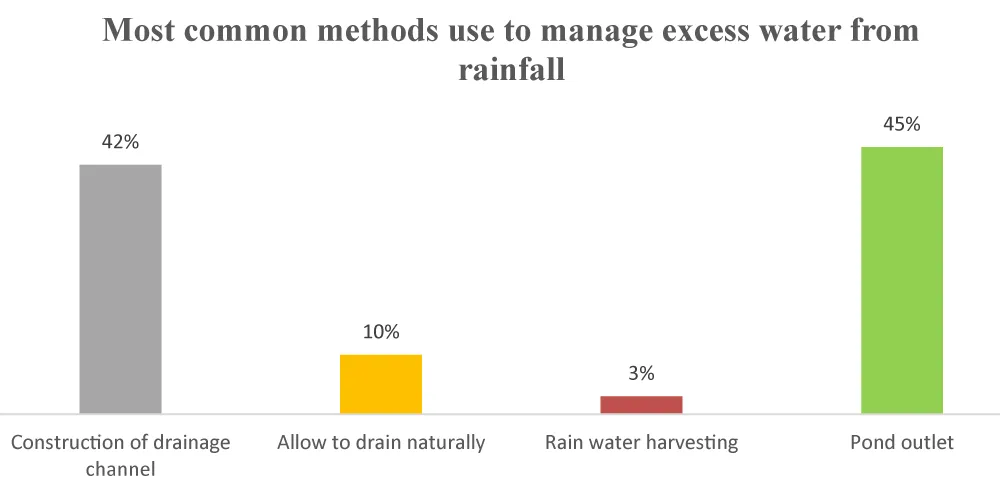
According to the results above, 45% of respondents considered the pond outlet the most appropriate method for managing excess pond water (Figure 6). In addition, 10% of the respondents noted that allowing water to drain naturally through the channels is the best common approach to use. However, 43% of the respondents indicated they constructed a drainage channel for the pond water so that the excess water drains through the pond outlet. The findings imply that the discharge of toxic water through the drainage system is fundamental for the effective performance of any fish pond.
The table above shows that 35% of the respondents believed that the decrease in dissolved oxygen negatively impacts water quality in fish farming, while 10% of the respondents stated that nutrient concentration is the bedrock in fish pond productivity (Table 2). However, 20% of the respondents pointed out that water temperature elevation adversely affects water quality; on the other hand, 20% of the respondents agree with the idea that pH fluctuations harm water quality. The findings mean that the dry period affects fish survival and productivity.
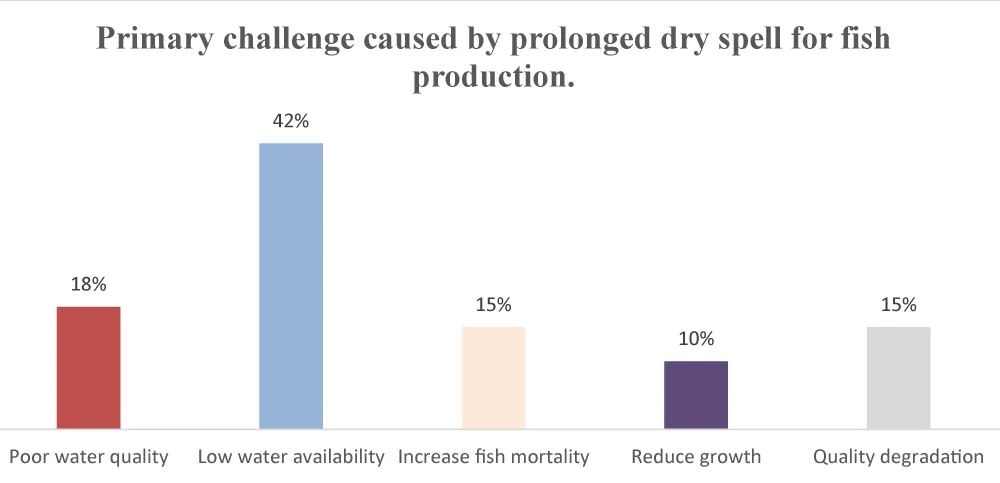
According to the results, 42% of the respondents indicated that low water availability is the most significant challenge caused by prolonged dry spells for fish production in the study area (Figure 7). In addition, 18% of the respondents stated that poor water quality is another primary challenge affected by prolonged dry spells, whereas 15% of the respondents pointed out that prolonged dry spells lead to an increase in fish mortality. Note that 15% of the respondents indicated quality degradation as one of the primary challenges. The findings imply that as the dry season prolongs, water in the pond becomes toxic and leads to the death of fish.
The above table shows that 54% of the respondents believed that diversification is beneficial in fish farming practices, while 27% of respondents expressed strong conviction in its effectiveness (Table 3). However, according to the table, 11% of the respondents did not see it as helpful. This shows that 81% of the respondents believe in diversification as a strategy to cope with unusual weather conditions.
Based on the study results provided above, (47%) of the respondents indicated that climate indices are the primary indicator (Table 4). However, (30%) of respondents stated that climate risk management is another indicator in measuring adaptation effectiveness; therefore, climate index trends are the most widely recognized indicator.
According to the results, (28%) of the respondents stated that lack of financial funding is the major challenge that they have been encountering in the implementation of various climate change adaptation measures/strategies (Table 5). In addition, access to markets (17%) was noted as another challenge militating against climate change adaptation measures in the study area, while 20% of the respondents believed that limited access to fingerlings is another challenge worth noting. Furthermore, (15%) of the respondents pointed out insufficient knowledge and training as a key challenge in implementing adaptation measures. In conclusion, (20%) of the respondents noted that the feed formulation is a significant challenge in adaptation measures in fish farming.
Discussions
Effective water quality management is a critical component of sustainable aquaculture practices in Sierra Leon and beyond. This approach is appropriate to test water quality & monitoring among fish farmers. These differences reflect not only the diversity in farming practices but also differing levels of awareness, resource availability, and technical capacity among aquaculture practitioners. The fact that a significant proportion of respondents conduct weekly water testing is encouraging. The results align with findings by Boyd and Tucker [8], who noted that weekly testing is ideal for intensive systems where changes in water quality can occur rapidly and significantly, hence affecting fish health. Frequent testing ensures that farmers can implement corrective measures before fish stress or mortality occurs. Monthly or quarterly testing may fail to capture short-term fluctuations that could have significant effects on pond ecology and fish well-being. El-Sayed [9] notes that in less intensive systems or where resources are limited, monthly testing might be a common practice, but he emphasizes that this approach may miss critical events, such as sudden drops in dissolved oxygen or pH spikes. In addition, the study results revealed that these varying frequencies also reflect disparities in farmer knowledge, training, and access to testing kits or laboratories. A study by Sani, et al. [10] in Nigeria found that most small-scale fish farmers only conduct water quality tests when problems arise, citing cost and lack of equipment as barriers. Furthermore, climatic variability can intensify the need for regular water quality testing. In Bo District, where changing weather patterns influence rainfall, temperature, and evaporation rates, pond conditions may shift rapidly [11]. Without frequent testing, these changes may go unnoticed until they result in fish stress or disease outbreaks. The World Bank [12] emphasizes that in the face of climate variability, adaptive management strategies such as increased frequency of monitoring are essential for resilient aquaculture systems.
An imbalanced pH can cause stress or even mortality in fish. Boyd and Tucker’s [13] findings align well with this revelation by noting that optimal pond pH should range between 6.5 and 9.0; the slightest deviations from this range can alter ammonia toxicity and disrupt aquatic life. Furthermore, Dissolved Oxygen (DO) is essential for fish respiration, and its depletion is one of the leading causes of fish mortality in aquaculture. Low oxygen levels can result from overfeeding, excessive algae, or poor pond management. Maulu, et al. [1] affirm that fluctuations in dissolved oxygen, especially during early morning or in overstocked ponds, can significantly reduce growth and survival rates. This concern becomes even more critical in warmer climates where oxygen solubility decreases as temperature rises. According to FAO [11], even small changes in water temperature can disrupt fish health, especially in tropical areas where the weather is increasingly erratic. The relatively low response rate here might indicate that farmers are either unaware of the direct impact of temperature or are accustomed to local seasonal patterns. Nutrients like nitrogen and phosphorus are crucial for plankton growth, which forms the base of the pond food web. However, excessive nutrients can lead to eutrophication, dense algal blooms that deplete oxygen and cause fish mortality. El-Sayed [9] emphasizes that balanced nutrient levels promote a healthy pond ecosystem. These findings collectively demonstrate that the fish farmers are aware of key water quality parameters.
Water availability is one of the most critical resources in aquaculture, and its fluctuation due to changes in rainfall patterns poses serious risks to the sustainability of fish farming, particularly in earthen pond systems. Rainfall provides a primary source of water for many smallholder fish farms, especially in regions where infrastructure for controlled water supply is limited. Barange, et al. [14] noted that unpredictable rainfall patterns and prolonged dry periods can lead to lower water levels and increased evaporation rates, thereby reducing fish survival and productivity. Ahmed, et al. [15] observed that reduced rainfall and drought conditions in West Africa have resulted in seasonal water shortages in fish farms, leading to increased fish stress, poor growth, and higher mortality rates. Moreover, rainfall variability affects not only the quantity but also the quality of pond water. Heavy rains following dry spells can introduce large volumes of runoff containing sediments, pollutants, and organic matter into ponds, thus deteriorating water quality. As noted by Ogundeji, et al. [16], many farmers in sub-Saharan Africa are aware of the effects of changing weather patterns but often lack the technical capacity and resources to adapt their farming practices accordingly. To mitigate the impact of rainfall variability, adaptive measures such as rainwater harvesting, construction of water reservoirs, and use of lined ponds or Recirculating Aquaculture Systems (RAS) are recommended strategies. Moreover, the results indicated a growing awareness among fish farmers regarding the impacts of changing rainfall patterns on water availability. However, to translate this awareness into resilience, targeted interventions are needed to support farmers in adopting adaptive water management practices in the face of increasing climate variability.
Managing excess water from rainfall is a critical component of fishpond management, particularly in regions with unpredictable or intense rainfall patterns. Poor management of excess water can result in pond overflow, erosion of pond embankments, loss of fish stock, and deterioration of water quality. The results presented revealed that the use of pond outlets is the most appropriate method to manage excess water. The use of a pond outlet, as mentioned by the largest proportion of respondents, is a standard practice in aquaculture design. Pond outlets are engineered structures used to control water levels and facilitate the removal of excess water in a regulated manner. According to Boyd and Tucker [13], a properly constructed outlet that allows for both partial and complete draining of a pond helps prevent overtopping during heavy rains. When water levels rise beyond the optimal point, outlets maintain water balance, protect dikes from breaching, and help maintain ideal conditions for fish growth and health. Drainage channels are crucial for diverting excess runoff away from the pond area and safely channeling it into designated outlets. Constructed drainage systems offer better control compared to natural flow patterns, particularly in sloped terrains or areas prone to flooding. Natural drainage is less predictable and harder to control, especially during extreme weather events. The preference for structured outlets and constructed drainage channels among the majority of respondents demonstrates a growing awareness of the risks posed by climate-related water surges and the need for adaptive pond engineering. It also reflects a trend toward more technical approaches to aquaculture management, which are necessary to enhance resilience and minimize losses. The findings further revealed that fish farmers in the surveyed area understand the importance of proper drainage and water control. The combined use of pond outlets and constructed drainage systems offers a practical and effective approach for managing excess rainfall, preventing damage to ponds, and maintaining optimal growing conditions for fish. Climate change and its associated impacts—prolonged dry spells, erratic rainfall, and temperature fluctuations—pose significant challenges to fish farming, particularly in vulnerable regions like sub-Saharan Africa. Notably, respondents cited improved water management as the most effective adaptation measure. This was followed by enhancing water quality monitoring systems.
The highest percentage of respondents acknowledged that effective water management is critical for sustaining fish production under changing climatic conditions. Efficient water use, pond design modifications (e.g., deepening or lining), rainwater harvesting, and the use of water-saving technologies like drip or pipe inflows are among the key strategies employed. El-Sayed [9] stated that sustainable water management in aquaculture plays a pivotal role in maintaining stable water parameters and reducing the risk of fish mortality due to drought or overheating. Furthermore, water scarcity, particularly during prolonged dry spells, leads to elevated water temperatures and reduced dissolved oxygen levels, creating stressful conditions for aquatic species. Barange, et al. [14] noted that water scarcity will become increasingly prevalent as a result of climate change, and proactive water management practices are essential to ensure continued fish survival and optimal growth. Regular and precise monitoring of water quality parameters such as pH, dissolved oxygen, ammonia levels, and temperature is crucial for early detection of stressors and timely interventions. The increasing unpredictability of weather events necessitates real-time and continuous water quality monitoring tools that can help farmers make informed management decisions. Boyd & Tucker [13] indicated similar findings; poor water quality is one of the leading causes of fish disease and low productivity in aquaculture. Implementing affordable, user-friendly monitoring systems can equip farmers with the knowledge and tools to maintain stable pond conditions, even during periods of environmental stress. The results revealed that 22% of respondents viewed the selection of climate-resilient fish species as a practical adaptation approach. This involves cultivating species that are more tolerant to temperature fluctuations, low dissolved oxygen levels, and changing water chemistry. Tilapia (Oreochromis niloticus), for instance, is widely recognized for its hardiness and ability to withstand challenging environmental conditions.
However, the availability and affordability of such species remain a challenge for smallholder farmers in many developing regions. A smaller, but still significant, proportion of respondents indicated the diversification of livelihoods as an important climate adaptation strategy. Livelihood diversification refers to the process of engaging in multiple income-generating activities outside traditional fish farming to reduce dependence on a single vulnerable sector. However, implementing such strategies often requires access to training, finance, and market information.
Conclusion
This study has brought to light the multifaceted challenges and adaptive responses of fish farmers in Bo District, Southern Sierra Leone. The study concludes that the condition of fish ponds, particularly water quality parameters such as pH, dissolved oxygen, temperature, and nutrient concentrations, significantly influences fish health and the overall productivity of fish farms in Bo District. Weekly testing, practiced by most respondents, reflects commendable awareness, yet the prevalence of less frequent testing suggests the need for wider outreach and capacity building. The study further concludes that rainfall patterns had direct consequences on water availability and quality, with erratic rains and extended dry periods leading to pond drying, water quality degradation, and reduced fish survival and growth. The study further concludes that climate-induced variability does not only impact pond ecology but also undermines the broader socioeconomic stability of aquaculture-dependent households. A lack of financial support, poor market access, and insufficient training emerged as dominant barriers that restrict farmers from implementing adaptive solutions. Nevertheless, farmers are responding in diverse ways, ranging from improving water management and monitoring systems to adopting climate-resilient fish species and diversifying livelihoods. The findings indicate a growing awareness and willingness among farmers to adapt, but this must be matched with sustained institutional support, technical training, and financial investment. Without addressing these core issues, the resilience and sustainability of small-scale aquaculture in Bo District will remain fragile in the face of escalating climate threats.
Ethics approval and consent to participate
Ethical approval was sought from participants.
Availability of data and materials: Data can be made available upon request.
Ethics approval
All authors have read and understood and have complied as applicable with the statement on “Ethical Responsibilities of Authors” as found in the Instructions for Authors.
Contributions
FAM: Conceptualization, investigation, and stakeholder interviews. MF: Writing and editing of original draft: IMG: Review and editing.
- Maulu S, Hasimuna OJ, Haambiya LH, Monde GC, Musuka CG, Makorwa TH, et al. Climate change effects on aquaculture production: sustainability implications, mitigation, and adaptations. Front Sustain Food Syst. 2021;5:609097. Available from: https://doi.org/10.3389/fsufs.2021.609097
- Olapade JO, Bangura A. Aquaculture development perspectives in Sierra Leone: the challenges of critical inputs and political will. In: Emerging sustainable aquaculture innovations in Africa. 2023. Available from: https://link.springer.com/chapter/10.1007/978-981-19-7451-9_19
- Boyd CE. Effects of weather and climate on aquaculture. Global Seafood Alliance. 2020. Available from: https://www.globalseafood.org/advocate/effects-of-weather-and-climate-on-aquaculture/
- Gbigbi TM, Eghagha JE. Assessing the effects of flood risk on fish farming in the coastal region of Delta State, Nigeria. Int J Oceanogr Aquac. 2024;8(1):000298. Available from: https://doi.org/10.23880/ijoac-16000298
- Olapade JO. Climate smart best practices in aquaculture and fisheries with specific emphasis on Sierra Leone. In: Emerging sustainable aquaculture innovations in Africa. 2023;5:459-475. Available from: https://doi.org/10.1007/978-981-19-7451-9_21
- Oladele OI, Amara A. Farmers’ use of indigenous knowledge on climate change adaptation across farming systems and agroecological zones of Sierra Leone. AlterNative. 2024;20(3):473-483. Available from: https://doi.org/10.1177/11771801241251862
- Okeke‐Ogbuafor N, Gray T, Sankoh S, Bangura AA, Stead S, Rajah E. Is nutrition-sensitive fish farming a panacea for Africa's increasing malnutrition burden? The case of Sierra Leone. Aquac Fish Fish. 2024;4(3):e174. Available from: https://doi.org/10.1002/aff2.174
- Boyd CE, Tucker CS. Pond aquaculture water quality management. Springer; 1998. Available from: https://link.springer.com/book/10.1007/978-1-4615-5407-3
- El-Sayed AFM. Tilapia culture. CAB International; 2006. Available from: https://doi.org/10.1079/9780851990149.0000
- Sani A, Yusuf M, Bako T. Water quality management practices among fish farmers in Kaduna State, Nigeria. Statistics Sierra Leone. 2021. Available from: https://www.statistics.sl/images/StatisticsSL/Documents/Census/MTPHC_Preliminary_Report/Final_Preliminary_Report_2021_MTPHC.pdf
- FAO. Managing water quality in aquaculture. 2020.
- World Bank. Fish to 2030: prospects for fisheries and aquaculture. 2013. Available from: https://documents1.worldbank.org/curated/en/458631468152376668/pdf/831770WP0P11260ES003000Fish0to02030.pdf
- Boyd CE, Tucker CS. Pond aquaculture water quality management. Springer Science; 2012. Available from: https://www.scirp.org/reference/referencespapers?referenceid=2184634
- Barange M, Bahri T, Beveridge MCM, Cochrane KL, Funge-Smith S, Poulain F. Impacts of climate change on fisheries and aquaculture: synthesis of current knowledge, adaptation, and mitigation options. FAO. 2018. Available from: https://openknowledge.fao.org/server/api/core/bitstreams/9aeb8ade-a623-4954-8adf-204daae3b5de/content
- Ahmad M, Ahmed Z, Majeed A, Huang B. An environmental impact assessment of economic complexity and energy consumption: does institutional quality make a difference? Environ Impact Assess Rev. 2021;89:106603. Available from: https://doi.org/10.1016/j.eiar.2021.106603
- Ogundeji AA, Ayinde OE, Yusuf O. Climate change adaptation strategies among fish farmers in Sub-Saharan Africa. Climate Risk Manag. 2022;35:100415.

 Save to Mendeley
Article Alerts
Subscribe to our articles alerts and stay tuned.
 This work is licensed under a Creative Commons Attribution 4.0 International License.