Annals of Environmental Science and Toxicology
Electrochemical Valorization of Biosolids: A Comprehensive Review of Resource Recovery and High-Value Product Generation
Department of Petroleum Engineering, Texas Tech University, 2500 Broadway W, Lubbock, TX 79409, USA
Author and article information
Cite this as
Poda S, et al. Electrochemical Valorization of Biosolids: A Comprehensive Review of Resource Recovery and High-Value Product Generation. Ann Environ Sci Toxicol. 2026; 10(1): 1-24. Available from: 10.17352/aest.000092
Copyright License
© 2026 Poda S, et al. This is an open-access article distributed under the terms of the Creative Commons Attribution License, which permits unrestricted use, distribution, and reproduction in any medium, provided the original author and source are credited.The rapid growth of municipal and industrial wastewater treatment has led to an unprecedented accumulation of biosolids, traditionally managed through land application, incineration, or disposal pathways that often undervalue their embedded chemical and energetic potential. In the context of the circular economy, biosolids should no longer be viewed as residual waste streams but as reservoirs of recoverable carbon, nitrogen, phosphorus, and energy. Electrochemical sludge valorization has recently emerged as a transformative approach that leverages controlled redox reactions to convert complex organic and nutrient-rich matrices into hydrogen, fertilizers, and other value-added products under relatively mild and modular operating conditions. This review critically examines the integration of electrochemistry, microbiology, and process engineering in advancing biosolids valorization technologies. Key pathways discussed include electrochemical ammonia recovery and electrolysis for hydrogen generation, electro-oxidation of refractory organics, electro-assisted phosphorus precipitation, and bio-electrochemical systems such as microbial electrolysis cells. Particular emphasis is placed on reaction mechanisms, electrode materials, mass transfer limitations, energy efficiency, and reactor design considerations that govern process performance. Comparative analysis with conventional biological and thermal sludge treatment technologies highlights both the advantages and current limitations of electrochemical approaches. Furthermore, this review evaluates techno-economic feasibility, scalability challenges, and life-cycle implications, identifying critical research gaps that must be addressed to transition from laboratory-scale demonstrations to full-scale implementation. By bridging wastewater treatment, electrochemical engineering, and resource recovery, electrochemical sludge valorization represents a promising platform for sustainable materials and energy production, aligning environmental stewardship with chemical process innovation.
Global generation and management of biosolids
Increasing urbanization has caused municipal solid waste and wastewater to emerge as primary sources of materials that would otherwise be discarded. A byproduct of wastewater treatment is sewage sludge, a nutrient-rich organic material that contains nitrogen (N) concentrations between 2.4 and 8% and phosphorus (P) concentrations ranging from 1.4 to 3% of the total solids [1–5]. Optimal operation of wastewater treatment plants (WWTPs) is a complex task that requires both effluent quality and efficient sludge management to be pursued with strict interdependencies between the two goals. In Europe, the Urban Waste Water Treatment Directive 91/271/EC introduced more restrictive standards for effluent quality and discharge. Its gradual implementation is resulting in a consistent increase of sewage sludge production, which reached 10.9 million tonnes dry solids in 2005 and is expected to exceed 13 million tonnes by 2020 [4]. The volume of municipal sludge feedstock has been underestimated due to the incorrect interchangeability of the terms “sewage sludge” and “biosolids” [1]. Governments and municipalities are constantly battling whether to upgrade or implement new biosolids handling systems. High capital costs and operating expenses, such as energy, labor, and chemicals, can make the cost to treat and dispose of biosolids 50% of the total wastewater utility costs [6].
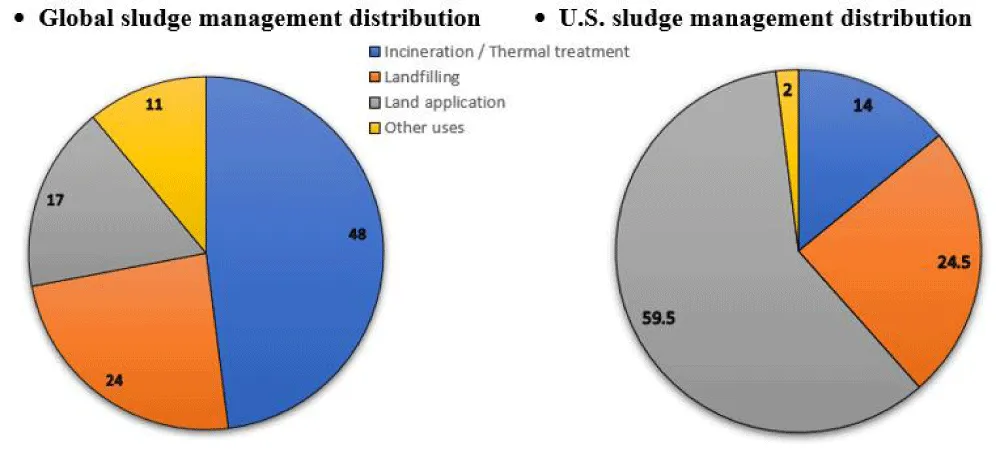
Municipal wastewater treatment plants worldwide generate large volumes of sewage sludge, commonly referred to as biosolids after stabilization and treatment, as a by-product of removing organic matter and nutrients from wastewater. Globally, the annual production of biosolids is estimated to be on the order of 1 × 10⁸ dry tonnes per year [7], driven by expanding urbanization and increased wastewater treatment coverage, with projections suggesting significant growth in the coming decades as treatment facilities proliferate and regulations tighten on effluent discharge quality. Biosolids are nutrient-rich and contain organic carbon, nitrogen, phosphorus, and micronutrients that provide potential for beneficial reuse; however, traditional management methods—including land application, landfilling, and incineration—continue to dominate current practices. In the United States alone, approximately 4 million dry metric tons of biosolids were generated in recent reporting, with the majority land applied, followed by landfilling and incineration, reflecting the range of disposal and reuse pathways employed in practice [8]. Despite the recognized agronomic benefits of land application as a soil amendment and nutrient source, environmental concerns over contaminants and emerging pollutants have prompted increased scrutiny and research into alternative and sustainable management strategies. These trends highlight the dual challenge of addressing biosolids accumulation while maximizing resource recovery in line with circular economy principles [9]. Figure 1 shows the global and US management of sewage sludge/biosolids [10,11].
Limitations of conventional sludge treatment technologies
With rapid urbanization and emphasis on environmental protection, wastewater treatment plants (WWTPs) are increasingly being built to treat municipal and industrial wastewater. It was reported that approximately 103.0 million metric tons of waste activated sludge (WAS) would be generated annually worldwide by 2025, arousing extensive concerns for subsequent treatment and disposal [12,13]. However, various emerging organic contaminants (EOCs) contained in sludge impede anaerobic treatment processes and, following disposal of digested sludge (e.g., agricultural use or landfilling), pose high risks to sustainable development [14,15]. Conventional sludge treatment technologies, including anaerobic digestion, incineration, landfilling, and land application, have long been implemented to stabilize and reduce the volume of biosolids generated from wastewater treatment processes. While these approaches provide practical solutions for sludge handling and disposal, they present several environmental, economic, and operational limitations.s Anaerobic digestion is widely used for sludge stabilization and biogas production; however, its performance is often constrained by slow reaction kinetics, incomplete degradation of complex organic compounds, and the requirement for long hydraulic retention times and temperature control to maintain microbial activity [16]. Thermal treatment methods such as incineration can significantly reduce sludge volume and destroy pathogens, but they require high energy input and may produce air pollutants, including particulate matter and nitrogen oxides, along with ash residues that still require disposal [17]. Landfilling remains a common practice in many regions due to its simplicity and relatively low immediate cost, yet it contributes to long-term environmental concerns such as greenhouse gas emissions, leachate formation, and potential contamination of soil and groundwater [18]. Similarly, land application of biosolids provides beneficial nutrient recycling for agricultural soils; however, increasing concerns about heavy metals, pathogens, and emerging contaminants such as pharmaceuticals and microplastics have raised regulatory and public acceptance challenges [19]. Collectively, these limitations highlight the need for advanced treatment and resource recovery strategies capable of transforming biosolids from waste streams into valuable products within a circular economy framework.
Transition from waste treatment to resource recovery
In recent decades, the paradigm of wastewater treatment has gradually shifted from a waste disposal approach toward a resource recovery framework, driven by increasing environmental concerns, resource scarcity, and the principles of the circular economy. Traditionally, wastewater treatment plants were designed primarily to remove contaminants and protect receiving water bodies; however, these systems also contain substantial quantities of recoverable resources, including organic carbon, nitrogen, phosphorus, and embedded chemical energy. Biosolids produced during treatment represent a particularly valuable resource reservoir, as they contain significant concentrations of nutrients and organic matter that can be converted into energy carriers, fertilizers, and other value-added products [18,20]. This shift has led to the concept of wastewater treatment plants evolving into water resource recovery facilities (WRRFs), where multiple resource streams such as biogas, nutrients, and reusable water are recovered through integrated treatment processes. Technologies such as anaerobic digestion, nutrient precipitation, and advanced oxidation have already demonstrated potential for recovering energy and materials from wastewater residuals [21]. More recently, electrochemical and bio-electrochemical systems have gained increasing attention as promising pathways for transforming biosolids into high-value products, including hydrogen, ammonium-based fertilizers, and organic chemicals, under controlled reaction environments. These emerging technologies provide opportunities to enhance energy efficiency, improve nutrient recovery, and reduce the environmental footprint of conventional sludge management systems, thereby supporting the transition toward sustainable and circular wastewater management.
Role of electrochemical engineering in circular economy
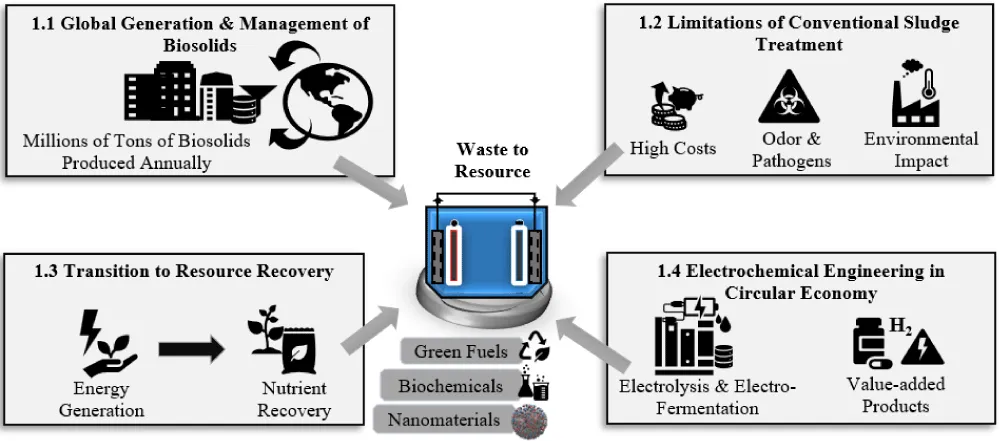
Electrochemical engineering has emerged as a promising technological platform for advancing sustainable resource recovery and supporting the transition toward a circular economy. Unlike conventional treatment technologies that primarily focus on pollutant removal and waste stabilization, electrochemical processes enable the selective conversion of chemical species into valuable products through controlled redox reactions driven by electrical energy. These systems offer several advantages, including high reaction selectivity, modular reactor design, relatively mild operating conditions, and the ability to integrate with renewable electricity sources, making them attractive for sustainable wastewater and biosolids treatment applications [22]. In the context of biosolids valorization, electrochemical technologies can facilitate the recovery of energy carriers and nutrients through pathways such as ammonia electrolysis for hydrogen production, electrochemical oxidation of complex organic compounds, and electro-assisted precipitation of phosphorus-based fertilizers [23]. Additionally, bio-electrochemical systems, including microbial electrolysis cells and microbial fuel cells, combine electrochemical processes with microbial metabolism to enhance the conversion of organic matter into hydrogen, methane, or other valuable intermediates [24]. These integrated electrochemical approaches provide opportunities to simultaneously address waste management challenges while recovering energy and critical nutrients, thereby contributing to the development of resource-efficient wastewater treatment systems. As global interest in electrified chemical processes grows, electrochemical engineering is expected to play a central role in enabling next-generation wastewater treatment and biosolids valorization technologies aligned with circular economy principles. Figure 2 depicts the overall structure of the study.
Scope and structure of the review
The increasing demand for sustainable waste management and efficient resource recovery has driven growing interest in the valorization of biosolids produced by wastewater treatment processes. Electrochemical technologies have emerged as a promising approach, offering the ability to transform the organic and inorganic components of sludge into valuable products. This review presents a comprehensive assessment of current electrochemical strategies for biosolids valorization, focusing on pathways for recovering hydrogen, nutrient-rich fertilizers, and other value-added chemicals. The discussion encompasses electrochemical oxidation, ammonia electrolysis, electro-assisted nutrient recovery, and bio-electrochemical systems, highlighting how these methods convert sludge constituents into useful resources. Key operational factors, including electrode selection, reactor design, mass transfer considerations, and energy efficiency, are also examined to provide guidance for optimizing electrochemical sludge treatment systems.
The novelty of this review stems from its holistic perspective, which integrates electrochemical engineering principles with circular economy concepts in biosolids management. Unlike previous studies that primarily address conventional treatment methods or isolated electrochemical processes, this work synthesizes recent advancements in electrochemical sludge valorization and evaluates their potential for simultaneous energy and nutrient recovery. Additionally, the review identifies current research gaps, emerging trends, and technological challenges, outlining future directions to facilitate the large-scale implementation of electrochemical resource recovery within wastewater treatment infrastructure.
To highlight the novelty and contribution of the present work, Table 1 compares the scope of previously published review articles with that of this review. Earlier reviews have primarily focused on individual aspects of biosolids management, including sludge disposal, thermochemical conversion, nutrient recovery, or bioelectrochemical systems. However, a comprehensive review integrating electrochemical pathways for hydrogen production, nutrient recovery, metal extraction, reactor engineering considerations, techno-economic assessment, life-cycle analysis, and circular economy perspectives remains lacking. The present review addresses this gap by providing a holistic evaluation of electrochemical biosolids valorization technologies and their potential role in transforming wastewater treatment systems into resource recovery platforms.
Composition and resource potential of biosolids
Organic carbon fractions
Biosolids derived from wastewater treatment processes contain a substantial fraction of organic carbon, which represents a key resource for energy and material recovery. The organic carbon in biosolids is typically composed of a complex mixture of biodegradable and refractory compounds, including proteins, carbohydrates, lipids, humic substances, and microbial cell debris formed during biological treatment processes. The distribution and composition of these carbon fractions depend strongly on the nature of the influent wastewater and the treatment processes employed, particularly biological oxidation and sludge stabilization methods [18]. Readily biodegradable components, such as simple carbohydrates and proteins, are more amenable to biological and electrochemical conversion, whereas more recalcitrant fractions, including humic and fulvic substances, exhibit resistance to degradation and often require advanced oxidation or electrochemical treatment for effective breakdown [16]. The presence of these diverse carbon fractions provides significant opportunities for resource recovery, as they can be transformed into energy carriers such as biogas and hydrogen, or into intermediate compounds like volatile fatty acids through controlled conversion pathways [17]. However, the heterogeneous and complex nature of organic carbon in biosolids also presents challenges for efficient utilization, necessitating a deeper understanding of reaction mechanisms, mass transfer limitations, and process optimization strategies. Consequently, characterizing organic carbon fractions is critical for designing effective valorization technologies that maximize recovery while minimizing energy consumption and environmental impacts.
Nitrogen speciation (ammonia, organic nitrogen)
Nitrogen present in biosolids exists in multiple forms, primarily as ammoniacal nitrogen (NH₄⁺/NH₃) and organically bound nitrogen associated with proteins, amino acids, and microbial biomass. The distribution of these nitrogen species is strongly influenced by wastewater characteristics and treatment processes, particularly biological nitrogen removal and sludge stabilization techniques [18,19]. Organic nitrogen constitutes a significant fraction in untreated or primary sludge, whereas secondary and digested sludges typically contain higher concentrations of ammonium due to the mineralization of organic matter during biological treatment processes [18]. Ammoniacal nitrogen is of particular interest for resource recovery, as it can be directly utilized in electrochemical systems for hydrogen production via ammonia electrolysis or recovered as ammonium salts for fertilizer applications [24]. In contrast, organically bound nitrogen requires additional conversion steps, such as hydrolysis and deamination, to release ammonia before it can be effectively recovered or utilized. The coexistence of multiple nitrogen forms presents both opportunities and challenges for valorization processes, as selective recovery depends on controlling reaction pathways, pH, and electrochemical conditions. Therefore, understanding nitrogen speciation in biosolids is critical for optimizing electrochemical treatment strategies aimed at maximizing nutrient recovery and minimizing energy consumption.
Phosphorus forms and mineral associations
Phosphorus present in biosolids is a critical resource due to its essential role in agriculture and the increasing concerns over the depletion of natural phosphate reserves. In wastewater-derived sludge, phosphorus exists in both inorganic and organic forms, with inorganic phosphorus typically dominating in stabilized biosolids. These forms include orthophosphates, polyphosphates, and mineral-bound phosphates associated with metal ions such as calcium, iron (Fe), and aluminum, depending on the treatment processes employed [29]. Chemical phosphorus removal processes, particularly those involving iron and aluminum salts, lead to the formation of stable metal-phosphate complexes that can limit phosphorus bioavailability but enhance its retention within sludge matrices [30]. In contrast, biologically enhanced phosphorus removal (EBPR) processes result in the accumulation of polyphosphate within microbial cells, which can be subsequently released under controlled conditions to facilitate recovery [31].
From a resource recovery perspective, these phosphorus fractions provide significant opportunities for the production of fertilizers, particularly through processes such as struvite (MgNH₄PO₄·6H₂O) precipitation and calcium phosphate recovery. However, the efficiency of phosphorus recovery is strongly influenced by its chemical speciation, solubility, and association with other elements within the sludge matrix. For instance, phosphorus bound to iron and aluminum tends to be less readily recoverable compared to calcium-associated or soluble phosphate forms, necessitating the use of advanced treatment or electrochemical processes to enhance release and recovery [32]. Therefore, a detailed understanding of phosphorus forms and their mineral associations is essential for designing effective valorization strategies that maximize nutrient recovery while ensuring product quality and process efficiency.
Trace metals and inorganic constituents
Biosolids contain a wide range of trace metals and inorganic constituents originating from domestic, industrial, and urban wastewater inputs, as well as from chemical additives used during treatment processes. Commonly detected metals include iron (Fe), aluminum (Al), zinc (Zn), copper (Cu), nickel (Ni), chromium (Cr), and lead (Pb), with their concentrations varying significantly depending on the source of wastewater and the treatment configuration [33]. Iron and aluminum are often present in elevated concentrations due to their use as coagulants in phosphorus removal processes, resulting in the formation of metal hydroxides and metal-phosphate complexes within the sludge matrix. These inorganic components play a dual role in biosolids management: while certain micronutrients such as Zn and Cu can be beneficial for agricultural applications at low concentrations, excessive levels of heavy metals pose environmental and regulatory concerns, particularly for land application [17].
From a resource recovery perspective, the presence of metal species offers both challenges and opportunities. Metal ions can interfere with nutrient recovery processes by forming stable complexes with phosphorus and organic matter, thereby reducing bioavailability and recovery efficiency. Conversely, emerging electrochemical technologies provide pathways for selective metal recovery through electrodeposition, electrocoagulation, and redox-mediated separation processes, enabling the extraction of valuable metals while simultaneously improving sludge quality [34]. In addition, inorganic constituents such as silica, calcium, and magnesium influence sludge dewaterability, ash formation during thermal treatment, and precipitation reactions during nutrient recovery processes. Therefore, understanding the composition and behavior of trace metals and inorganic constituents is essential for optimizing biosolids valorization strategies, particularly in the context of electrochemical systems aimed at simultaneous recovery of nutrients and valuable materials. Table 2 is presented to summarize the compositions, properties, and resource potential of biosolids.
Energy and material recovery potential
Biosolids represent a significant reservoir of embedded energy and valuable materials, making them an attractive feedstock for resource recovery within sustainable wastewater management frameworks. The high organic content of sludge provides considerable potential for energy recovery, typically quantified in terms of chemical oxygen demand (COD) and volatile solids, which can be converted into energy carriers such as biogas, hydrogen, and other fuels through biological, thermal, and electrochemical processes [35]. In addition to energy recovery, biosolids are rich in essential nutrients, particularly nitrogen and phosphorus, which can be reclaimed and reused as fertilizers, contributing to the conservation of finite natural resources such as phosphate rock [37]. The recovery of intermediate products, including volatile fatty acids and organic acids, further enhances the potential for integrating biosolids into biorefinery concepts aimed at producing value-added chemicals.
Recent advancements in electrochemical and hybrid treatment technologies have expanded the scope of resource recovery by enabling the direct conversion of sludge components into hydrogen, ammonia-based products, and functional materials under controlled conditions. These approaches offer advantages in terms of process selectivity, modularity, and compatibility with renewable energy sources, thereby improving overall system sustainability [36]. However, the efficiency of energy and material recovery is strongly influenced by factors such as sludge composition, pretreatment requirements, process integration, and energy input, which must be carefully optimized to ensure economic viability. Consequently, unlocking the full resource potential of biosolids requires a holistic approach that integrates advanced conversion technologies with process engineering and life-cycle considerations, positioning biosolids as a key component in circular economy-driven resource recovery systems.
Fundamentals of electrochemical sludge valorization
Electrochemical principles in complex matrices
Traditional primary and secondary treatments have achieved great success in the control of conventional water quality indicators. However, the global occurrence of emerging toxic organic pollutants in water has raised concerns about serious adverse effects on aquatic ecosystems and human health [38,39]. Electrochemical processes applied to biosolids valorization operate within highly complex and heterogeneous matrices, where organic matter, inorganic ions, suspended solids, and microbial components interact simultaneously under applied electrical fields. Unlike conventional aqueous systems, sludge-based matrices exhibit significant variability in conductivity, pH, ionic strength, and mass transport behavior, all of which influence electrochemical performance and reaction pathways. The fundamental principle governing these systems involves the transfer of electrons at the electrode–electrolyte interface, where oxidation reactions typically occur at the anode and reduction reactions at the cathode, enabling the transformation of organic and inorganic species into value-added products [40]. However, the presence of particulate matter and complex organic compounds in biosolids introduces additional resistances, including diffusion limitations and electrode fouling, which can hinder electron transfer efficiency and reduce process effectiveness [27]. Figure 3 is the schematic representation of electrochemical processes occurring in complex biosolid matrices, illustrating anodic oxidation and cathodic reduction reactions, and electron flow influencing reaction kinetics and system performance.
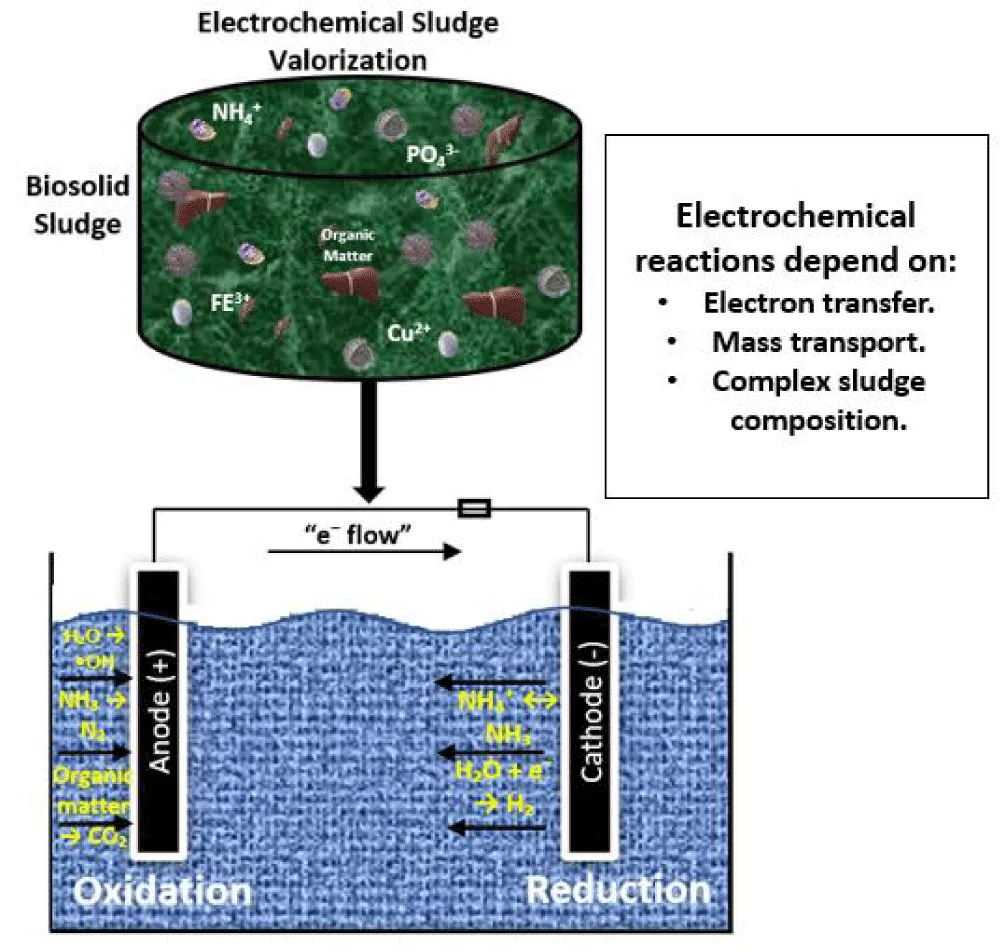
In such complex environments, indirect electrochemical processes often play a dominant role, where reactive species such as hydroxyl radicals (•OH), active chlorine, or other oxidants are generated in situ and subsequently react with target compounds. These mediated pathways are particularly important for the degradation of recalcitrant organic fractions and the release of bound nutrients, thereby enhancing resource recovery potential [41]. Additionally, the selection of electrode materials, including boron-doped diamond (BDD), mixed metal oxides, and carbon-based electrodes, significantly affects reaction selectivity, overpotential, and long-term stability in sludge systems. The interplay between electrochemical kinetics, mass transfer, and matrix complexity ultimately determines system performance, highlighting the need for optimized reactor design and operational strategies tailored to biosolids treatment. Understanding these fundamental principles is essential for advancing electrochemical sludge valorization technologies and enabling efficient conversion of complex waste matrices into valuable resources.
Electrode reactions and redox pathways
Electrode reactions and associated redox pathways play a central role in determining the efficiency and selectivity of electrochemical sludge valorization processes. At the anode, oxidation reactions are responsible for the transformation of organic matter, ammonia, and other reduced species present in biosolids, while reduction reactions at the cathode facilitate the generation of valuable products such as hydrogen or reduced chemical intermediates. The anodic oxidation of organic compounds can proceed via direct electron transfer at the electrode surface or through indirect pathways involving electrogenerated oxidants such as hydroxyl radicals, sulfate radicals, or active chlorine species, depending on the electrolyte composition and electrode material [42]. These oxidative pathways contribute to the breakdown of complex and recalcitrant organics, enabling their conversion into smaller, more reactive molecules or complete mineralization to carbon dioxide.
In parallel, cathodic reactions are crucial for resource recovery, particularly in hydrogen evolution reactions (HER), where protons or water molecules are reduced to produce hydrogen gas under suitable electrochemical conditions. In systems containing nitrogen species, cathodic and anodic reactions may also facilitate ammonia oxidation or reduction pathways, enabling nitrogen recovery or transformation into useful products such as ammonium salts or nitrogen gas [43]. The competition between desired and parasitic reactions, including oxygen evolution at the anode and side reactions at the cathode, significantly influences overall process efficiency and energy consumption. Furthermore, electrode material properties—including catalytic activity, overpotential, surface area, and resistance to fouling—strongly govern the kinetics of redox reactions and the distribution of reaction products. Therefore, a detailed understanding of electrode reactions and redox mechanisms is essential for optimizing electrochemical systems aimed at maximizing resource recovery from complex biosolid matrices. Table 3 validates the redox pathway mechanisms.
Mass transfer and charge transport limitations
Mass transfer and charge transport phenomena play a critical role in governing the performance and efficiency of electrochemical sludge valorization systems, particularly due to the heterogeneous and multiphase nature of biosolids. In such complex matrices, the transport of reactants, intermediates, and products between the bulk phase and electrode surfaces is often hindered by high solids content, viscosity, and the presence of colloidal and particulate matter. These factors contribute to the formation of diffusion boundary layers and concentration gradients, which can significantly limit reaction rates and reduce overall process efficiency [42,48]. Additionally, the migration of ionic species under an applied electric field, coupled with diffusion and convection mechanisms, determines the availability of electroactive species at the electrode interface, thereby influencing reaction kinetics and selectivity.
Charge transport within sludge systems is further complicated by variations in electrical conductivity, which depend on ionic strength, dissolved salts, and the composition of organic and inorganic constituents. Low conductivity can lead to increased ohmic resistance, higher energy consumption, and uneven current distribution within the reactor [49]. Moreover, electrode fouling caused by the deposition of organic matter, biofilms, or inorganic precipitates can obstruct active sites and hinder electron transfer processes, further exacerbating transport limitations. Strategies to overcome these challenges include reactor design optimization to enhance mixing and turbulence, the use of conductive additives or supporting electrolytes to improve ionic transport, and the development of advanced electrode materials with high surface area and anti-fouling properties [34,36]. A comprehensive understanding of mass transfer and charge transport limitations is therefore essential for improving the efficiency, scalability, and economic viability of electrochemical systems for biosolids valorization.
Reactor configurations and cell architectures
The design of reactor configurations and electrochemical cell architectures is a critical factor influencing the performance, scalability, and economic feasibility of electrochemical sludge valorization processes. Due to the complex and heterogeneous nature of biosolids, reactor systems must be carefully engineered to ensure effective contact between electrodes and the sludge matrix while maintaining efficient mass and charge transport. Common electrochemical reactor configurations include batch reactors, continuous-flow systems, divided and undivided cells, as well as advanced designs such as fluidized-bed and three-dimensional electrode reactors, each offering distinct advantages depending on the target application [50]. Undivided cells are often preferred for simplicity and lower capital cost, whereas divided cells equipped with ion-exchange membranes enable selective separation of anodic and cathodic reactions, improving product purity and process control.
Recent advancements have focused on the development of three-dimensional (3D) electrode systems, where particle electrodes or porous conductive materials are introduced to significantly increase the active surface area and enhance reaction rates. These configurations improve mass transfer and reduce diffusion limitations, making them particularly suitable for treating high-strength and particulate-rich sludge streams [51]. Additionally, flow-through and filter-press reactor designs have been explored to enable continuous operation and scalability, which are essential for practical implementation in wastewater treatment facilities. Key design considerations include electrode spacing, current distribution, hydraulic retention time, and energy consumption, all of which must be optimized to balance process efficiency with operational cost [52]. Therefore, the selection and optimization of reactor configurations play a pivotal role in translating electrochemical sludge valorization technologies from laboratory-scale studies to full-scale applications.
Electrochemical recovery of nitrogen and hydrogen
Ammonia electrolysis mechanisms
Ammonia, as a chemical raw material, is widely used in the manufacture of fertilizer and the production of pharmaceuticals, synthetic fibers, resins, etc [53]. Ammonia electrolysis has emerged as a promising pathway for simultaneous nitrogen recovery and hydrogen production from ammonia-rich streams derived from biosolids. The industrial synthesis of ammonia mainly adopts the Haber–Bosch (H–B) process, which requires high temperature (300–500 °C) and high pressure (200–300 atm) [54–56]. The H–B process for NH3 synthesis consumes ∼2% of the world’s energy and produces ∼1.5% of the global CO2 emission per year [57–59]. In electrochemical systems, ammonia (NH₃) acts as a hydrogen carrier and can be oxidized at the anode under alkaline conditions, while hydrogen is produced at the cathode through reduction reactions. The overall process is thermodynamically favorable compared to conventional water electrolysis, as ammonia oxidation requires a significantly lower theoretical cell potential (~0.06 V vs. 1.23 V for water splitting), thereby offering substantial energy savings [60].
At the anode, ammonia oxidation proceeds through a series of complex reaction pathways involving adsorbed nitrogen intermediates, ultimately producing nitrogen gas (N₂) as the primary product. The generalized anodic reaction in alkaline media can be expressed as:
2NH3 + 6OH⁻ → N2 + 6H2O + 6e⁻
Simultaneously, at the cathode, water reduction leads to hydrogen evolution:
6H2O + 6e⁻ → 3H2 + 6OH⁻
The overall reaction results in the conversion of ammonia into nitrogen gas and hydrogen, enabling both pollutant removal and clean energy generation. However, the kinetics of ammonia oxidation are relatively sluggish and highly dependent on catalyst properties, often requiring noble or transition metal-based electrocatalysts such as platinum, nickel, or their alloys to enhance reaction rates and reduce overpotential [61]. Reaction selectivity and efficiency are further influenced by operational parameters including pH, temperature, ammonia concentration, and electrode surface characteristics. Competing side reactions, such as the formation of nitrate or nitrite, may occur under certain conditions, reducing overall nitrogen recovery efficiency. Additionally, catalyst poisoning and surface fouling due to intermediates or impurities present in sludge-derived streams can hinder long-term performance [62]. Despite these challenges, recent advancements in catalyst development and reactor design have demonstrated significant improvements in ammonia electrolysis efficiency, positioning it as a key technology for integrated hydrogen production and nitrogen recovery in electrochemical sludge valorization systems.
To facilitate comparison among reported ammonia electrolysis systems, Table 4 summarizes representative operating parameters and catalyst performances reported in the literature. Catalyst composition strongly influences ammonia oxidation kinetics, cell voltage requirements, and hydrogen production efficiency. Noble metal catalysts, particularly Pt-based bimetallic systems, generally exhibit superior catalytic activity and lower operating voltages, whereas transition metal-based materials are being actively investigated as cost-effective alternatives for large-scale applications. The continuous development of highly active and durable catalysts remains a key requirement for improving the practical feasibility of electrochemical hydrogen generation from ammonia.
Hydrogen production from sludge-derived streams
Hydrogen production from sludge-derived streams has gained increasing attention as a sustainable pathway for converting waste into clean energy within wastewater treatment systems. Biosolids and their associated liquid fractions, such as sludge liquor and anaerobic digestion effluents, are rich in organic compounds and reduced nitrogen species that can serve as feedstocks for hydrogen generation through electrochemical and hybrid processes. In electrochemical systems, hydrogen is primarily produced via the HER at the cathode, where water or proton reduction occurs depending on the operating conditions and electrolyte composition [65]. The presence of organic substrates and ammonia in sludge-derived streams can further enhance hydrogen production by lowering the required cell potential through alternative anodic reactions, such as ammonia oxidation or organic electro-oxidation. Compared to conventional water electrolysis, the use of sludge-derived streams offers significant advantages, including reduced energy consumption and the simultaneous treatment of waste while producing valuable energy carriers. However, the complexity of these streams introduces challenges related to mass transfer limitations, electrode fouling, and the presence of impurities that can inhibit catalytic activity [66]. To address these issues, advanced electrode materials such as nickel-based catalysts, carbon-supported metals, and nanostructured electrodes have been explored to improve catalytic efficiency and durability under realistic operating conditions.
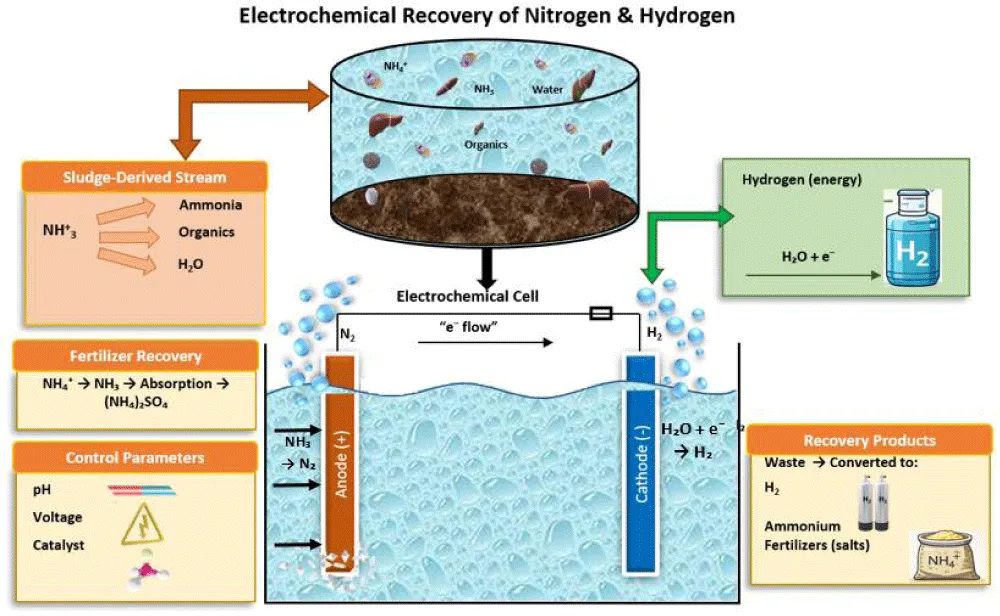
In addition to purely electrochemical approaches, bioelectrochemical systems such as microbial electrolysis cells (MECs) have demonstrated the ability to convert organic matter in sludge into hydrogen through the synergistic action of electroactive microorganisms and applied voltage. These systems enable the utilization of biodegradable substrates while enhancing overall hydrogen yields beyond those achievable through conventional anaerobic processes [67]. Despite promising advancements, challenges related to system scalability, energy efficiency, and long-term stability remain significant barriers to large-scale implementation. Nevertheless, the integration of electrochemical hydrogen production with sludge treatment processes represents a key step toward sustainable energy recovery and circular wastewater management. Figure 4, conceptual diagram showing the conversion of sludge-derived streams into hydrogen and nitrogen-based products through ammonia oxidation, hydrogen evolution, and selective ammonium recovery pathways under controlled electrochemical conditions.
Selective nitrogen recovery as ammonium salts
Selective recovery of nitrogen from biosolids in the form of ammonium salts represents a sustainable strategy for nutrient recycling and fertilizer production within wastewater treatment systems. Ammoniacal nitrogen released during sludge digestion and hydrolysis is typically present in liquid streams such as centrate and filtrate, providing an accessible source for recovery. Electrochemical processes enable the selective separation and concentration of ammonium ions (NH₄⁺) through mechanisms such as electrochemical stripping, membrane electrolysis, and electro-driven ion transport, offering advantages over conventional biological nitrogen removal processes that convert reactive nitrogen into inert nitrogen gas (N₂) [68]. One widely studied approach involves the electrochemical generation of alkaline conditions near the cathode, which promotes the conversion of ammonium ions to free ammonia (NH₃), facilitating its subsequent stripping and capture in acidic solutions to form valuable ammonium salts such as ammonium sulfate or ammonium nitrate. This method allows for the recovery of nitrogen in a concentrated and reusable form while minimizing chemical consumption compared to traditional stripping processes [68,69]. Additionally, electrochemical systems can be integrated with ion-exchange membranes to selectively transport ammonium ions across compartments, enhancing separation efficiency and enabling continuous recovery processes.
The efficiency of ammonium recovery is influenced by several operational parameters, including pH, current density, temperature, and membrane selectivity, as well as the presence of competing ions such as potassium and sodium in sludge-derived streams. Challenges remain in terms of membrane fouling, energy consumption, and process optimization for large-scale applications [70]. Nevertheless, electrochemical nitrogen recovery offers a promising alternative to conventional treatment methods by enabling the direct conversion of waste-derived nitrogen into marketable fertilizer products, thereby contributing to circular nutrient management and reducing reliance on energy-intensive synthetic fertilizer production processes.
Competing oxidation pathways and selectivity control
In electrochemical sludge valorization systems, the presence of multiple reactive species within complex biosolid matrices gives rise to competing oxidation pathways that can significantly influence process efficiency and product selectivity. During anodic reactions, target species such as ammonia and organic compounds compete with side reactions, including oxygen evolution (OER) and the formation of undesired nitrogen byproducts such as nitrate (NO₃⁻) and nitrite (NO₂⁻). These competing pathways reduce current efficiency and increase energy consumption, thereby limiting the effectiveness of electrochemical resource recovery processes [71]. The competition between direct electron transfer and indirect oxidation via reactive intermediates further complicates reaction mechanisms, particularly in systems where oxidants such as hydroxyl radicals or active chlorine species are generated in situ. Selectivity control is therefore a critical aspect of electrochemical process optimization, requiring careful tuning of operational parameters and material properties. Factors such as electrode material, applied potential, electrolyte composition, and pH strongly influence the dominant reaction pathways. For example, non-active anodes such as boron-doped diamond (BDD) tend to favor the generation of highly reactive hydroxyl radicals, promoting non-selective oxidation, whereas active anodes such as mixed metal oxides facilitate more selective electron transfer processes [72]. Similarly, controlling the applied potential within an optimal window can suppress parasitic reactions such as oxygen evolution while enhancing the desired oxidation of ammonia or organic compounds. In addition, electrolyte composition plays a significant role in determining selectivity, as the presence of chloride ions can lead to the formation of reactive chlorine species, which may either enhance oxidation efficiency or produce undesirable chlorinated byproducts. Advanced strategies such as pulsed current operation, catalyst modification, and reactor design optimization have been explored to improve selectivity and minimize energy losses [73]. Understanding and controlling these competing oxidation pathways is essential for maximizing product yield and ensuring the efficient conversion of biosolids into valuable resources within electrochemical systems.
Electro-oxidation of organic matter
Degradation of complex organics
Electro-oxidation has emerged as an effective approach for the degradation of complex organic compounds present in biosolids, particularly those that are resistant to conventional biological treatment processes. These organics, including proteins, lipids, extracellular polymeric substances (EPS), and humic-like substances, are often structurally complex and recalcitrant, limiting their biodegradability. In electrochemical systems, degradation occurs primarily through anodic oxidation, which can proceed via direct electron transfer at the electrode surface or indirectly through the generation of highly reactive oxidizing species such as hydroxyl radicals (•OH), sulfate radicals, and active chlorine species, depending on the electrolyte composition [74,75]. The non-selective nature of these reactive species enables the breakdown of high-molecular-weight organic compounds into smaller intermediates, such as short-chain carboxylic acids, and ultimately their mineralization to carbon dioxide and water under optimized conditions [76,77]. This transformation not only reduces the overall organic load but also enhances the biodegradability of sludge, facilitating downstream biological or electrochemical processes. For instance, electrochemical pretreatment has been shown to disrupt extracellular polymeric substances and increase soluble chemical oxygen demand (sCOD), thereby improving hydrolysis and subsequent conversion pathways [78].
Furthermore, the efficiency of organic degradation is strongly dependent on electrode material, current density, and operational conditions. Advanced anode materials such as boron-doped diamond (BDD) and PbO₂ exhibit high oxygen evolution overpotentials, enabling the generation of large quantities of hydroxyl radicals and enhancing oxidation efficiency [79,80]. Despite these advantages, challenges such as incomplete mineralization, formation of intermediate byproducts, and energy consumption remain critical considerations for practical implementation. Therefore, optimizing electro-oxidation pathways for complex organic degradation is essential for maximizing resource recovery and integrating these processes into sustainable sludge valorization systems.
Generation of short-chain organic acids
In addition to complete mineralization, electro-oxidation processes can be strategically controlled to promote the formation of value-added intermediates from complex organic matter present in biosolids. Partial oxidation pathways enable the conversion of high-molecular-weight and recalcitrant organics into lower-molecular-weight compounds such as volatile fatty acids (VFAs), including acetate, propionate, and butyrate, as well as other short-chain organic acids. These intermediates are of significant interest due to their role as platform chemicals for bioenergy production, bioplastics, and downstream biochemical processes [81,82]. Research on the influence of the combined effects of functional groups and chain lengths of organic matter on MH formation has been limited primarily due to the complexity of organic matter in various environments. Researchers have suggested that long-chain amino acids can promote MH formation, while short-chain amino acids have an opposite effect [83,84]. The generation of short-chain organic acids (SCOAs) from biosolids through electrochemical processes represents a promising pathway for transforming complex waste into valuable chemical intermediates. During electro-oxidation, the breakdown of macromolecular organic matter—such as proteins, lipids, and polysaccharides—leads to the formation of intermediate compounds, including acetic, propionic, and butyric acids. These SCOAs are key platform chemicals widely utilized in the production of biofuels, bioplastics, and other industrial products, making their recovery an important component of sludge valorization strategies [85,86]. Unlike complete mineralization processes, controlled electrochemical conditions can be tailored to favor partial oxidation pathways that enhance the accumulation of these acids.
The formation of SCOAs is strongly influenced by the operational conditions of the electrochemical system. Parameters such as current density, electrode material, and reaction time determine the balance between intermediate formation and further oxidation to carbon dioxide. Lower oxidative potentials and optimized reaction times have been shown to promote the accumulation of SCOAs by limiting over-oxidation, while specific electrode materials, such as graphite and dimensionally stable anodes (DSA), provide favorable conditions for selective conversion [87]. In addition, electrochemical pretreatment enhances the solubilization of particulate organics and disrupts extracellular polymeric substances (EPS), increasing substrate availability for acid formation [88]. Furthermore, coupling electrochemical processes with biological systems, such as anaerobic fermentation or bioelectrochemical reactors, can significantly improve SCOA yields by integrating electrochemical hydrolysis with microbial acidogenesis. This hybrid approach enables more efficient conversion of solubilized organics into target acids while reducing overall energy consumption [89]. Despite these advancements, challenges remain in achieving high selectivity, controlling product distribution, and optimizing energy efficiency for large-scale applications. Therefore, further research is needed to refine electrochemical conditions and integrate complementary processes to maximize the production and recovery of short-chain organic acids from biosolids.
Mineralization versus partial oxidation
Electrochemical treatment of biosolids can proceed through two primary pathways: complete mineralization and partial oxidation, each offering distinct advantages depending on the desired outcome. Mineralization involves the full conversion of organic compounds into carbon dioxide, water, and inorganic ions, typically driven by highly reactive oxidizing species such as hydroxyl radicals (•OH) generated at non-active anodes like boron-doped diamond (BDD) [22]. This approach is effective for reducing overall organic load and toxicity; however, it often requires higher energy input and may not fully capitalize on the resource recovery potential of biosolids.
In contrast, partial oxidation focuses on selectively breaking down complex organics into intermediate compounds such as short-chain organic acids and other value-added chemicals. This pathway is generally favored under controlled electrochemical conditions, including lower current densities and the use of electrode materials with moderate oxidation strength, which help prevent over-oxidation [27,50]. The balance between mineralization and partial oxidation is influenced by factors such as applied potential, reaction time, and electrolyte composition. Achieving optimal selectivity requires careful process control to maximize intermediate production while minimizing energy consumption and undesired byproducts. Therefore, tailoring electrochemical conditions to favor either mineralization or partial oxidation is essential for aligning sludge treatment processes with environmental or resource recovery objectives.
Advanced electrode materials
The performance of electrochemical sludge valorization processes is highly dependent on the properties of electrode materials, which govern reaction kinetics, selectivity, and system stability. Advanced electrode materials such as boron-doped diamond (BDD), mixed metal oxides (MMOs), and carbon-based electrodes have been extensively studied for their ability to enhance electro-oxidation efficiency. BDD electrodes are characterized by high oxygen evolution overpotentials and the generation of non-selective hydroxyl radicals, enabling effective mineralization of recalcitrant organic compounds [72,90]. In contrast, MMOs, such as Ti/IrO₂ and Ti/RuO₂, facilitate more selective oxidation pathways due to their lower overpotentials and catalytic activity, making them suitable for partial oxidation and intermediate production [91].
Carbon-based electrodes, including graphite, carbon felt, and graphene-based materials, offer advantages such as high surface area, conductivity, and cost-effectiveness. These materials are particularly relevant for applications requiring selective transformation and bioelectrochemical integration due to their favorable interaction with organic substrates and microbial communities [92]. The choice of electrode material directly influences the formation of reactive species, energy efficiency, and resistance to fouling, all of which are critical for long-term operation in sludge systems. Therefore, the development and optimization of advanced electrode materials remain a key focus area for improving the performance and scalability of electrochemical biosolids valorization technologies (Table 5).
Reaction kinetics and mechanistic pathways
Understanding reaction kinetics and mechanistic pathways is essential for optimizing electrochemical degradation and valorization of organic matter in biosolids. Electrochemical reactions typically follow complex, multi-step mechanisms involving adsorption of reactants onto the electrode surface, electron transfer, and formation of intermediate species before final product generation. The rate of these reactions is governed by factors such as current density, electrode surface properties, mass transport, and the concentration of reactive species [94]. In sludge systems, the presence of heterogeneous components further complicates reaction kinetics, introducing additional resistances related to diffusion limitations and surface fouling.
Mechanistically, electro-oxidation can proceed via direct anodic oxidation, where pollutants are oxidized at the electrode surface, or indirect oxidation, involving electrogenerated oxidants such as hydroxyl radicals, persulfates, or active chlorine species. The dominance of a particular pathway depends on electrode material and operating conditions, which influence the generation and reactivity of these species [48,95]. Kinetic models, including pseudo-first-order and mass transfer-controlled models, are often employed to describe degradation behavior and evaluate system performance. A thorough understanding of these kinetic and mechanistic aspects enables the design of more efficient electrochemical systems, facilitating improved selectivity, reduced energy consumption, and enhanced recovery of valuable products from biosolids.
Bioelectrochemical systems for sludge valorization
Microbial electrolysis cells (mecs) for hydrogen production
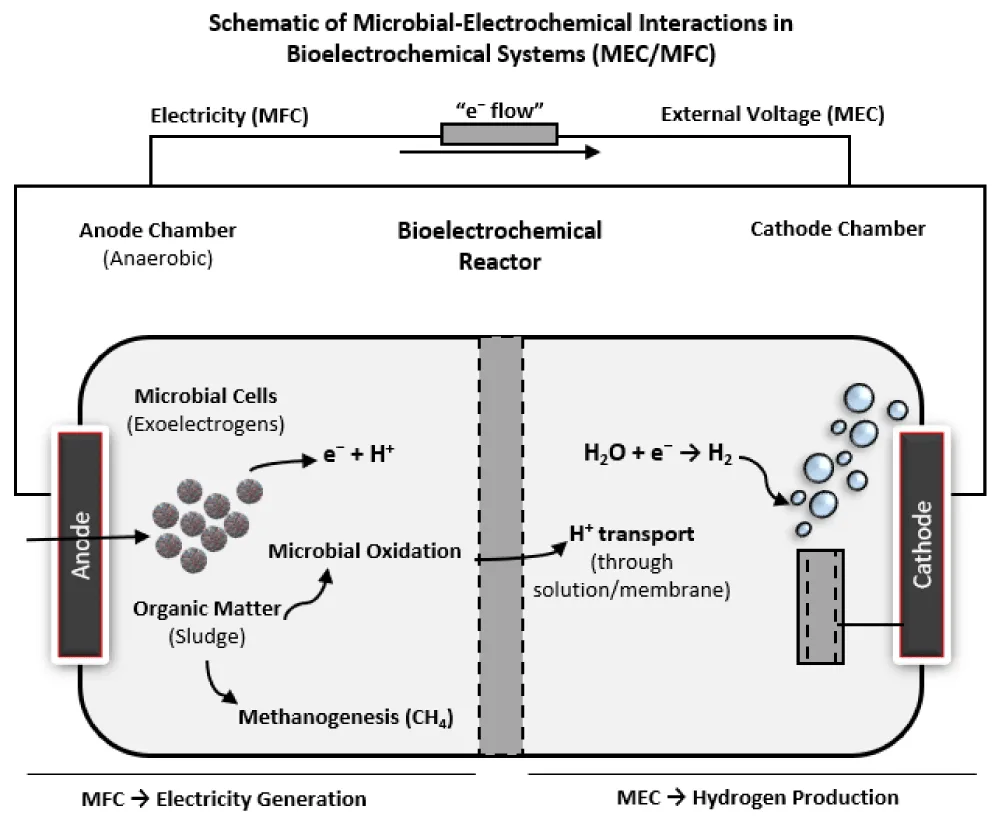
Microbial electrolysis cells (MECs) have emerged as a promising bioelectrochemical technology for converting organic matter in biosolids into hydrogen, integrating biological and electrochemical processes within a single system. In MECs, electroactive microorganisms oxidize biodegradable organic substrates present in sludge at the anode, releasing electrons and protons. These electrons are transferred through an external circuit to the cathode, where hydrogen is produced via the hydrogen evolution reaction (HER) under the application of a small external voltage [96]. Compared to conventional water electrolysis, MECs require significantly lower energy input due to the contribution of microbial metabolism, making them an energy-efficient pathway for hydrogen production from waste streams. The performance of MECs is strongly influenced by substrate characteristics, microbial community composition, electrode materials, and reactor configuration. Sludge-derived substrates, particularly those pretreated through electrochemical or thermal processes, enhance solubilization and improve bioavailability, thereby increasing hydrogen yields [97]. Additionally, the use of high-surface-area electrodes such as carbon felt and stainless steel mesh promotes biofilm formation and facilitates efficient electron transfer between microorganisms and the electrode surface. Despite these advantages, challenges such as methanogenic competition, electrode fouling, and system scalability remain critical barriers to large-scale implementation [67]. Recent research has focused on improving MEC performance through advanced electrode design, optimized operational conditions, and microbial community engineering. Strategies such as suppressing methanogenesis, enhancing anodic biofilm activity, and integrating MECs with other treatment processes have demonstrated significant improvements in hydrogen recovery efficiency. As a result, MECs represent a key technology for sustainable energy recovery from biosolids, aligning with circular economy principles and low-carbon wastewater treatment systems.
Microbial fuel cells (mfcs) and energy recovery
Microbial fuel cells (MFCs) represent an important class of bioelectrochemical systems capable of directly converting the chemical energy stored in organic matter within biosolids into electrical energy. In MFCs, electroactive microorganisms oxidize biodegradable substrates at the anode under anaerobic conditions, releasing electrons and protons. The electrons are transferred through an external circuit to the cathode, generating an electric current, while protons migrate through the dialysis solution or a proton exchange membrane to complete the circuit [98]. At the cathode, reduction reactions typically involve oxygen reduction to water, although alternative electron acceptors may also be employed depending on system design. The application of MFCs to sludge-derived substrates offers a dual benefit of waste stabilization and energy recovery. Organic matter present in biosolids, particularly soluble fractions obtained through pretreatment, can be effectively utilized by electroactive microbial consortia, leading to simultaneous reduction in chemical oxygen demand (COD) and electricity generation [99]. However, compared to microbial electrolysis cells, MFCs generally produce lower energy outputs due to thermodynamic and kinetic limitations, as well as internal resistances within the system. Factors such as electrode material, reactor configuration, substrate concentration, and microbial community structure play a crucial role in determining system performance and power density [100]. Despite these limitations, MFCs have demonstrated significant potential for integration into wastewater treatment systems, particularly as energy-neutral or energy-positive technologies. Advances in electrode materials, such as the use of carbon-based and nanostructured electrodes, have improved electron transfer efficiency and biofilm development. Additionally, innovations in reactor design, including air-cathode configurations and stacked systems, have enhanced scalability and operational feasibility [101]. While challenges related to low power density, membrane fouling, and long-term stability persist, MFCs provide a promising platform for sustainable energy recovery from biosolids and contribute to the broader goal of resource-efficient wastewater management.
Synergistic microbial–electrochemical interactions
The effectiveness of bioelectrochemical systems for biosolids valorization relies heavily on the synergistic interactions between microbial communities and electrochemical processes. In these systems, electroactive microorganisms—commonly referred to as exoelectrogens—facilitate the oxidation of organic substrates and transfer electrons to the anode either directly through conductive pili or indirectly via soluble redox mediators [102]. This biologically driven electron transfer is coupled with electrochemical reactions at the electrodes, enabling the conversion of complex organic matter into energy carriers such as hydrogen or electricity, as well as value-added chemicals. The interaction between microbial metabolism and electrode surfaces is influenced by several factors, including biofilm formation, electrode material properties, and operational conditions. Conductive and high-surface-area materials, such as carbon felt and modified electrodes, enhance microbial attachment and electron transfer efficiency, thereby improving system performance [24,102]. Furthermore, electrochemical conditions such as applied potential can influence microbial activity by altering metabolic pathways and selectively enriching specific microbial populations. For instance, controlled potentials can suppress methanogenic activity while promoting exoelectrogenic bacteria, thereby enhancing hydrogen or electricity production efficiency. In addition to direct interactions, bioelectrochemical systems benefit from integrated pathways where electrochemical pretreatment enhances substrate availability by solubilizing complex organics, which are subsequently utilized by microbial communities. This coupling enables improved degradation of recalcitrant compounds and facilitates the production of intermediates such as volatile fatty acids, which can further serve as substrates for energy recovery processes [103]. Despite these advantages, maintaining stable microbial–electrode interactions over long-term operation remains a challenge due to biofouling, microbial competition, and system instability. A deeper understanding of these synergistic mechanisms is therefore essential for optimizing bioelectrochemical systems and maximizing resource recovery from biosolids.
Challenges and scale-up of bioelectrochemical systems
Despite significant advancements in bioelectrochemical systems such as microbial fuel cells (MFCs) and microbial electrolysis cells (MECs), several technical and economic challenges hinder their large-scale implementation for biosolids valorization. One of the primary limitations is the relatively low power density and hydrogen production rates achieved in laboratory-scale systems, which are often insufficient for practical applications. These limitations are largely attributed to internal resistances, inefficient electron transfer, and mass transport constraints within complex sludge matrices [104]. Scaling up bioelectrochemical systems introduces additional challenges related to reactor design, electrode spacing, and uniform current distribution. Larger systems often experience increased ohmic losses and reduced performance due to difficulties in maintaining optimal conditions across the entire reactor volume. Furthermore, the cost of materials, particularly electrodes and membranes, remains a significant barrier to commercialization. Membrane fouling, electrode degradation, and biofilm instability also contribute to increased operational and maintenance costs over extended periods [100]. Another critical challenge is the variability of sludge composition, which affects microbial activity, substrate availability, and overall system performance. The presence of toxic compounds, heavy metals, and competing microbial populations can inhibit electroactive microorganisms and reduce process efficiency. Additionally, achieving stable and reproducible performance under real wastewater conditions remains a key concern for practical deployment. To address these challenges, ongoing research has focused on developing low-cost and durable electrode materials, optimizing reactor configurations, and integrating bioelectrochemical systems with existing wastewater treatment processes. Innovations such as membrane-less designs, modular reactor systems, and hybrid electrochemical–biological approaches have shown promise in improving scalability and economic feasibility [105]. Nevertheless, further advancements in system design, process optimization, and techno-economic analysis are required to transition these technologies from laboratory-scale demonstrations to full-scale industrial applications.
Recent studies have demonstrated the considerable potential of microbial electrochemical systems for simultaneous wastewater treatment and resource recovery. Microbial electrolysis cells (MECs) have reported hydrogen production rates ranging from approximately 0.5 to 3.1 m³ H₂ m⁻³ reactor day⁻¹, with coulombic efficiencies frequently exceeding 70–90% under optimized operating conditions [67,98]. Similarly, microbial fuel cells (MFCs) have achieved power densities ranging from 500 to over 2,000 mW m⁻² depending on reactor configuration, electrode materials, and substrate characteristics [100]. Despite these encouraging performance metrics, significant variability exists among studies due to differences in feedstock composition, reactor design, operating conditions, and microbial community structure. Consequently, direct comparison of system performance remains challenging, highlighting the need for standardized testing protocols and pilot-scale validation to facilitate technology scale-up and commercialization. Figure 5 explains the microbial metabolism-driven electron generation, which is harnessed through electrochemical systems for hydrogen production or electricity generation.
High-value product generation from biosolids
Hydrogen as a clean energy carrier
In recent years, many environmental problems have arisen due to the large consumption of fossil fuels as energy sources [106,107]. The transition to a hydrogen-based economy garners the most political support as a vast energy storage solution aimed at maximizing the utilization of renewable energy sources (RES) and reducing the carbon footprint of energy-intensive industries. Leveraging hydrogen as an energy carrier and efficient storage medium presents a viable alternative owing to its abundant availability of various chemical substances such as hydrocarbons, hydrogen sulfides, and water [108–110]. Presently, the annual hydrogen production constitutes a multimillion-dollar market driven by the necessity for clean energy to satisfy the substantial demand for food and various commodities. In 2020, the total demand for hydrogen reached 90 million metric tons (Mt), with 70 Mt allocated for pure hydrogen usage and the remaining 20 Mt utilized for other purposes [108,111]. Hydrogen is widely recognized as a clean and versatile energy carrier with significant potential to support the transition toward low-carbon energy systems. In the context of biosolids valorization, electrochemical and bioelectrochemical processes enable the conversion of organic matter and ammonia present in sludge into hydrogen, providing a sustainable alternative to conventional fossil fuel-based hydrogen production methods. Unlike steam methane reforming, which is carbon-intensive, hydrogen generation from sludge-derived streams through electrolysis or microbial electrolysis cells (MECs) offers the dual benefit of waste treatment and renewable energy production [67,112].
Electrochemical hydrogen production in these systems primarily occurs via the hydrogen evolution reaction (HER) at the cathode, where water or protons are reduced to form hydrogen gas. The integration of alternative anodic reactions, such as ammonia oxidation or organic electro-oxidation, significantly reduces the overall energy requirement compared to conventional water electrolysis, thereby improving process efficiency [113]. Furthermore, bioelectrochemical systems enhance hydrogen recovery by utilizing electroactive microorganisms to oxidize biodegradable substrates, contributing electrons that drive cathodic hydrogen production under lower applied voltages. From a sustainability perspective, hydrogen produced from biosolids represents a carbon-neutral or even carbon-negative energy pathway when coupled with renewable electricity sources. Additionally, the decentralized nature of wastewater treatment facilities provides opportunities for on-site hydrogen generation, reducing transportation and storage challenges associated with hydrogen supply chains [114]. However, challenges related to system efficiency, gas purity, and scalability must be addressed to enable widespread adoption. Advances in catalyst development, reactor design, and process integration are expected to further enhance hydrogen production from sludge-derived streams, positioning it as a key component of circular and sustainable wastewater treatment systems.
Fertilizer production and nutrient recycling
The recovery of nutrients from biosolids for fertilizer production represents a key pillar of sustainable wastewater management and circular economy practices. Biosolids are inherently rich in essential plant nutrients, particularly nitrogen and phosphorus, which are traditionally lost during conventional treatment processes or discharged into the environment, contributing to eutrophication. Electrochemical and bioelectrochemical technologies provide innovative pathways for selectively recovering these nutrients in reusable forms, thereby reducing reliance on energy-intensive synthetic fertilizer production and promoting resource efficiency [37,115]. Nitrogen recovery is primarily achieved through the extraction of ammonium from sludge-derived streams, followed by its conversion into valuable fertilizer products such as ammonium sulfate or ammonium nitrate. Electrochemical methods, including ammonia stripping, membrane electrolysis, and ion transport systems, enable efficient concentration and recovery of ammonium ions under controlled conditions [68]. Similarly, phosphorus recovery is commonly facilitated through electrochemically induced precipitation processes, leading to the formation of struvite (MgNH₄PO₄·6H₂O) or calcium phosphate compounds, which are widely used as slow-release fertilizers [25].
In addition to direct nutrient recovery, electrochemical pretreatment enhances the release of bound nutrients from complex organic matrices, increasing their availability for subsequent recovery processes. This is particularly important in biosolids, where a significant fraction of nutrients is present in particulate or chemically bound forms. Furthermore, integrating nutrient recovery technologies with existing wastewater treatment infrastructure enables decentralized fertilizer production, contributing to local resource cycles and reducing environmental impacts associated with nutrient losses [28]. Despite these advantages, challenges such as process optimization, energy consumption, and product purity must be addressed to ensure economic feasibility and regulatory compliance. The presence of contaminants, including heavy metals and organic micropollutants, may affect the quality of recovered fertilizers and requires careful monitoring and treatment. Nevertheless, advancements in electrochemical technologies and system integration continue to improve nutrient recovery efficiency, positioning biosolids as a valuable resource for sustainable fertilizer production and closing the nutrient loop in wastewater treatment systems.
Metal recovery and resource extraction
In addition to energy and nutrient recovery, biosolids represent a potential secondary resource for the extraction of valuable metals, including iron, copper, zinc, and trace amounts of critical elements such as nickel and rare earth elements. These metals originate from domestic, industrial, and urban runoff sources and often accumulate in wastewater treatment sludge due to adsorption, precipitation, and complexation processes. Conventional sludge disposal methods typically overlook this resource potential, leading to the loss of valuable materials and posing environmental risks associated with metal leaching. Electrochemical technologies offer promising pathways for selective metal recovery and resource extraction, enabling the transformation of biosolids into a source of recoverable inorganic materials [34,116]. Electrochemical metal recovery is primarily achieved through processes such as electrodeposition, electrocoagulation, and electroleaching. In electrodeposition, dissolved metal ions are reduced at the cathode to form solid metallic deposits, allowing for selective recovery based on reduction potentials. This approach is particularly effective for metals such as copper, nickel, and zinc, which exhibit favorable electrochemical properties [117]. Electrocoagulation, on the other hand, involves the in situ generation of coagulants (e.g., Fe²⁺ or Al³⁺) from sacrificial electrodes, facilitating the aggregation and removal of metal species from sludge matrices. Additionally, electroleaching processes can enhance the solubilization of bound metals, increasing their availability for subsequent recovery [118].
The efficiency of metal recovery is influenced by several factors, including sludge composition, pH, applied potential, and competing reactions within the electrochemical system. Selectivity remains a key challenge, particularly in complex matrices where multiple metal ions coexist and may interfere with each other’s recovery pathways. Furthermore, the presence of organic matter can hinder metal extraction by forming stable complexes or causing electrode fouling. Despite these challenges, recent advancements in electrode materials, process optimization, and hybrid treatment approaches have improved the feasibility of electrochemical metal recovery from biosolids [119]. From a sustainability perspective, recovering metals from biosolids not only reduces environmental contamination but also contributes to resource conservation and circular economy goals. Integrating metal recovery with energy and nutrient recovery processes can further enhance the overall value proposition of biosolids valorization systems. As research continues to advance, electrochemical resource extraction is expected to play an increasingly important role in transforming wastewater treatment plants into resource recovery facilities.
Comparative assessment with conventional technologies
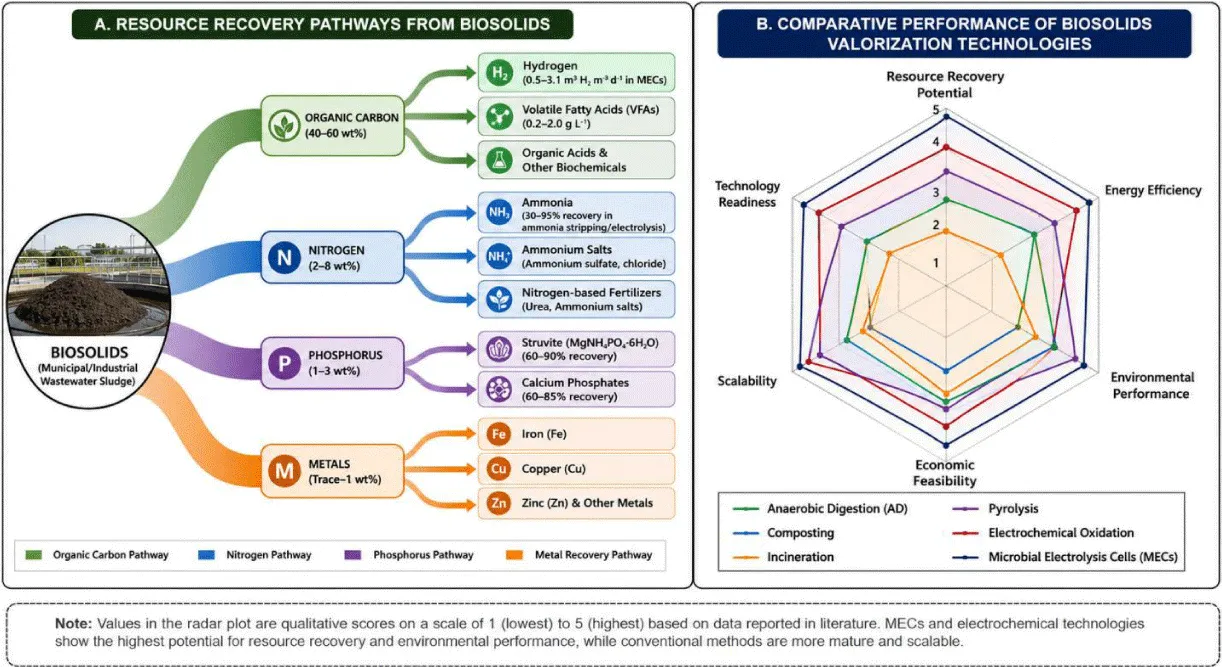
Table 6 presents a comparative assessment of conventional and emerging technologies for biosolids treatment, highlighting key differences in process mechanisms, environmental impacts, energy efficiency, and resource recovery potential. Conventional approaches such as biological and thermal methods are well-established and effective for stabilization and volume reduction; however, they often fall short in maximizing resource recovery and minimizing environmental footprints. In contrast, electrochemical and bioelectrochemical systems offer promising alternatives by enabling targeted recovery of energy carriers and valuable products under controlled conditions. This comparison underscores the trade-offs between treatment efficiency, sustainability, and economic feasibility, while also emphasizing the growing potential of electrochemical technologies to support circular and resource-oriented wastewater management strategies.
Figure 6: Integrated overview of biosolids valorization pathways and comparative sustainability performance of major treatment technologies. The left panel illustrates the conversion of biosolids constituents into hydrogen, nutrient-based fertilizers, organic chemicals, and recoverable metals through electrochemical and bioelectrochemical processes. The right panel provides a qualitative comparison of conventional and emerging biosolids treatment technologies based on resource recovery potential, energy efficiency, environmental performance, economic feasibility, scalability, and technology readiness.
Reactor design and process engineering considerations
Scale-up challenges
Despite promising laboratory-scale performance, the scale-up of electrochemical and bioelectrochemical systems for biosolids valorization remains a significant challenge. One of the primary limitations arises from increased internal resistance and non-uniform current distribution in larger reactors, which can reduce overall efficiency and hinder consistent performance across the system. As reactor size increases, maintaining effective electron transfer pathways and minimizing ohmic losses becomes more complex, particularly in heterogeneous sludge environments where mass transport limitations are pronounced [26]. Another critical challenge is reactor design optimization, including electrode spacing, configuration, and surface area scaling. While high surface-area electrodes enhance reaction rates at the laboratory scale, replicating these conditions in large systems often leads to engineering and economic constraints. Additionally, scaling up requires careful consideration of hydrodynamics and mixing, as inadequate mass transfer can limit substrate availability and reduce reaction kinetics [128]. Material costs also pose a barrier to commercialization, particularly for advanced electrode materials and ion-exchange membranes. The durability and long-term performance of these components must be ensured under real wastewater conditions, where fouling and chemical degradation are prevalent. Furthermore, system integration with existing wastewater treatment infrastructure introduces additional complexities related to process compatibility and operational stability [129]. To address these challenges, recent research has focused on the development of scalable reactor configurations, including modular designs, stacked electrode systems, and membrane-less architectures. These approaches aim to reduce costs, improve current distribution, and enhance operational flexibility. Nevertheless, further advancements in reactor engineering, coupled with pilot-scale demonstrations, are essential to bridge the gap between laboratory research and full-scale implementation of electrochemical biosolids valorization technologies.
Electrode durability and fouling
Electrode durability and fouling represent critical challenges in the long-term operation of electrochemical and bioelectrochemical systems for biosolids valorization. In complex sludge matrices, electrodes are continuously exposed to high concentrations of organic matter, suspended solids, inorganic precipitates, and microbial communities, all of which contribute to surface fouling and performance degradation. Fouling can occur through multiple mechanisms, including the adsorption of organic compounds, deposition of inorganic scales such as calcium and magnesium salts, and biofilm overgrowth, which collectively hinder electron transfer and reduce active surface area [130]. The accumulation of foulants on electrode surfaces leads to increased charge transfer resistance, reduced catalytic activity, and ultimately a decline in system efficiency. In anodic systems, excessive biofilm thickness or the presence of non-electroactive microorganisms can limit effective electron transfer, while at the cathode, scaling and catalyst poisoning can significantly impair reactions such as the hydrogen evolution reaction (HER) [100]. Furthermore, electrode materials may undergo chemical or electrochemical degradation over time, particularly under harsh operating conditions involving high potentials, oxidizing species, or fluctuating pH levels. To mitigate these challenges, various strategies have been explored, including the development of fouling-resistant and self-cleaning electrode materials, surface modifications to enhance hydrophilicity or reduce adhesion, and periodic cleaning techniques such as polarity reversal or chemical washing [131]. The use of robust materials such as carbon-based electrodes, stainless steel, and advanced coatings has also been shown to improve durability under real wastewater conditions. Additionally, optimizing operational parameters, including current density and flow conditions, can help minimize fouling and extend electrode lifespan. Despite these advancements, achieving long-term stability and maintaining consistent performance remain key challenges for large-scale deployment. Continued research into material innovation, fouling mechanisms, and maintenance strategies is essential to enhance electrode longevity and ensure the economic viability of electrochemical biosolids treatment systems.
Sludge handling and pretreatment requirements
Effective sludge handling and pretreatment are essential for improving the performance of electrochemical and bioelectrochemical systems used in biosolids valorization. Raw biosolids typically contain high moisture content, suspended solids, complex organic structures, and inorganic contaminants that can limit mass transfer, reduce electrode accessibility, and inhibit electrochemical reactions. The heterogeneous nature of sludge also restricts the direct conversion of organic and nutrient components, making pretreatment a critical step to enhance substrate availability and process efficiency [132]. Pretreatment methods are commonly employed to disrupt microbial cell walls, solubilize extracellular polymeric substances (EPS), and release bound organic matter into the liquid phase. Physical approaches such as ultrasonication, thermal hydrolysis, and mechanical disintegration have been shown to increase soluble chemical oxygen demand (sCOD), thereby improving the accessibility of biodegradable substrates for subsequent electrochemical conversion [133]. Chemical pretreatments, including alkaline or acid conditioning, can further enhance nutrient release and facilitate the recovery of ammonium and phosphate species from sludge-derived streams. Electrochemical pretreatment itself has also gained attention as a means of simultaneously disintegrating sludge flocs and initiating oxidation reactions that improve downstream treatment performance [78].
In addition to improving reaction kinetics, proper sludge handling is necessary to ensure stable reactor operation. High solids concentrations can lead to clogging, excessive viscosity, and poor mixing within electrochemical reactors, reducing overall process efficiency. Dewatering and phase separation are therefore often required to generate liquid fractions suitable for electrochemical treatment while concentrating solid residues for complementary processing routes [134]. However, pretreatment steps also introduce additional energy and operational costs, making process optimization essential for balancing performance improvements with economic feasibility. Future research should focus on integrating low-energy pretreatment methods with electrochemical systems to maximize resource recovery while minimizing energy consumption. Optimized sludge conditioning strategies can play a crucial role in enhancing the practicality and scalability of biosolids valorization technologies within modern wastewater treatment facilities.
Modular and distributed systems
The development of modular and distributed electrochemical systems has emerged as a promising strategy to address scalability and implementation challenges associated with biosolids valorization technologies. Unlike conventional centralized wastewater treatment infrastructures, modular systems are designed as compact, flexible units that can be deployed at various scales, enabling decentralized treatment and resource recovery. This approach offers significant advantages in terms of operational flexibility, ease of maintenance, and adaptability to varying sludge compositions and flow rates [135]. Modular electrochemical and bioelectrochemical reactors can be configured in parallel or series arrangements, allowing for incremental scaling without the need for large, capital-intensive installations. Such designs facilitate improved control over reaction conditions, including current distribution, mass transfer, and residence time, which are critical for optimizing system performance. Additionally, distributed systems enable localized recovery of valuable products such as hydrogen, fertilizers, and treated water, reducing the need for transportation and associated energy costs [136]. Another key advantage of modular systems is their compatibility with renewable energy sources, such as solar and wind power, which can be integrated to drive electrochemical processes in a sustainable manner. This is particularly relevant for remote or resource-limited settings, where decentralized treatment solutions can enhance resilience and reduce dependence on centralized infrastructure. Furthermore, modular designs simplify system maintenance and allow for easier replacement or upgrading of individual components, improving overall system reliability and lifespan. Despite these benefits, challenges related to system integration, process optimization, and economic feasibility remain. Ensuring consistent performance across multiple modules, managing variability in feed composition, and optimizing control strategies are critical factors that require further investigation. Nevertheless, modular and distributed electrochemical systems represent a forward-looking approach for the practical implementation of biosolids valorization technologies, supporting the transition toward sustainable and resource-efficient wastewater management.
Real-world implementation challenges and practical feasibility
Although electrochemical and bioelectrochemical technologies have demonstrated considerable potential for biosolids valorization at laboratory and pilot scales, their widespread implementation faces several practical challenges. Variations in biosolids composition among wastewater treatment facilities can significantly affect process performance, product yields, and operational stability. In addition, high capital investments associated with electrochemical reactors, electrodes, membranes, and power supply systems may limit economic feasibility, particularly for small and medium-sized treatment plants [118,130]. Operational challenges such as electrode fouling, maintenance requirements, and energy consumption further influence long-term reliability and cost-effectiveness. Moreover, integrating electrochemical technologies into existing wastewater treatment infrastructure requires careful consideration of process compatibility, regulatory compliance, and market demand for recovered products such as hydrogen and nutrient-based fertilizers [21]. Therefore, future efforts should focus on pilot-scale demonstrations, standardized performance assessments, and integrated techno-economic evaluations to facilitate the transition of these technologies from research laboratories to full-scale resource recovery facilities.
Techno-economic and life-cycle perspective
Operational cost analysis, energy demand and renewable integration
The economic feasibility of electrochemical and bioelectrochemical systems for biosolids valorization is strongly influenced by both capital (CAPEX) and operational expenditures (OPEX). Capital costs are primarily associated with reactor construction, electrode materials, power supply units, and auxiliary components such as membranes and control systems. Among these, electrode materials and ion-exchange membranes represent significant cost drivers, particularly when advanced materials such as boron-doped diamond or noble metal catalysts are used [137]. Operational costs are dominated by electricity consumption, maintenance requirements, and periodic replacement of system components. Compared to conventional sludge treatment methods, electrochemical systems may exhibit higher upfront costs but offer potential long-term economic benefits through resource recovery, including hydrogen production, nutrient recycling, and reduced sludge disposal costs. Process optimization, material innovation, and system integration are essential to improve cost competitiveness and enable large-scale adoption.
Energy consumption is a key factor determining the sustainability of electrochemical biosolids valorization processes. While these systems can be energy-intensive, particularly under high current densities, the integration of alternative anodic reactions such as ammonia oxidation or organic electro-oxidation can significantly reduce overall energy requirements compared to conventional water electrolysis [69,138]. The coupling of electrochemical systems with renewable energy sources, including solar and wind power, presents a promising pathway to minimize carbon emissions and enhance process sustainability. Decentralized wastewater treatment facilities are particularly well-suited for such integration, enabling on-site energy utilization and reducing dependence on fossil-based electricity. However, variability in renewable energy supply and the need for energy storage solutions remain challenges that must be addressed for reliable operation.
Life-Cycle Assessment (LCA)
Life-cycle assessment (LCA) provides a comprehensive framework for evaluating the environmental impacts of biosolids valorization technologies across their entire life cycle, from material extraction and system construction to operation and end-product utilization. In the context of electrochemical and bioelectrochemical systems, LCA is essential for quantifying trade-offs between energy consumption, greenhouse gas emissions, resource recovery, and environmental benefits. Unlike conventional treatment processes that primarily focus on waste stabilization, electrochemical approaches introduce additional considerations related to electricity use, electrode manufacturing, and system maintenance [139,140]. Studies have shown that the environmental performance of these systems is highly dependent on the source of electricity. When powered by fossil-based energy, the overall carbon footprint may offset the environmental benefits of resource recovery. In contrast, coupling electrochemical processes with renewable energy sources can significantly reduce greenhouse gas emissions and improve sustainability metrics [141]. Additionally, the recovery of valuable products such as hydrogen, fertilizers, and metals can provide environmental credits by displacing conventional production pathways, thereby enhancing the overall life-cycle performance.
Figure 7 illustrates an integrated framework linking techno-economic analysis and life-cycle assessment within defined system boundaries, highlighting inputs, reactor processes, resource recovery outputs, and their associated economic metrics (CAPEX, OPEX, ROI) and environmental impacts to support sustainable decision-making. Another important aspect of LCA is the consideration of avoided impacts associated with reduced sludge disposal, including lower landfill usage, decreased incineration emissions, and minimized nutrient discharge into water bodies. However, uncertainties related to system boundaries, scaling assumptions, and data availability can affect the reliability of LCA results. Therefore, standardized methodologies and real-world data from pilot- and full-scale systems are necessary to improve the accuracy of environmental assessments. Overall, LCA plays a crucial role in identifying sustainable design strategies and guiding the development of electrochemical biosolids valorization systems toward environmentally and economically viable solutions. Future research should focus on integrating LCA with techno-economic analysis to support decision-making and accelerate the transition toward circular wastewater treatment systems.
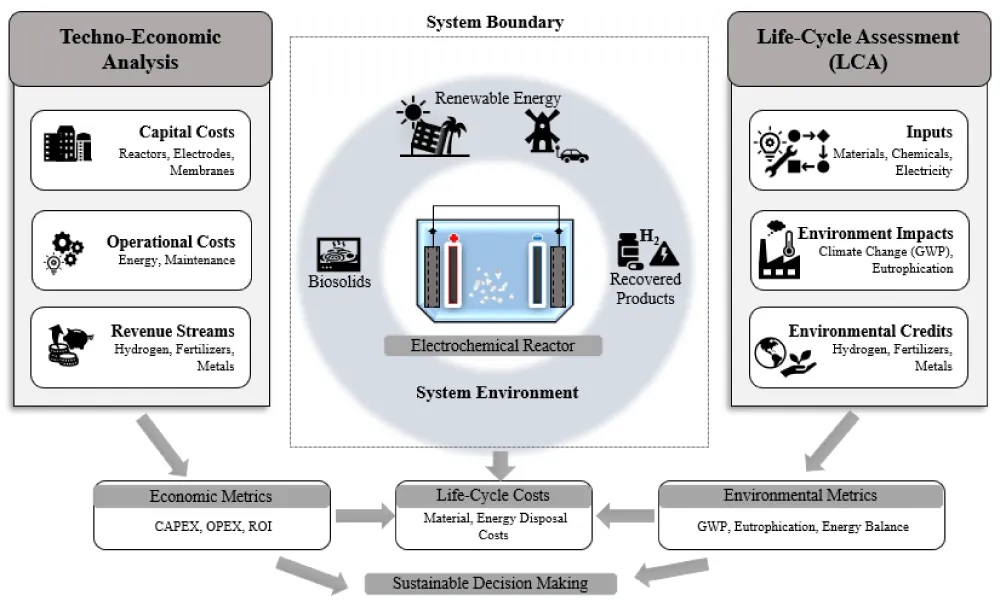
Challenges, research gaps, and future directions
Despite the significant progress achieved in electrochemical and bioelectrochemical biosolids valorization, considerable variations in reported performance metrics remain across the literature. Differences in feedstock characteristics, reactor configurations, electrode materials, operating conditions, and evaluation methodologies often complicate direct comparison among studies and may contribute to conflicting conclusions regarding process efficiency and economic feasibility. Furthermore, many emerging technologies remain at laboratory or pilot scales, creating uncertainty regarding long-term performance, operational reliability, and commercial viability. Addressing these challenges is essential for advancing biosolids valorization technologies toward large-scale implementation.
The advancement of electrochemical and bioelectrochemical biosolids valorization technologies is still accompanied by several critical challenges and research gaps that must be addressed to enable full-scale implementation and commercialization. A major limitation lies in selectivity and product optimization, where controlling reaction pathways to favor desired products such as hydrogen, ammonia-derived fertilizers, or specific organic acids remains difficult in complex sludge matrices containing competing reactions and heterogeneous substrates. Another key concern is long-term system stability, as performance degradation due to electrode fouling, microbial community shifts, and material corrosion continues to hinder consistent operation over extended periods, particularly under real wastewater conditions. From a broader systems perspective, the development of integrated biorefinery concepts is gaining attention, where biosolids are no longer treated as waste but as multi-feedstock resources for simultaneous recovery of energy, nutrients, metals, and chemicals within a unified processing framework. In parallel, digitalization and smart process control are emerging as transformative enablers, with tools such as real-time monitoring, machine learning, and predictive modeling offering the potential to optimize reactor performance, reduce energy consumption, and improve process reliability. Finally, pathways toward commercialization remain dependent on overcoming economic and engineering barriers, including reducing capital costs, improving scalability, ensuring regulatory compliance, and demonstrating long-term techno-economic viability at pilot and industrial scales. Collectively, these challenges define the current research frontier and highlight the need for integrated, interdisciplinary approaches to transition biosolids valorization technologies from laboratory innovation to sustainable industrial practice.
Conclusion
This review demonstrates that electrochemical and bioelectrochemical technologies offer a transformative pathway for converting biosolids from wastewater treatment into valuable resources, including hydrogen, nutrient-based fertilizers, and recoverable metals. By enabling controlled reaction environments and compatibility with renewable energy integration, these systems present clear advantages over conventional biological and thermochemical methods in terms of resource recovery and process flexibility. However, challenges related to reaction selectivity, electrode durability, sludge variability, and large-scale implementation continue to limit practical deployment. Techno-economic feasibility and life-cycle impacts further play a decisive role in assessing their sustainability. Future progress will depend on advances in reactor design, material development, and integrated biorefinery approaches, supported by standardized assessment frameworks. Overall, electrochemical biosolids valorization holds strong potential to support circular economy goals and redefine wastewater treatment as a resource recovery platform.
Author contributions
Conceptualization, S.P; methodology, S.P; validation, S.P; writing—original draft preparation, S.P; writing—review and editing, S.P; supervision, G.G.B. All authors have read and agreed to the published version of the manuscript.
Funding: This research received no external funding.
Institutional Review Board Statement: Not Applicable.
Informed Consent Statement: Not Applicable.
Data Availability Statement: This study did not involve creating new data; therefore, data sharing does not apply.
Acknowledgement
The author would like to thank the Institute for Sustainability & Circular Economy and the Whitacre Endowed Chair in Sustainable Energy, Texas Tech University, for providing the academic environment and resources that supported this effort. The author acknowledges the use of AI-assisted tools, including QuillBot, Grammarly, and ChatGPT, for language editing, paraphrasing, and improving the clarity and organization of the manuscript, and takes full responsibility for the content of the published article.
- Botte GG, Donneys-Victoria D, Alvarez-Pugliese CE, Adjei J, Sahin S, Wilson NW, et al. Innovative approach to sustainable fertilizer production: leveraging electrically assisted conversion of sewage sludge for nutrient recovery. ACS Omega. 2024. Available from: https://doi.org/10.1021/acsomega.4c07926
- Mayer BK, Baker LA, Boyer TH, Drechsel P, Gifford M, Hanjra MA, Parameswaran P, Stoltzfus J, Westerhoff P, Rittmann BE. Total value of phosphorus recovery. Environ Sci Technol. 2016;50(12):6606-6620.Available from: https://doi.org/10.1021/acs.est.6b01239
- Turovskiĭ IS, Mathai PK. Wastewater sludge processing. Hoboken (NJ): John Wiley & Sons; 2006. 354 p.
- Mininni G, Laera G, Bertanza G, Canato M, Sbrilli A. Mass and energy balances of sludge processing in reference and upgraded wastewater treatment plants. Environ Sci Pollut Res Int. 2015;22(10):7203-7215. Available from: https://doi.org/10.1007/s11356-014-4013-2
- Chojnacka K, Skrzypczak D, Szopa D, Izydorczyk G, Moustakas K, Witek-Krowiak A. Management of biological sewage sludge: fertilizer nitrogen recovery as the solution to fertilizer crisis. J Environ Manage. 2023;326:116602. Available from: https://doi.org/10.1016/j.jenvman.2022.116602
- Stramer Y, Brenner A, Cohen SB, Oron G. Selection of a multi-stage system for biosolids management applying genetic algorithm. Environ Sci Technol. 2010;44(14):5503-5508. Available from: https://doi.org/10.1021/es902981t
- Wijesekara H, Colyvas K, Rippon P, Hoang SA, Bolan NS, Chandra Manna M, et al. Carbon sequestration value of biosolids applied to soil: a global meta-analysis. J Environ Manage. 2021;284:112008. Available from: https://doi.org/10.1016/j.jenvman.2021.112008
- EPA (US Environmental Protection Agency). Basic information about sewage sludge and biosolids. Biosolids Program. Available from: https://www.epa.gov/biosolids/basic-information-about-sewage-sludge-and-biosolids. Accessed 23 June 2026.
- Elgarahy AM, Eloffy MG, Priya AK, Yogeshwaran V, Yang Z, Elwakeel KZ, Lopez-Maldonado EA. Biosolids management and utilizations: a review. J Clean Prod. 2024;451:141974. Available from: https://doi.org/10.1016/j.jclepro.2024.141974
- Ghorbani M, Konvalina P, Walkiewicz A, Neugschwandtner RW, Kopecký M, Zamanian K, et al. Feasibility of biochar derived from sewage sludge to promote sustainable agriculture and mitigate GHG emissions—a review. Int J Environ Res Public Health. 2022;19(19):12983. Available from: https://doi.org/10.3390/ijerph191912983
- United States Environmental Protection Agency. Basic information about sewage sludge and biosolids. Available from: https://www.epa.gov/biosolids/basic-information-about-sewage-sludge-and-biosolids
- Wang Y, Zheng K, Guo H, Tong Y, Zhu T, Liu Y. Unveiling the mechanisms of how vivianite affects anaerobic digestion of waste activated sludge. Bioresour Technol. 2022;343:126045. Available from: https://doi.org/10.1016/j.biortech.2021.126045
- Anderson JH. Unveiling the roles of biofilm in reducing N₂O emission in a nitrifying integrated fixed-film activated sludge (IFAS) system. Water Res. 2023;243:120326. Available from: https://doi.org/10.1016/j.watres.2023.120326
- Tawfik A, Mohsen M, Ismail S, Alhajeri NS, Osman AI, Rooney DW. Methods to alleviate the inhibition of sludge anaerobic digestion by emerging contaminants: a review. Environ Chem Lett. 2022;20:3811–3836. Available from: https://doi.org/10.1007/s10311-022-01465-2
- Huang W, Wang F, Xia X, Fang S, Cheng X, Zhou A, et al. Tannic acid modulation of substrate utilization, microbial community, and metabolic traits in sludge anaerobic fermentation for volatile fatty acid promotion. Environ Sci Technol. 2024;58:9792–9803. Available from: https://doi.org/10.1021/acs.est.3c08678
- Appels L, Baeyens J, Degrève J, Dewil R. Principles and potential of the anaerobic digestion of waste-activated sludge. Prog Energy Combust Sci. 2008;34:755–781. Available from: https://doi.org/10.1016/j.pecs.2008.06.002
- Fytili D, Zabaniotou A. Utilization of sewage sludge in EU: application of old and new methods—a review. Renew Sustain Energy Rev. 2008;12:116–140. Available from: https://doi.org/10.1016/j.rser.2006.05.014
- Metcalf & Eddy Inc, Tchobanoglous G, Burton FL, Stensel HD, Tsuchihashi R. Wastewater engineering: treatment and resource recovery. 5th ed. New York: McGraw-Hill; 2013.
- Lu Q, He ZL, Stoffella PJ. Land application of biosolids in the USA: a review. Appl Environ Soil Sci. 2012;2012:201462. Available from: https://doi.org/10.1155/2012/201462
- Van Loosdrecht MCM, Brdjanovic D. Anticipating the next century of wastewater treatment. Science. 2014;344(6191):1452–1453. Available from: https://doi.org/10.1126/science.1255183
- Guest JS, Skerlos SJ, Barnard JL, Beck MB, Daigger GT, Hilger H, Jackson SJ, Karvazy K, Kelly L, Macpherson L, et al. A new planning and design paradigm to achieve sustainable resource recovery from wastewater. Environ Sci Technol. 2009;43(16):6126–6130. Available from: https://doi.org/10.1021/es9010515
- Panizza M, Cerisola G. Direct and mediated anodic oxidation of organic pollutants. Chem Rev. 2009;109(12):6541–6569. Available from: https://doi.org/10.1021/cr9001319
- Radjenovic J, Sedlak DL. Challenges and opportunities for electrochemical processes as next-generation technologies for the treatment of contaminated water. Environ Sci Technol. 2015;49(19):11292–11302. Available from: https://doi.org/10.1021/es5b02414
- Logan BE, Rabaey K. Conversion of wastes into bioelectricity and chemicals by using microbial electrochemical technologies. Science. 2012;337(6095):686–690. Available from: https://doi.org/10.1126/science.1217412
- Egle L, Rechberger H, Krampe J, Zessner M. Phosphorus recovery from municipal wastewater: an integrated comparative technological, environmental and economic assessment of P recovery technologies. Sci Total Environ. 2016;571:522–542. Available from: https://doi.org/10.1016/j.scitotenv.2016.07.019
- Logan BE, Rossi R, Ragab A, Saikaly PE. Electroactive microorganisms in bioelectrochemical systems. Nat Rev Microbiol. 2019;17(5):307–319. Available from: https://doi.org/10.1038/s41579-019-0173-x
- Moreira FC, Boaventura RAR, Brillas E, Vilar VJP. Electrochemical advanced oxidation processes: a review on their application to synthetic and real wastewaters. Appl Catal B Environ. 2017;202:217–261. Available from: https://doi.org/10.1016/j.apcatb.2016.08.037
- Ye Y, Ngo HH, Guo W, Chang SW, Nguyen DD, Zhang X, et al. Nutrient recovery from wastewater: from technology to economy. Bioresour Technol Rep. 2020;11:100425. Available from: https://doi.org/10.1016/j.biteb.2020.100425
- Morse GK, Brett SW, Guy JA, Lester JN. Review: phosphorus removal and recovery technologies. Sci Total Environ. 1998;212(1–2):69–81. Available from: https://doi.org/10.1016/s0048-9697(97)00332-x
- Petzet S, Cornel P. Phosphorus recovery from wastewater. In: Waste as a Resource. Cambridge: RSC Publishing; 2013. p. 110–143. Available from: https://doi.org/10.1039/9781849737883-00110
- Oehmen A, Lemos PC, Carvalho G, Yuan Z, Keller J, Blackall LL, Reis MAM. Advances in enhanced biological phosphorus removal: from micro to macro scale. Water Res. 2007;41(11):2271–2300. Available from: https://doi.org/10.1016/j.watres.2007.02.030
- Desmidt E, Ghyselbrecht K, Zhang Y, Pinoy L, Van Der Bruggen B, Verstraete W, Rabaey K, Meesschaert B. Global phosphorus scarcity and full-scale P-recovery techniques: a review. Crit Rev Environ Sci Technol. 2015;45(4):336–384. Available from: https://doi.org/10.1080/10643389.2013.866531
- Smith SR. A critical review of the bioavailability and impacts of heavy metals in municipal solid waste composts compared to sewage sludge. Environ Int. 2009;35(1):142–156. Available from: https://doi.org/10.1016/j.envint.2008.06.009
- Feng Y, Yang L, Liu J, Logan BE. Electrochemical technologies for wastewater treatment and resource reclamation. Environ Sci Water Res Technol. 2016;2:800–831. Available from: https://doi.org/10.1039/c5ew00289c
- Tyagi VK, Lo SL. Sludge: a waste or renewable source for energy and resources recovery? Renew Sustain Energy Rev. 2013;25:708–728. Available from: https://doi.org/10.1016/j.rser.2013.05.005
- Arkatkar A, Patel A, Mungray AA, Mungray AK. Fundamentals of bio-electrochemical systems for wastewater treatment: challenges and opportunities for resource recovery. In: Novel Approaches towards Wastewater Treatment and Resource Recovery Technologies. Elsevier; 2022. p. 3–22. Available from: https://doi.org/10.1016/b978-0-323-90627-2.00004-6
- Cordell D, Drangert JO, White S. The story of phosphorus: global food security and food for thought. Glob Environ Chang. 2009;19(2):292–305. Available from: https://doi.org/10.1016/j.gloenvcha.2008.10.009
- Cai J, Niu B, Xie Q, Lu N, Huang S, Zhao G, et al. Accurate removal of toxic organic pollutants from complex water matrices. Environ Sci Technol. 2022;56(5):2917–2935. Available from: https://doi.org/10.1021/acs.est.1c07824
- Alsbaiee A, Smith BJ, Xiao L, Ling Y, Helbling DE, Dichtel WR. Rapid removal of organic micro pollutants from water by a porous β-cyclodextrin polymer. Nature. 2016;529(7585):190–194. Available from: https://doi.org/10.1038/nature16185
- Martínez-Huitle CA, Brillas E. Decontamination of wastewaters containing synthetic organic dyes by electrochemical methods: a general review. Appl Catal B Environ. 2009;87(3–4):105–145. Available from: https://doi.org/10.1016/j.apcatb.2008.09.017
- Anglada Á, Urtiaga A, Ortiz I. Contributions of electrochemical oxidation to wastewater treatment: fundamentals and review of applications. J Chem Technol Biotechnol. 2009;84(12):1747–1755. Available from: https://doi.org/10.1002/jctb.2214
- Chaplin BP. Critical review of electrochemical advanced oxidation processes for water treatment applications. Environ Sci Process Impacts. 2014;16(6):1182–1203. Available from: https://doi.org/10.1039/c3em00679d
- García-Segura S, Maesia M, Eiband SG, Vieira de Melo JV, Martínez-Huitle CA. Electrocoagulation and advanced electrocoagulation processes: a general review about the fundamentals, emerging applications and their association with other technologies. J Electroanal Chem. 2017. Available from: https://doi.org/10.1016/j.jelechem.2017.07.047
- Lu S, Li X, Zheng X, Tang G, Liu T, Ke Y, et al. Electrochemical treatment of waste activated sludge: volume reduction mechanism and improvement possibilities. Sep Purif Technol. 2022;300:121617. Available from: https://doi.org/10.1016/j.seppur.2022.121617
- Liu Q, Li J, Wang X, Drogui P, Zhang X. Enhanced sludge dewatering via synergistic electrochemical and sulfate radical-based oxidation: performance and mechanism. Chem Eng J. 2025;512:162295. Available from: https://doi.org/10.1016/j.cej.2025.162295
- Jafari M, Botte GG. Electrochemical valorization of waste activated sludge for short-chain fatty acids production. Front Chem. 2022;10:974223. Available from: https://doi.org/10.3389/fchem.2022.974223
- Wang L, Gu K, Zhang Y, Sun J, Gu Z, Zhao B, et al. Enhanced struvite generation and separation by magnesium anode electrolysis coupled with cathode electrodeposition. Sci Total Environ. 2022;804:150101. Available from: https://doi.org/10.1016/j.scitotenv.2021.150101
- Comninellis C, Kapalka A, Malato S, Parsons SA, Poulios I, Mantzavinos D. Advanced oxidation processes for water treatment: advances and trends for R&D. J Chem Technol Biotechnol. 2008;83(6):769–776. Available from: https://doi.org/10.1002/jctb.1873
- Kapałka A, Fóti G, Comninellis C. The importance of electrode material in environmental electrochemistry. formation and reactivity of free hydroxyl radicals on boron-doped diamond electrodes. Electrochim Acta. 2009;54(8):2018–2023. Available from: https://doi.org/10.1016/j.electacta.2008.06.045
- Sirés I, Brillas E, Oturan MA, Rodrigo MA, Panizza M. Electrochemical advanced oxidation processes: today and tomorrow. a review. Environ Sci Pollut Res. 2014;21(14):8336–8367. Available from: https://doi.org/10.1007/s11356-014-2783-1
- Zhu X, Ni J, Lai P. Advanced treatment of biologically pretreated coking wastewater by electrochemical oxidation using boron-doped diamond electrodes. Water Res. 2009;43(17):4347–4355. Available from: https://doi.org/10.1016/j.watres.2009.06.030
- Brillas E, Martínez-Huitle CA. Decontamination of wastewaters containing synthetic organic dyes by electrochemical methods. an updated review. Appl Catal B Environ. 2015;166–167:603–643. Available from: https://doi.org/10.1016/j.apcatb.2014.11.016
- Wang B, Li T, Gong F, Othman MHD, Xiao R. Ammonia as a green energy carrier: electrochemical synthesis and direct ammonia fuel cell—a comprehensive review. Fuel Process Technol. 2022;235:107380.Available from: https://doi.org/10.1016/j.fuproc.2022.107380
- Jeong MH, So J, Oh J, Kim KM, Park JH, You YW, et al. Cerium-modified Pt/Al2O3 for NH3 synthesis by NO reduction with H2. Appl Surf Sci. 2023;638:158067. Available from: https://doi.org/10.1016/j.apsusc.2023.158067
- Sharma RK, Patel H, Mushtaq U, Kyriakou V, Zafeiropoulos G, Peeters F, et al. Plasma activated electrochemical ammonia synthesis from nitrogen and water. ACS Energy Lett. 2020;6(1):313–319. Available from: https://doi.org/10.1021/acsenergylett.0c02349
- Bao D, Zhang Q, Meng FL, Zhong HX, Shi MM, Zhang Y, et al. Electrochemical reduction of N₂ under ambient conditions for artificial N₂ fixation and renewable energy storage using N₂/NH₃ cycle. Adv Mater. 2017;29(44):1604799. Available from: https://doi.org/10.1002/adma.201604799
- Mu J, Gao XW, Yu T, Zhao LK, Luo WB, Yang H, et al. Ambient electrochemical ammonia synthesis: from theoretical guidance to catalyst design. Adv Sci. 2024;11. Available from: https://doi.org/:10.1002/advs.202308979
- Wang H, Seemakurthi R, Chen GF, Strauss V, Savateev O, Hai G, Ding L, López N, Wang H, Antonietti M. Laser-induced nitrogen fixation. Nat Commun. 2023;14:5668. Available from: https://doi.org/10.1038/s41467-023-41441-0
- Hollevoet L, De Ras M, Roeffaers M, Hofkens J, Martens JA. Energy-efficient ammonia production from air and water using electrocatalysts with limited Faradaic efficiency. ACS Energy Lett. 2020;5(4):1124–1127. Available from: https://doi.org/10.1021/acsenergylett.0c00455
- Lan R, Tao S. Ammonia as a suitable fuel for fuel cells. Front Energy Res. 2014;2:110206. Available from: https://doi.org/10.3389/fenrg.2014.00035
- Vidal-Iglesias FJ, Solla-Gullón J, Montiel V, Feliu JM, Aldaz A. Ammonia selective oxidation on Pt(100) sites in an alkaline medium. J Phys Chem B. 2005;109(26):12914–12919. Available from: https://doi.org/10.1021/jp051269d
- García-Segura S, Lanzarini-Lopes M, Hristovski K, Westerhoff P. Electrocatalytic reduction of nitrate: fundamentals to full-scale water treatment applications. Appl Catal B Environ. 2018;236:546–568. Available from: https://doi.org/10.1016/j.apcatb.2018.05.041
- Vitse F, Cooper M, Botte GG. On the use of ammonia electrolysis for hydrogen production. J Power Sources. 2005;142(1–2):18–26. Available from: https://doi.org/10.1016/j.jpowsour.2004.09.063
- Kim H, Hong S, Kim H, Jun Y, Kim SY, Ahn SH. Recent progress in Pt-based electrocatalysts for ammonia oxidation reaction. Appl Mater Today. 2022;29:101640. Available from: https://doi.org/10.1016/j.apmt.2022.101640
- Zeng K, Zhang D. Recent progress in alkaline water electrolysis for hydrogen production and applications. Prog Energy Combust Sci. 2010;36(3):307–326. Available from: https://doi.org/10.1016/j.pecs.2009.11.002
- Escapa A, Mateos R, Martínez EJ, Blanes J. Microbial electrolysis cells: an emerging technology for wastewater treatment and energy recovery—from laboratory to pilot plant and beyond. Renew Sustain Energy Rev. 2016;55:942–956. Available from: https://doi.org/10.1016/j.rser.2015.11.004
- Kadier A, Simayi Y, Abdeshahian P, Azman NF, Chandrasekhar K, Kalil MS. A comprehensive review of microbial electrolysis cells reactor designs and configurations for sustainable hydrogen gas production. Alexandria Eng J. 2016;55(1):427–443. Available from: https://doi.org/10.1016/j.aej.2015.10.008
- Maqdasi B, Alhseinat E, Rodríguez J, Al-Ali K. Ammonia recovery from wastewater: a critical review of technologies with emphasis on capacitive deionization. Chem Eng J Adv. 2025;24:100901. Available from: https://doi.org/10.1016/j.ceja.2025.100901
- Sarah E, Cotterill E. Scale-up and development of a microbial electrolysis cell for domestic wastewater treatment and energy recovery.
- Wu H, Vaneeckhaute C. Nutrient recovery from wastewater: a review on the integrated physicochemical technologies of ammonia stripping, adsorption and struvite precipitation. Chem Eng J. 2022;433:133664. Available from: https://doi.org/10.1016/j.cej.2021.133664
- El Aggadi S, Kaichouh G, El Abbassi Z, Fekhaoui M, El Hourch A. Electrode material in electrochemical decolorization of dyestuffs wastewater: a review. E3S Web Conf. 2021;234:00058. Available from: https://doi.org/10.1051/e3sconf/202123400058
- Domínguez JR, González T, Palo P, Sánchez-Martín J. Electrochemical oxidation of carbamazepine on boron-doped diamond anodes: influence of operating variables. Ind Eng Chem Res. 2010;49(17):8353–8359. Available from: https://doi.org/10.1021/ie101023u
- Wacławek S, Lutze HV, Grübel K, Padil VVT, Černík M, Dionysiou DD. Chemistry of persulfates in water and wastewater treatment: a review. Chem Eng J. 2017;330:44–62. Available from: https://doi.org/:10.1016/j.cej.2017.07.132
- Martínez-Huitle CA, Ferro S. Electrochemical oxidation of organic pollutants for wastewater treatment: direct and indirect processes. Chem Soc Rev. 2006;35(12):1324–1340. Available from: https://doi.org/10.1039/b517632h
- Yang Y. Recent advances in the electrochemical oxidation water treatment: spotlight on byproduct control. Front Environ Sci Eng. 2020;14:1264. Available from: https://doi.org/10.1007/s11783-020-1264-7
- Lee KM, Lee HJ, Seo J, Lee T, Yoon J, Kim C, et al. Electrochemical oxidation processes for the treatment of organic pollutants in water: performance evaluation using different figures of merit. ACS EST Eng. 2022;2(10):1797–1824. Available from: https://doi.org/10.1021/acsestengg.2c00228
- Zhang C, Yu Z, Wang X. A review of electrochemical oxidation technology for advanced treatment of medical wastewater. Front Chem. 2022;10:1002038. Available from: https://doi.org/10.3389/fchem.2022.1002038
- González-Ledesma S, Romero-Serrano MC, Sánchez-Vázquez V, González I, Durán-Hinojosa U. Electrochemical pretreatment to improve biodegradability and valorization of waste activated sludge. Biotechnol Biofuels Bioproducts. 2025;18:97. Available from: https://doi.org/10.1186/s13068-025-02693-8
- Liu W, Su X, Wu Y, Yi G, Guo X, Shi S, et al. A comprehensive review of PbO₂ electrodes in electrocatalytic degradation of organic pollutants. Environ Res. 2025;279:121885. Available from: https://doi.org/10.1016/j.envres.2025.121885
- Shi L, Leng C, Zhou Y, Yuan Y, Liu L, Li F, et al. A review of electrooxidation systems treatment of PFAS: degradation mechanisms and electrode materials. Environ Sci Pollut Res Int. 2024;31:42593–42613. Available from: https://doi.org/10.1007/s11356-024-34014-1
- Atasoy M, Owusu-Agyeman I, Plaza E, Cetecioglu Z. Bio-based volatile fatty acid production and recovery from waste streams: current status and future challenges. Bioresour Technol. 2018;268:773–786. Available from: https://doi.org/10.1016/j.biortech.2018.07.042
- Tomás-Pejó E, González-Fernández C, Greses S, Kennes C, Otero-Logilde N, Veiga MC, et al. Production of short-chain fatty acids as chemicals or substrates for microbes to obtain biochemicals. Biotechnol Biofuels Bioproducts. 2023;16:96. Available from: https://doi.org/10.1186/s13068-023-02349-5
- Yuan B, Han M, Li Y, Liu X, Kang L, Tong X, et al. Roles of short- and long-chain organic matter in methane hydrate formation: insights from molecular dynamics simulations. Energy Fuels. 2024;38(10):9742–9750. Available from: https://doi.org/10.1021/acs.energyfuels.4c01717
- Maddah M, Maddah M, Peyvandi K. Molecular dynamics simulation of methane hydrate formation in the presence and absence of amino acid inhibitors. J Mol Liq. 2018;269:721–732. Available from: https://doi.org/10.1016/j.molliq.2018.08.108
- Agler MT, Wrenn BA, Zinder SH, Angenent LT. Waste to bioproduct conversion with undefined mixed cultures: the carboxylate platform. Trends Biotechnol. 2011;29(2):70–78. Available from: https://doi.org/10.1016/j.tibtech.2010.11.006
- Lee WS, Chua ASM, Yeoh HK, Ngoh GC. A review of the production and applications of waste-derived volatile fatty acids. Chem Eng J. 2014;235:83–99. Available from: https://doi.org/10.1016/j.cej.2013.09.033
- Liu X, Xu Q, Wang D, Yang Q, Wu Y, Yang J, et al. Enhanced short-chain fatty acids from waste activated sludge by heat–CaO₂ advanced thermal hydrolysis pretreatment: parameter optimization, mechanisms, and implications. ACS Sustain Chem Eng. 2019;7(4):3544–3555. Available from: https://doi.org/10.1021/acssuschemeng.8b05799
- Feng Y, Wang X, Logan BE, Lee H. Brewery wastewater treatment using air-cathode microbial fuel cells. Appl Microbiol Biotechnol. 2008;78(5):873–880. Available from: https://doi.org/10.1007/s00253-008-1360-2
- Koul Y, Devda V, Varjani S, Guo W, Ngo HH, Taherzadeh MJ, et al. Microbial electrolysis: a promising approach for treatment and resource recovery from industrial wastewater. Bioengineered. 2022;13(1):8115–8133. Available from: https://doi.org/10.1080/21655979.2022.2051842
- Kraft A. Doped diamond: a compact review on a new, versatile electrode material. Int J Electrochem Sci. 2007;2:355–385. Available from: https://doi.org/10.1016/s1452-3981(23)17080-5
- Trasatti S. Electrocatalysis: understanding the success of DSA®. Electrochim Acta. 2000;45(15–16):2377–2385. Available from: https://doi.org/10.1016/s0013-4686(00)00338-8
- Zhu Y, Murali S, Cai W, Li X, Suk JW, Potts JR, et al. Graphene and graphene oxide: synthesis, properties, and applications. Adv Mater. 2010;22(35):3906–3924. Available from: https://doi.org/10.1002/adma.201001068
- Panizza M, Cerisola G. Direct and mediated anodic oxidation of organic pollutants. Chem Rev. 2009;109(12):6541–6569. Available from: https://doi.org/10.1021/cr9001319
- Bard AJ, Faulkner LR. Electrochemical methods: fundamentals and applications. 2nd ed. New York: John Wiley & Sons; 2001.
- Oturan MA, Aaron JJ. Advanced oxidation processes in water/wastewater treatment: principles and applications. Crit Rev Environ Sci Technol. 2014;44(23):2577–2641. Available from: https://doi.org/10.1080/10643389.2013.829765
- Logan BE, Call D, Cheng S, Hamelers HVM, Sleutels THJA, Jeremiasse AW, et al. Microbial electrolysis cells for high yield hydrogen gas production from organic matter. Environ Sci Technol. 2008;42(23):8630–8640. Available from: https://doi.org/10.1021/es801553z
- Lu L, Xing D, Ren N. Bioreactor performance and quantitative analysis of methanogenic and bacterial community dynamics in microbial electrolysis cells during large temperature fluctuations. Environ Sci Technol. 2012;46(13):6874–6881. Available from: https://doi.org/10.1021/es300860a
- Logan BE. Exoelectrogenic bacteria that power microbial fuel cells. Nat Rev Microbiol. 2009;7(5):375–381. Available from: https://doi.org/10.1038/nrmicro2113
- Pant D, Van Bogaert G, Diels L, Vanbroekhoven K. A review of the substrates used in microbial fuel cells for sustainable energy production. Bioresour Technol. 2010;101(6):1533–1543. Available from: https://doi.org/10.1016/j.biortech.2009.10.017
- Santoro C, Arbizzani C, Erable B, Ieropoulos I. Microbial fuel cells: from fundamentals to applications. J Power Sources. 2017;356:225–244. Available from: https://doi.org/10.1016/j.jpowsour.2017.03.109
- Li WW, Yu HQ, He Z. Towards sustainable wastewater treatment by using microbial fuel cells-centered technologies. Energy Environ Sci. 2014;7(3):911–924. Available from: https://doi.org/10.1039/c3ee43106a
- Lovley DR. Electromicrobiology. Annu Rev Microbiol. 2012;66:391–409. Available from: https://doi.org/10.1146/annurev-micro-092611-15010 .
- Rabaey K, Rozendal RA. Microbial electrosynthesis—revisiting the electrical route for microbial production. Nat Rev Microbiol. 2010;8(10):706–716. Available from: https://doi.org/10.1038/nrmicro2422
- Rozendal RA, Hamelers HVM, Rabaey K, Keller J, Buisman CJN. Towards practical implementation of bioelectrochemical wastewater treatment. Trends Biotechnol. 2008;26(8):450–459. Available from: https://doi.org/10.1016/j.tibtech.2008.04.008
- Kanani B, Zahedi A, Abtahi F, Abedi S. Exploring operational barriers in microbial fuel cells: enhancing energy recovery from wastewater. Electrochem Commun. 2025;180:108051. Available from: https://doi.org/10.1016/j.elecom.2025.108051
- Hussain AI, Shabanian J, Latifi M, Chaouki J. Hydrogen production from methane thermal pyrolysis in a microwave heating-assisted fluidized bed reactor. Energy Fuels. 2024;38(18):21617–21632. Available from: https://doi.org/10.1021/acs.energyfuels.4c03428
- El-Adawy M, Zayed ME, Shboul B, Ashraf WM, Nemitallah MA. Performance improvement of compression ignition engine fueled by biodiesel blends enriched with ZnO nanoparticles. Process Saf Environ Prot. 2024;190:1372–1385. Available from: https://doi.org/10.1016/j.psep.2024.07.069
- El-Adawy M, Dalha IB, Ismael MA, Al-Absi ZA, Nemitallah MA. Review of sustainable hydrogen energy processes: production, storage, transportation, and color-coded classifications. Energy Fuels. 2024;38(24):22686–22718. Available from: https://doi.org/10.1021/acs.energyfuels.4c04317
- El-Adawy M, Nemitallah MA, Abdelhafez A. Towards sustainable hydrogen and ammonia internal combustion engines: challenges and opportunities. Fuel. 2024;364:131090. Available fromhttps://doi.org/10.1016/j.fuel.2024.131090
- Yin L, Yang H, Ju Y. Review on key technologies and future development of insulation structure for liquid hydrogen storage tanks. Int J Hydrogen Energy. 2024;57:1302–1315. Available from: https://doi.org/10.1016/j.ijhydene.2024.01.093
- Liu H, Jin F, Liu D, Liu W, Zhao J, Chen P, et al. Synthesis of ZIF-8-derived porous carbon/NiS composite for hydrogen storage. Int J Hydrogen Energy. 2022;47(35):20572–20584. Available from: https://doi.org/10.1016/j.ijhydene.2022.04.164
- Turner JA. Sustainable hydrogen production. Science. 2004;305(5686):972–974. Available from: https://doi.org/10.1126/science.1103197
- Lan R, Irvine JTS, Tao S. Ammonia and related chemicals as potential indirect hydrogen storage materials. Int J Hydrogen Energy. 2012;37(2):1482–1494. Available from: https://doi.org/10.1016/j.ijhydene.2011.10.004
- Glenk G, Reichelstein S. Economics of converting renewable power to hydrogen. Nat Energy. 2019;4(3):216–222. Available from: https://doi.org/10.1038/s41560-019-0326-1
- Elser J, Bennett E. Phosphorus cycle: a broken biogeochemical cycle. Nature. 2011;478(7367):29–31. Available from: https://doi.org/10.1038/478029a
- Fu F, Wang Q. Removal of heavy metal ions from wastewater: a review. J Environ Manage. 2011;92(3):407–418. Available from: https://doi.org/10.1016/j.jenvman.2010.11.011
- Pletcher D, Walsh FC. Industrial electrochemistry. 2nd ed. Dordrecht: Springer; 1993.
- Chen T, Zhang Y, Wang H, Lu W, Zhou Z, Zhang Y, et al. Influence of pyrolysis temperature on biochar from municipal sewage sludge. Bioresour Technol. 2014;164:47–54. Available from: https://doi.org/10.1016/j.biortech.2014.04.048
- Zeng X, Mathews JA, Li J. Urban mining of e-waste is becoming more cost-effective than virgin mining. Environ Sci Technol. 2018;52(8):4835–4841. Available from: https://doi.org/10.1021/acs.est.7b04909
- Angelidaki I, Batstone DJ. Anaerobic digestion: process. In: Solid Waste Technology and Management. Wiley; 2011. Available from: https://doi.org/ 10.1002/9780470666883.ch37
- Composting of organic wastes as a strategy for producing high-quality organic fertilizers. Res Pract. 2008. Available from: https://www.researchgate.net/publication/228495068_Composting_of_organic_wastes_as_a_strategy_for_producing_high_quality_organic_fertilizers.
- Haug RT. The practical handbook of compost engineering. Boca Raton (FL): CRC Press; 2018. Available from: https://doi.org/10.1201/9780203736234
- Werther J, Ogada T. Sewage sludge combustion. Prog Energy Combust Sci. 1999;25(1):55–116. Available from: https://doi.org/10.1016/s0360-1285(98)00020-3
- Fonts I, Gea G, Azuara M, Ábrego J, Arauzo J. Sewage sludge pyrolysis for liquid production: a review. Renew Sustain Energy Rev. 2012;16(5):2781–2805. Available from: https://doi.org/10.1016/j.rser.2012.02.070
- Shah MP, Kaur P. Biomass energy for sustainable development. Boca Raton (FL): CRC Press; 2024. Available from: https://doi.org/10.1201/9781003406501
- Arena U. Process and technological aspects of municipal solid waste gasification: a review. Waste Manag. 2012;32(4):625–639. Available from: https://doi.org/10.1016/j.wasman.2011.09.025
- Molino A, Chianese S, Musmarra D. Biomass gasification technology: the state of the art overview. J Energy Chem. 2016;25:10–25. Available from: https://doi.org/10.1016/j.jechem.2015.11.005
- Sleutels THJA, Hamelers HVM, Rozendal RA, Buisman CJN. Ion transport resistance in microbial electrolysis cells with anion and cation exchange membranes. Int J Hydrogen Energy. 2009;34(8):3612–3620. Available from: https://doi.org/10.1016/j.ijhydene.2009.03.004
- Santoro C, Brown M, Gajda I, Greenman J, Obata O, García MJS, et al. Microbial fuel cells: concept and applications. In: Handbook of Cell Biosensors. Springer; 2022. p. 875–909. Available from: https://doi.org/10.1007/978-3-030-23217-7_93
- Zhao F, Harnisch F, Schröder U, Scholz F, Bogdanoff P, Herrmann I. Challenges and constraints of using oxygen cathodes in microbial fuel cells. Environ Sci Technol. 2006;40(17):5193–5199. Available from: https://doi.org/10.1021/es060332p
- Liu H, Cheng S, Logan BE. Production of electricity from acetate or butyrate using a single-chamber microbial fuel cell. Environ Sci Technol. 2005;39(17):658–662. Available from: https://doi.org/10.1021/es048927c
- Carrère H, Dumas C, Battimelli A, Batstone DJ, Delgenès JP, Steyer JP, et al. Pretreatment methods to improve sludge anaerobic degradability: a review. J Hazard Mater. 2010;183(1–3):1–15. Available from: https://doi.org/10.1016/j.jhazmat.2010.06.129
- Bougrier C, Delgenès JP, Carrère H. Combination of thermal treatments and anaerobic digestion to reduce sewage sludge quantity and improve biogas yield. Process Saf Environ Prot. 2006;84(4):280–284. Available from: https://doi.org/10.1205/psep.05162
- Neyens E, Baeyens J. A review of thermal sludge pre-treatment processes to improve dewaterability. J Hazard Mater. 2003;98(1–3):51–67.Available from: https://doi.org/10.1016/s0304-3894(02)00320-5
- Guest JS, Skerlos SJ, Barnard JL, Beck MB, Daigger GT, Hilger H, et al. A new planning and design paradigm to achieve sustainable resource recovery from wastewater. Environ Sci Technol. 2009;43(16):6126–6130. Available from: https://doi.org/10.1021/es9010515
- Singh NK, Kazmi AA, Starkl M. A review on full-scale decentralized wastewater treatment systems: techno-economical approach. Water Sci Technol. 2015;71(3):468–478. Available from: https://doi.org/10.2166/wst.2014.413
- Devda V, Chaudhary K, Varjani S, Pathak B, Patel AK, Singhania RR, et al. Recovery of resources from industrial wastewater employing electrochemical technologies: status, advancements and perspectives. Bioengineered. 2021;12(2):4697–4718. Available from: https://doi.org/10.1080/21655979.2021.1946631
- McCarty PL, Bae J, Kim J. Domestic wastewater treatment as a net energy producer—can this be achieved? Environ Sci Technol. 2011;45(17):7100–7106. Available from: https://doi.org/10.1021/es2014264
- Corominas L, Foley J, Guest JS, Hospido A, Larsen HF, Morera S, et al. Life cycle assessment applied to wastewater treatment: state of the art. Water Res. 2013;47(15):5480–5492. Available from: https://doi.org/10.1016/j.watres.2013.06.049
- Lopes TAS, Braga LS, Queiroz LM, Kiperstok A, Torres EA. Life cycle assessment applied to wastewater treatment plants: how the choice of background processes can affect the studies’ reliability. Desalination Water Treat. 2021;210:170–179. Available from: https://doi.org/10.5004/dwt.2021.26572
- Foley J, de Haas D, Yuan Z, Lant P. Nitrous oxide generation in full-scale biological nutrient removal wastewater treatment plants. Water Res. 2010;44(3):831–844. Available from: https://doi.org/10.1016/j.watres.2009.10.033



 Save to Mendeley
Article Alerts
Subscribe to our articles alerts and stay tuned.
 This work is licensed under a Creative Commons Attribution 4.0 International License.