Residents’ Perception of the Environmental Consequences of Coastal Land-Use Conversion for Urban and Industrial Development in Oto-Awori, Lagos State, Nigeria
1Natural Science Department, Lagos State University of Education
2Environmental Health Services Department, Ayobo-Ipaja LCDA
3Natural Science Department, Lagos State University of Education
Author and article information
Cite this as
Oga OA, et al. Residents’ Perception of the Environmental Consequences of Coastal Land-Use Conversion for Urban and Industrial Development in Oto-Awori, Lagos State, Nigeria. Glob J Ecol. 2026; 11(1): 8-14. Available from: 10.17352/gje.000117
Copyright License
© 2026 Oga OA, et al. This is an open-access article distributed under the terms of the Creative Commons Attribution License, which permits unrestricted use, distribution, and reproduction in any medium, provided the original author and source are credited.Coastal environments in rapidly urbanizing regions are increasingly subjected to land-use conversion driven by population growth, industrial expansion, and transportation demands. In Oto-Awori, Lagos State, the conversion of coastal lands for urban development and waterway-based commercial activities has intensified in recent years, raising concerns about its environmental implications. This study examines residents’ perception of the environmental consequences associated with coastal land-use conversion in the study area. A cross-sectional survey design was adopted, using structured questionnaires administered to residents in Oto-Awori. Data were analyzed using descriptive statistics and inferential tools such as chi-square. Findings revealed that residents perceived significant environmental impacts, including increased flooding, water pollution, loss of mangrove vegetation, and decline in aquatic biodiversity. The study also identified monetary gain from the sale of coastal areas, urban expansion, and waterway transportation as key drivers of coastal land conversion. The results highlight the urgent need for sustainable coastal management practices and policy interventions to mitigate environmental degradation. It is recommended that environmental impact assessments be strictly enforced and community participation integrated into coastal development planning.
Coastal zones are among the most productive and ecologically significant environments globally, providing essential ecosystem services such as shoreline protection, biodiversity conservation, and livelihood support (Barbier et al.,) [1, 2]. However, these fragile ecosystems are increasingly threatened by anthropogenic activities, particularly in rapidly urbanizing regions. Coastal land-use conversion, driven by urban expansion and industrial development, has emerged as a major environmental concern in many developing countries, including Nigeria [3, 4].
In Lagos State, coastal communities such as Oto-Awori are experiencing significant transformation due to increased demand for land for residential, commercial, and industrial purposes. The strategic location of these coastal areas has also facilitated the growth of waterway-based transportation and informal port activities, contributing to intensified land conversion [5]. While such developments may enhance economic opportunities, they often come at the expense of environmental sustainability [6].
Recent studies have shown that coastal land conversion can lead to severe environmental consequences, including habitat destruction, loss of mangroves, increased flooding, shoreline erosion, and water pollution [7,8]; Ward et al., 2021) Mangrove ecosystems, which are common in Lagos coastal areas, play a critical role in carbon sequestration and coastal protection, yet they are rapidly declining due to human activities [9,10]. The degradation of these ecosystems poses serious risks to both biodiversity and human populations.
Moreover, the environmental impacts of coastal land-use change are often exacerbated by inadequate planning, weak regulatory enforcement, and limited public awareness [11]. In many cases, residents directly experience the consequences of these environmental changes, making their perceptions valuable for understanding the extent and nature of the impacts. Residents’ perception studies provide insights into community awareness, attitudes, and adaptive responses to environmental changes [12, 13].
Despite the growing rate of coastal land conversion in areas like Oto-Awori, there is limited empirical research focusing on how residents perceive the environmental consequences of these changes. Understanding these perceptions is crucial for developing effective and inclusive coastal management strategies. This study, therefore, seeks to assess residents’ perception of the environmental consequences of coastal land-use conversion for urban and industrial development in Oto-Awori, Lagos State.
Statement of the problem
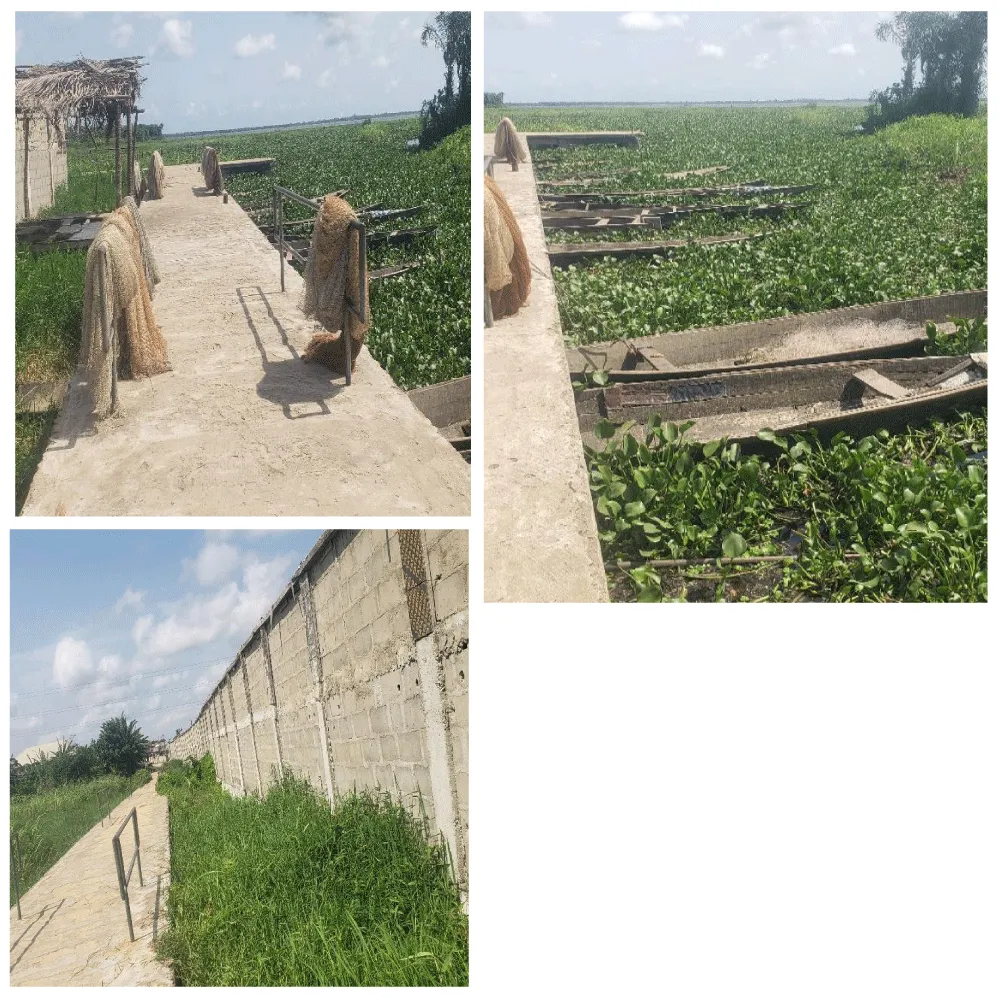
The increasing conversion of coastal lands in Oto-Awori for urban and industrial uses has raised significant environmental concerns. Activities such as land reclamation, sand filling, and construction for residential and commercial purposes have altered the natural coastal landscape. Additionally, the expansion of waterway-based transportation and informal goods transfer points through dredging has intensified human pressure on coastal ecosystems.
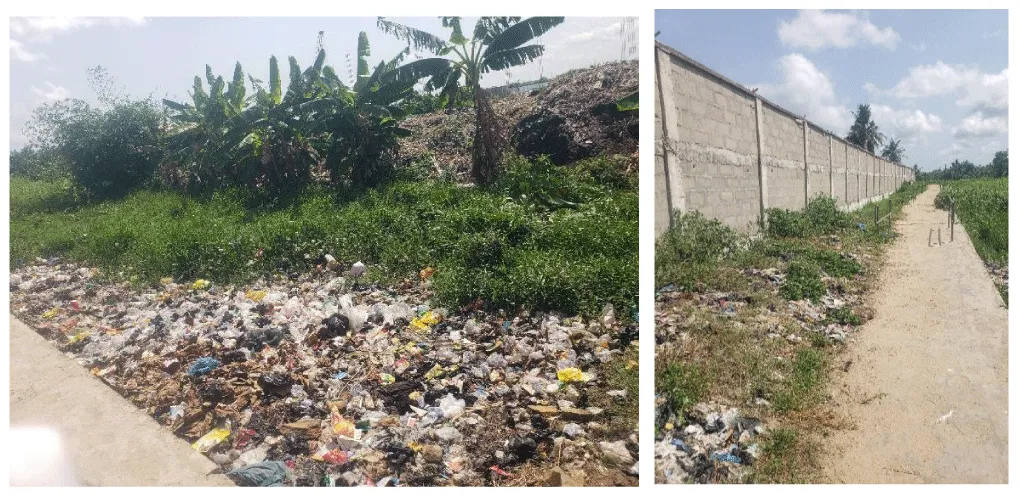
These developments have been associated with environmental issues such as recurrent flooding, water contamination, destruction of mangrove forests, and decline in aquatic resources. However, despite these observable changes, there is a lack of documented evidence on how residents perceive these environmental consequences. This gap in knowledge limits the ability of policymakers and environmental managers to design effective, community-informed interventions.
Furthermore, failure to incorporate residents’ perceptions into environmental planning may lead to resistance, poor policy implementation, and unsustainable development outcomes. Therefore, there is a need to investigate residents’ perception of the environmental consequences of coastal land-use conversion in the Oto-Awori community.
Aim and objectives of the study
Aim
To assess residents’ perception of the environmental consequences of coastal land-use conversion for urban and industrial development in Oto-Awori, Lagos State.
Objectives
- To identify the major drivers of coastal land-use conversion in Oto-Awori.
- To examine residents’ perception of environmental changes associated with coastal land conversion.
- To evaluate the level of awareness of environmental risks among residents.
Research Questions
- What are the major drivers of coastal land-use conversion in Oto-Awori?
- How do residents perceive the environmental consequences of these activities?
- What environmental changes are most noticeable to residents?
- What is the level of awareness of environmental risks among residents?
Research hypothesis
For the study, the null hypothesis was formulated and tested.
H₀1: There is no significant relationship between coastal land-use conversion and perceived environmental degradation in Oto-Awori.
Materials and methods
Description of study area
The study was conducted in Oto-Awori, a coastal community located in the Oto-Awori Local Council Development Area of Lagos State, Nigeria. The area is characterized by low-lying coastal terrain, proximity to lagoons and creeks, and increasing urban expansion. Oto-Awori has recently experienced intensified coastal land-use conversion due to residential development, industrial activities, and waterway-based transportation. The climatic condition is typically tropical, with distinct wet and dry seasons, and has appreciable forested areas, where various human activities are carried out. Major activities of the indigenes and residents include mat weaving, fishing, logging of wood and farming, while some are civil servants and artisans. The area is ecologically significant due to the presence of wetlands and a mangrove ecosystem, but it is currently experiencing rapid land use transformation.
Population of the study
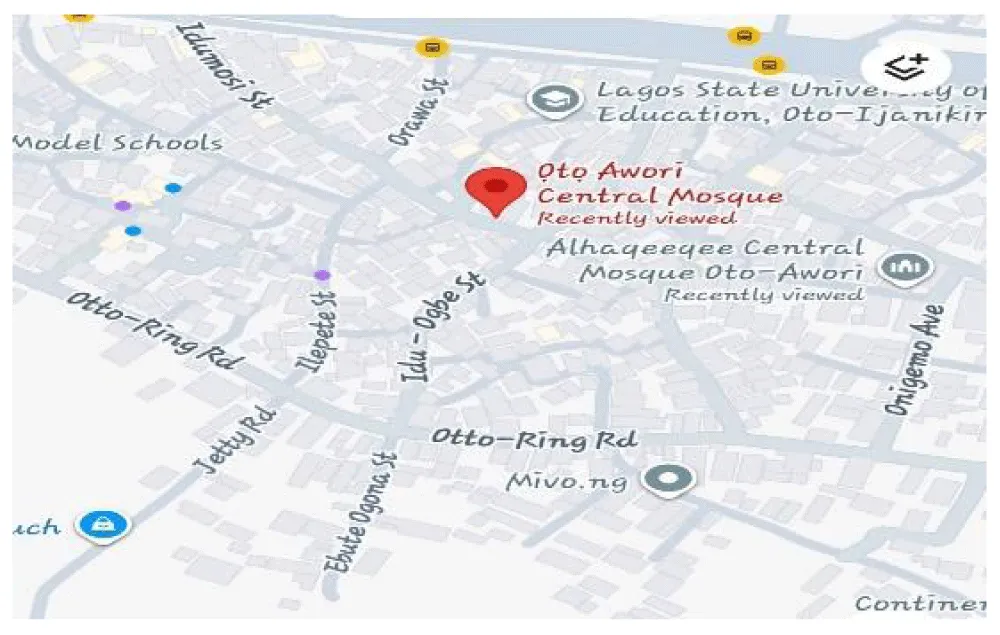
The target population comprised residents of Oto-Awori who have lived in the area for at least five years, ensuring the respondents possess adequate knowledge and experience of environmental change within the community.
Sample and sample procedure
A total of two hundred and fifty respondents were selected for the study. The sample size was considered adequate for statistical analysis and representation. A purposive and simple random sampling technique was employed. Purposive sampling was used to select residents with sufficient knowledge of the study area. Simple random sampling was then used to ensure that respondents were selected without bias.
Instrument of data collection
Data were collected using a structured questionnaire designed by the researcher based on the study objectives and relevant literature. The questionnaire was divided into four sections. Section A deals with the socio-demographic characteristics of the respondents. Section B assesses drivers of coastal land use conversion. Section C elicits information on the environmental consequences of coastal land conversion, while Section D deals with environmental awareness and participation of the respondents.
Method of data collection
The questionnaire was administered directly to the respondents in both English and their native language to aid effective communication through face-to-face interaction. This approach allowed for clarification of questions where necessary. Major drivers of coastal land-use conversion in Oto-Awori, residents’ perception of environmental changes associated with coastal land conversion, and the level of awareness of environmental risks among residents were the variables considered.
Method of data analysis
Data collected were analyzed using frequency count, percentage, mean, and chi-square.
Results and Discussion
The socio-demographic characteristics of respondents indicate a fairly balanced gender distribution, with males (54.0%) slightly higher than females (46.0%). This suggests that both genders are adequately represented in the study [Table 1].
The age distribution shows that the majority of respondents fall within the economically active age group of 18–45 years (74.0%), indicating that most participants are actively involved in livelihood activities that may influence coastal land-use decisions.
In terms of educational attainment, a significant proportion of respondents possess secondary education (40.0%), while 44.0% have either primary or no formal education. This highlights a moderate level of educational exposure within the community, which may influence awareness and decision-making regarding environmental issues.
Occupational distribution reveals that fishing (32.8%) is the dominant occupation, followed by civil service (24.0%), artisan work (22.4%), and trading (20.8%). The high proportion of fishermen indicates strong dependence on coastal and aquatic resources.
Furthermore, the majority of respondents (63.2%) have resided in the area for over 20 years, suggesting that they have substantial knowledge and long-term experience of environmental changes in Oto-Awori. This enhances the reliability of their perceptions regarding coastal land-use conversion and its environmental consequences.
Research Question 1: What are the major drivers of coastal land-use conversion in Oto-Awori?
Table 2 above reveals that the majority of the respondents, 88.0% (1.76), agreed that coastal lands are being sold for monetary gain, while 22.0% (0.12) disagreed with this position. 84.8% (1.70) of the respondents agreed that industrial activities increased the demand for coastal land, while 38% (0.15) disagreed. 16% (0.32) of the respondents agreed with item three as driving coastal land development, while 84% (0.84) disagreed with this position. 44.0% (0.88) of the respondents agreed that population growth is a contributing factor. However, 56.0% (0.56) disagreed. Importantly, 87.2% (1.16) agreed that low levels of formal education influence poor decision-making regarding coastal land use, while 12.8% reacted to the contrary.
This implies that monetary gains, Industrial activities, residential housing demand, and Low levels of formal education are the major drivers that influence the rate at which coastal land is sold in the study area.
Research Question 2: How do residents perceive the environmental consequences of these activities?
Table 3 shows that 89.76% of the respondents, with a mean of 1.80, agreed with the listed items as the perceived environmental consequences of coastal land conversion in the Oto-Awori community, while 10.24% of the respondents, with a mean of 0.10, disagreed with the items. Items with a mean of 1.50 and above are accepted as the environmental consequences of coastal land conversion in Oto-Awori, Lagos State.
Research Question 3: To evaluate the level of awareness of environmental risks among residents.
Table 4 indicates that 80.4% (201) indicated that they are aware of environmental changes in the area, while 19.6% (49) disagreed with this position. 84.0% (210) of the respondents agreed that they understood the causes of flooding, whereas 16% (40) of the respondents held a contrary opinion. Similarly, 80.0% (200) of the respondents affirmed that they know the importance of mangroves, while 20% (50) of respondents disagreed. Furthermore, 82.0% (205) of the respondents agreed that coastal land conversion has increased flooding. However, 18% (45) of the respondents expressed a contrary view. Regarding item 5, 28.0% (70) of the respondents agreed with the item, while 72.0% (180) did not support the statement. This reveals that residents are well informed about environmental issues, this awareness does not translate into meaningful environmental action, as there is a clear gap between environmental awareness and active participation in environmental protection activities.
Research hypothesis: H₀1: There is no significant relationship between coastal land-use conversion and perceived environmental degradation in Oto-Awori.
From Table 5 above, it can be observed that the X2 value of 233.36 is greater than the p-value of 3.841 at a 0.05 significance level. The indicates that the increasing rate of coastal land conversion is significantly associated with negative environmental outcomes such as flooding, water pollution, mangrove loss, and decline in aquatic life in the Oto-Awori Community.
Discussion
Findings from the study showed that monetary gain was affirmed to be the major driver of coastal land conversion use in the study area. Low level of formal education is ranked second, as the driver of coastal land conversion use, while industrial activities and residential housing demand are ranked third as the driver of coastal land conversion use. This finding is tantamount to the submission of Adelekan et al., [3] and Seto et al. [4] that coastal land-use conversion, driven by urban expansion and industrial development, has emerged as a major environmental concern in many developing countries, including Nigeria. Overall, the results highlight monetary gains, educational factors, urban expansion, and industrial development, are the dominant drivers of coastal land-use conversion in the study area.
The study established that coastal land-use conversion in Oto-Awori is associated with widespread environmental consequences such as loss of aquatic life, water pollution, increased flooding and loss of mangrove vegetation in the study area. This finding is in line with Nwankwo et al. [8] and Ward et al. (2021) that coastal land conversion can lead to severe environmental consequences, including habitat destruction, loss of mangroves, increased flooding, shoreline erosion, and water pollution.
In addition, Chi-square analysis revealed that the relationship between coastal land use conversion and perceived environmental degradation was significant. This indicates that coastal land conversion use contributes to loss of aquatic land, vegetation loss, and increased flooding in the study area.
In summary, it could be deduced that monetary gains from the sale of coastal land, industrial activities, and residential housing demands were the main drivers of coastal land conversion in the study area. On the other hand, residents are well informed about environmental issues; however, there exists a clear gap between environmental awareness and active participation in environmental protection activities in the study area.
Conclusion and Recommendations
Conclusion
This study examined residents’ perception of the environmental consequences of coastal land-use conversion in Oto-Awori, Lagos State, Nigeria. The findings revealed that coastal land conversion is primarily driven by monetary gains, residential development, industrial expansion, and low levels of formal education, which influence decision-making regarding land use. The study further established that coastal land-use conversion has led to significant environmental consequences, including increased flooding, water pollution, destruction of mangrove vegetation, decline in aquatic life, coastal erosion, and disruption of natural drainage systems. These impacts were strongly perceived by the majority of respondents, indicating that environmental degradation is both evident and widespread in the study area. In addition, the findings showed that while residents possess a high level of environmental awareness, their participation in environmental protection activities is low, suggesting a gap between knowledge and action. The hypothesis testing using the Chi-square method confirmed a statistically significant relationship between coastal land-use conversion and environmental degradation. This implies that human activities associated with land conversion are directly linked to the environmental challenges experienced in Oto-Awori. Overall, the study concludes that coastal land-use conversion is a major driver of environmental degradation, and without proper management, the sustainability of coastal ecosystems and livelihoods in the area will be severely threatened.
Recommendations
Based on the findings of this study, the following recommendations are proposed:
1. Strengthening Environmental Education
There is a need to improve environmental education and awareness programs within the community. Educating residents on the long-term consequences of coastal land conversion will promote more sustainable land-use decisions.
2. Enforcement of Environmental Regulations
Government agencies should enforce existing environmental laws and coastal protection policies to regulate land conversion activities, especially in ecologically sensitive areas such as mangroves and wetlands.
3. Promotion of Sustainable Coastal Land Use
Urban planning authorities should promote sustainable land-use practices, ensuring that coastal development is carried out in an environmentally responsible manner.
4. Community Participation in Environmental Management
Efforts should be made to encourage active community participation in environmental protection programs. This can be achieved through local initiatives, awareness campaigns, and stakeholder engagement.
5. Conservation and Restoration of Mangroves
Mangrove ecosystems should be protected and restored, as they play a critical role in flood control, shoreline stabilization, and biodiversity conservation.
6. Development of Recreational Coastal Spaces
Coastal areas should be reserved and developed for recreational and eco-tourism purposes, rather than being excessively converted for industrial and residential uses. This will provide long-term economic and environmental benefits.
7. Regulation of Coastal Land Sales
There should be stricter control over the sale of coastal lands, particularly those driven by short-term monetary gains, to prevent unsustainable exploitation.
Contribution to Knowledge
This study contributes to existing knowledge by:
Providing empirical evidence from a coastal community in Lagos State
Identifying education as a key social driver of land conversion
Highlighting the gap between awareness and environmental action
Demonstrating a statistical relationship between land conversion and environmental degradation.
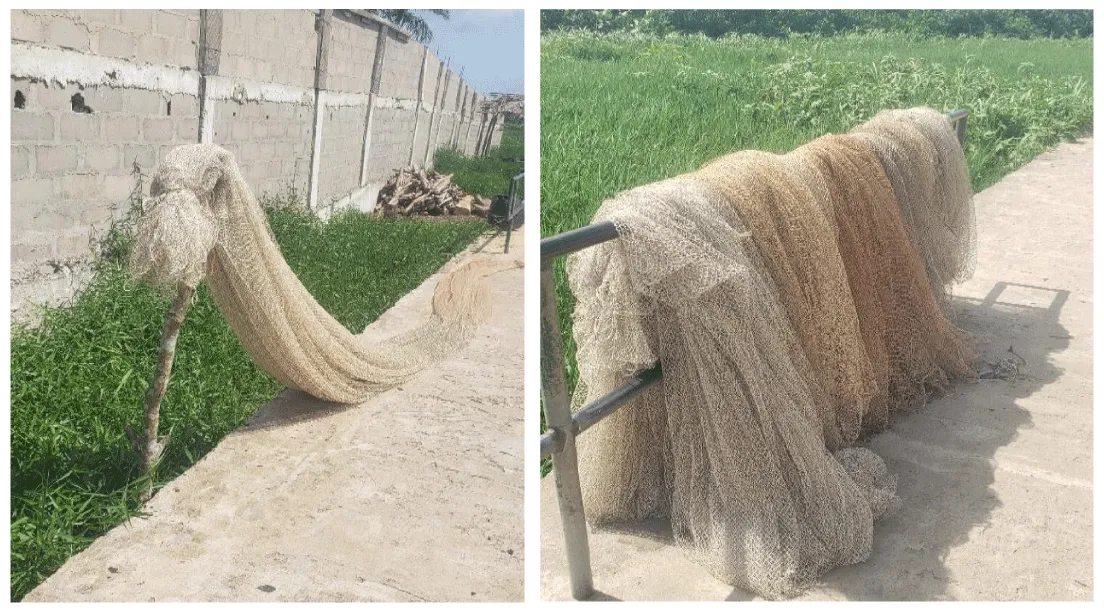
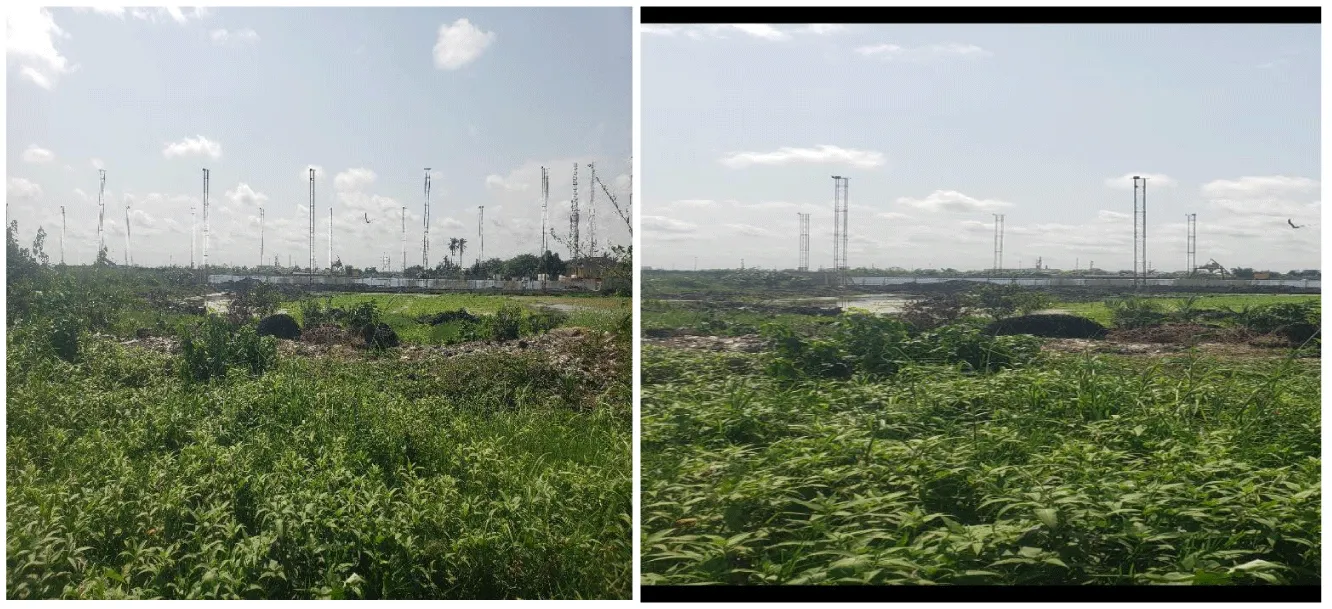
Pictorial Evidences Depicting the Effect of Coastal Land Conversion in Oto-Awori Community:
- Dasgupta S, Islam MS, Huq M, Khan ZH, Hasib MR. Climate change, salinity intrusion, and coastal ecosystem services in developing countries. Sci Total Environ. 2021;773:145673. Available from: https://doi.org/10.1007/s13280-015-0681-5
- Nicholls RJ, Adger WN, Hutton CW, Hanson SE. Deltas, land use change, and coastal vulnerability. Glob Environ Change. 2021;69:102285 .Available from: https://doi.org/10.1016/j.gloenvcha.2021.102285 .
- Adelekan IO, Johnson C, Manda M, Matyas D, Azubuike C. Urbanization and coastal flood risk in African cities. J Environ Manage. 2022;310:114756.
- Seto KC, Güneralp B, Hutyra LR. Global forecasts of urban expansion and environmental impacts. Proc Natl Acad Sci U S A. 2020;117(36):21924-21930. Available from: https://doi.org/10.1073/pnas.2000182117.
- Olajide O, Lawanson T. Urban expansion and informal development in Lagos. Cities. 2021;118:103352. Available from: https://doi.org/10.1016/j.cities.2021.103352 .
- UN-Habitat. World cities report 2022: envisaging the future of cities. Nairobi: United Nations Human Settlements Programme; 2022. Available from: https://unhabitat.org/sites/default/files/2022/06/wcr_2022.pdf
- United Nations Environment Programme (UNEP). Coastal ecosystem degradation and management strategies. Nairobi: UNEP; 2021
- Nwankwo C, Eze P, Okoye C. Anthropogenic impacts on coastal ecosystems in Nigeria. Environ Monit Assess. 2023;195(2):210.Available from: https://doi.org/10.1007/s10661-023-10721 .
- Spalding M, Kainuma M, Collins L. Global patterns in mangrove conservation and loss. Environ Res Lett. 2022;17(4):044021.Available from: https://doi.org/10.1088/1748-9326/ac5e1b .
- Friess DA, Rogers K, Lovelock CE, Krauss KW, Hamilton SE, Lee SY, et al. The state of the world’s mangrove forests. Annu Rev Environ Resour. 2020;45:89-115.Available from: https://doi.org/10.1146/annurev-environ-012320-083930
- Akinyemi FO, Ikporukpo CO, Omojola AS. Coastal environmental change and management in Nigeria. Ocean Coast Manage. 2020;190:105145.Available from: https://doi.org/10.1016/j.ocecoaman.2020.105145
- Ogunbode CA, Doran R, Böhm G. Individual and local flood risk perception in Nigeria. Nat Hazards. 2019;96(3):1139-1157. Available from: https://doi.org/10.1007/s11069-018-35589 .
- Bennett NJ, Blythe J, White CS, Campero C. Blue growth and coastal community perceptions. Mar Policy. 2021;125:104387.Available from: https://doi.org/10.1016/j.marpol.2020.104387


 Save to Mendeley
Article Alerts
Subscribe to our articles alerts and stay tuned.
 This work is licensed under a Creative Commons Attribution 4.0 International License.