Sustainable Use of Natural Resources and High-Quality Agricultural Development
1Northwest A&F University, Yangling, China
2The Institute of Water and Soil Conservation, the Chinese Academy of Sciences and department of water resources, Yangling, China
Author and article information
Cite this as
Guo Z. Sustainable Use of Natural Resources and High-Quality Agricultural Development. Glob J Ecol. 2025; 10(2): 40-44. Available from: 10.17352/gje.000114
Copyright License
© 2025 Guo Z. This is an open-access article distributed under the terms of the Creative Commons Attribution License, which permits unrestricted use, distribution, and reproduction in any medium, provided the original author and source are credited.As the economy and society develop and the population increases, there is an increasing demand for plant goods such as timber, food, medicine and so on. Because plant goods and services produced by original vegetation cannot meet the increasing need of people, most of the original vegetation has gradually become non-native vegetation, such as orchard, farmland, plantation and grass. Many exotic plant species were introduced to produce high-quality production and service. As plant grow, soil and vegetation degradation and crop failure will happen, which have to be resolved. According to my ten years of research, the results showed that Resources use limit by plants includes space resources use limit by plants, space vegetation carrying capacity and critical period of plant space relation regulation in soil water and nutrient rich regions, soil water resources use limit by plants, soil water vegetation carrying capacity and critical period of plant water relation regulation in water-limited regions and soil nutrient resources use limit by plants, soil nutrient vegetation carrying capacity and critical period of plant nutrient relation regulation in nutrient-limited regions. When the available amount of nature resources reduced to resources use limit by plants, the plant resources relation enters the critical period of plant resources relation regulation. The ending time of the critical period of plant resources relation regulation is the ineffective time of plant resources relation regulation, such as fruit mature or stopping service. The methods of sustainable use of nature resources and agriculture high-quality development is to select best plant species and varieties, take suitable initial plant density and take effect measure to ensure plant grow well and get maximal yield and beneficial effect. If the existing plant density is more than vegetation carrying capacity in the critical period of plant resources relation regulation, the plant resources relation must be regulated on the vegetation carrying capacity to ensure plant grow well and get maximal yield and beneficial effect and realize sustainable use of nature resources and agriculture high quality development.
Agriculture has now entered a stage of high-quality development. The high-quality development of agriculture is to take some measures and methods to make the land produce the maximum output and services to meet people's yearning for a better life and the needs of agricultural production services [1].
As economy and social develops and population increases, there is an increasing demand for the quantity and variety of plant production and service, but the plant production, especially food, fruit, fiber and wood and son on produced by original forest ecosystem cannot meet the need of demand for the quantity and variety of timber, food, medicine and so on and ecological services, so 80% of the original forest in the loess plateau [2] and the world has become farmland, man-made forest and grass [3] and a lot of exotic plant was introduced to produce more production and service. Because exotic plant changes the plant resources relation and the ability of self-regulation to adapt to climate change is very poor, soil and vegetation degradation, crop failure, serious soil erosion, greenhouse gas emissions and other ecological and environmental problems happen [4].
In order to solve these problems of soil and vegetation degradation or crop failure or waste of resources and achieve high-quality development and meet the increasing need of people for plant goods and service. Years of research has shown that there is a limit of plant utilization of soil water resources and the carrying capacity of soil water to vegetation the method of high quality and sustainable management of forest vegetation in water shortage area in the process of vegetation restoration [3,5]. Based on long-term research, this study focuses on key theoretical concepts governing sustainable resource use and high-quality agricultural development.
Resources utilization limit by plants
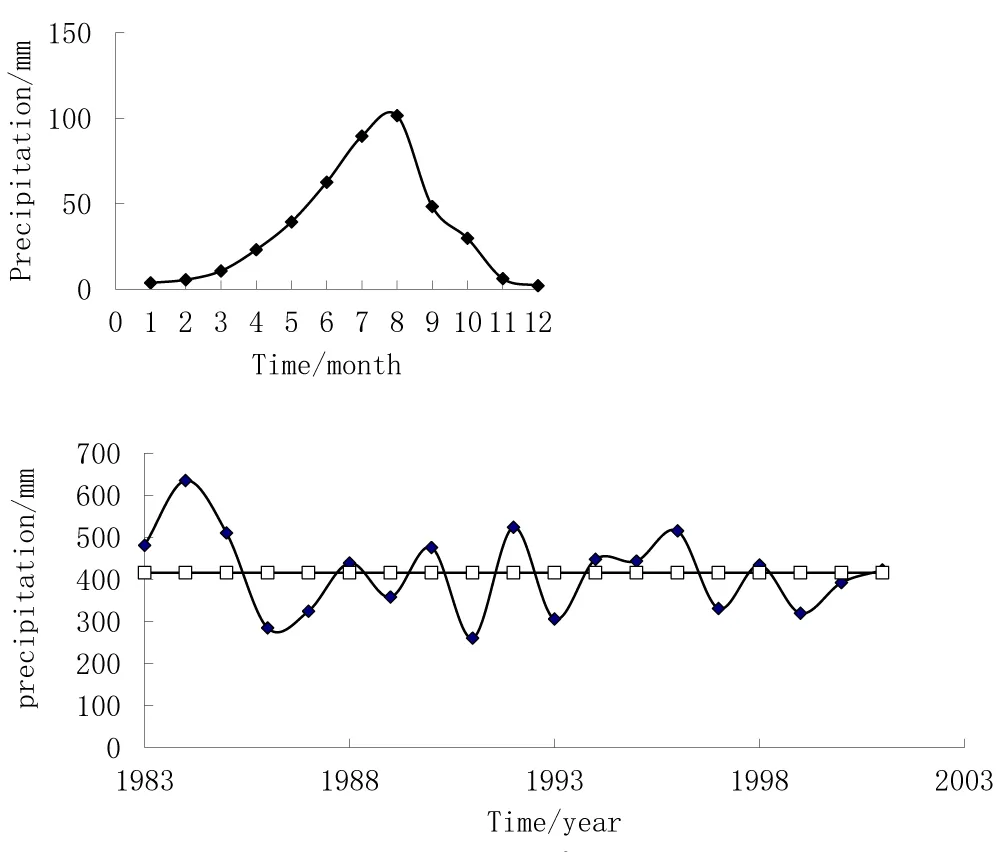
Nature resources are limit, so, Nature resources plant use in the crown and root zone is limit. The limit is resources Utilization limit by plants. Resources Utilization limit by plants includes space resource utilization limit by plants in soil water and nutrient rich regions; soil water resources utilization limit by plants in water limited regions in water limited regions and soil nutrient resources utilization limit by plants in soil nutrient limited regions. For example, in water-limited regions, along with plant growth, plant height diameter and canopy volume increase, and roots develop deep and soil water resources in the root zone reduced but available soil water resources in the crown and root zone are declined. In order to obtain maximum yield and beneficial result and carry out high quality development, even the root distribution depth is more than the maximum infiltration depth, plant roots do not absorb water indefinitely due to lack of water such as in semiarid loess hilly region (Guyuan, China) The precipitation changes with year and month, as shown in Figure 1 [2,3,6]. There should be a control limit for the utilization of soil water resources
By plants in water-scarce areas, that is, the soil water resources use limit by plants [7] It is the soil water storage when the soil water content is equal to the wilting coefficient in the range of the maximum infiltration depth. The wilting coefficient at different soil depth in the maximum infiltration depth can be determined by centrifugal machine or press film. The undisturbed soil at different soil depth in a soil profile was taken by a cutting ring with a 5 cm high and 5cm diameter. The maximum infiltration depth can be estimated by the two curves method [8,9]. The wilting coefficient is expressed by the wilting coefficient of indicating plants in a plant community. The indicator plants of natural vegetation are the constructive species, and the artificial vegetation is the target species. When the soil water resources decrease to the utilization limit of soil water resources, the plant-water relationship enters the starting time of critical period of plant-water relationship regulation [10]. At this time, the regulation of plant-water relationship should be considered to be regulated. The initial planting density influences the soil water resource use limit by plants [11].
Vegetation carrying capacity
Vegetation carrying capacity is the ability of nature resources to support vegetation which is limit. Vegetation carrying capacity includes space vegetation carrying capacity in soil water and nutrient rich regions, soil water vegetation carrying capacity in water limited regions and soil nutrient vegetation carrying capacity in nutrient limited regions. The vegetation carrying capacity in water shortage area is the soil water vegetation carrying capacity, which is the ability of soil water resources to support vegetation and limited. The soil water vegetation carrying capacity refers to the maximum quantity per unit area of soil water resources that can maintain healthy growth of indicator plants at a given period, especially the critical period of plant water relation regulation and site condition [1,3,8,12,13] and can be estimated by soil water-plant density model [3,8], expressed by the number of plant population (absolute index) or plant density (relative index) (Figure 2).
Of indicator plant population in the plant community. Soil water vegetation carrying capacity (SWVCC), changing with plant species (vegetation type), time or position, time climate change, especially the critical period of plant water relationship regulation, which is the theoretical basis for determining indicators and criteria for forest resources use degree and high quality and sustainable management of forest vegetation [3,8].
Critical period of plant- resources relationship regulation
As plant grow, plant- resources relationship changes with time. When the available sources plant use n crown or root is equal to the resource’s utilization limit by plants, the plant- resources relationship enters the Critical period of plant- resources relationship regulation. The ending time of the Critical period of plant- resources relationship regulation is fruit mature or stopping service. The Critical period of plant- resources relationship regulation includes critical period of plant- resources relationship regulation in soil water and nutrient rich regions, Critical period of plant- water relationship regulation in water limited regions and Critical period of plant- resources relationship regulation in soil nutrient limited regions. For example, in semiarid regions, as plant grow, the available resources amount in the maximum infiltration depth will also decrease, even though the soil water resources will increase after the rain. When the available resources amount in the maximum infiltration depth is equal to soil water resource use limit by plants, the plant water relationship enters the critical period of plant water relationship regulation and the ending time of the critical period of plant water relationship regulation is the ineffective. For example, the fruit ripens or the plant service stops. If the present plant density is more than soil water vegetation carrying capacity in the critical period of plant water relationship regulation, plant water relationship regulation has to be regulated. Plant–water relationships can be regulated by different methods such as cultivating and selecting better plant species and varieties [5], soil preparation such as thin film cover and ridge tillage in the semiarid loess hilly region (Guyuan, China) and pruning some leave and trig and so on, but the most important method is to regulate the plant-water relationship by reducing plant density in the critical period of plant-water relationship regulation.
Plant- resources relationship in the growing season can be divided into different stages according to resources use limit by plants such as soil water resources use limit by plants in the water-limited regions. If the available resources in the canopy are smaller resources use limit by plants or soil water resources in the range of the maximum infiltration depth is smaller than soil water resources use limit by plants, showing resources such as soil water resources enough and plant grow healthily. If not, more attention should be paid to the plant-water relationship regulation.
The critical period of plant- resources relationship regulation refers to the time that the resources cannot maintain the plant growth healthy when the resources descend to the utilization limit of resources by plants such as soil water resources within the range of the maximum infiltration depth, it not only affects plant growth condition but also determines the maximum yield and benefit in the growing season in the water-limited regions. The critical period of plant water relationship regulation is the period from the starting time soil water resources reduced to the limit of soil water resources utilization by plants to the ending time plant water relationship regulation is failure. The ending time of critical period of plant water relationship regulation can be estimate by the thinning plant method. The ending time of critical period of plant water relationship regulation such as stopping expanding red plum apricot in Jul.15 and stopping serving of caragana shrub in the end of Sept.in semiarid loess hilly region. Sowing seeds in a plot with a maximum plant density and ensure the maximum experimental plant density equals to or more than soil water carrying capacity for vegetation.
High quality development of agriculture
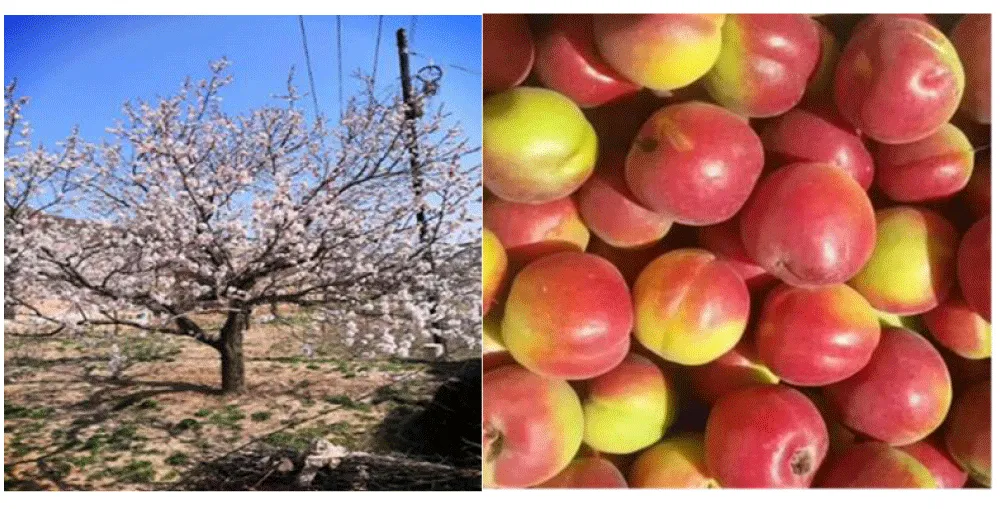
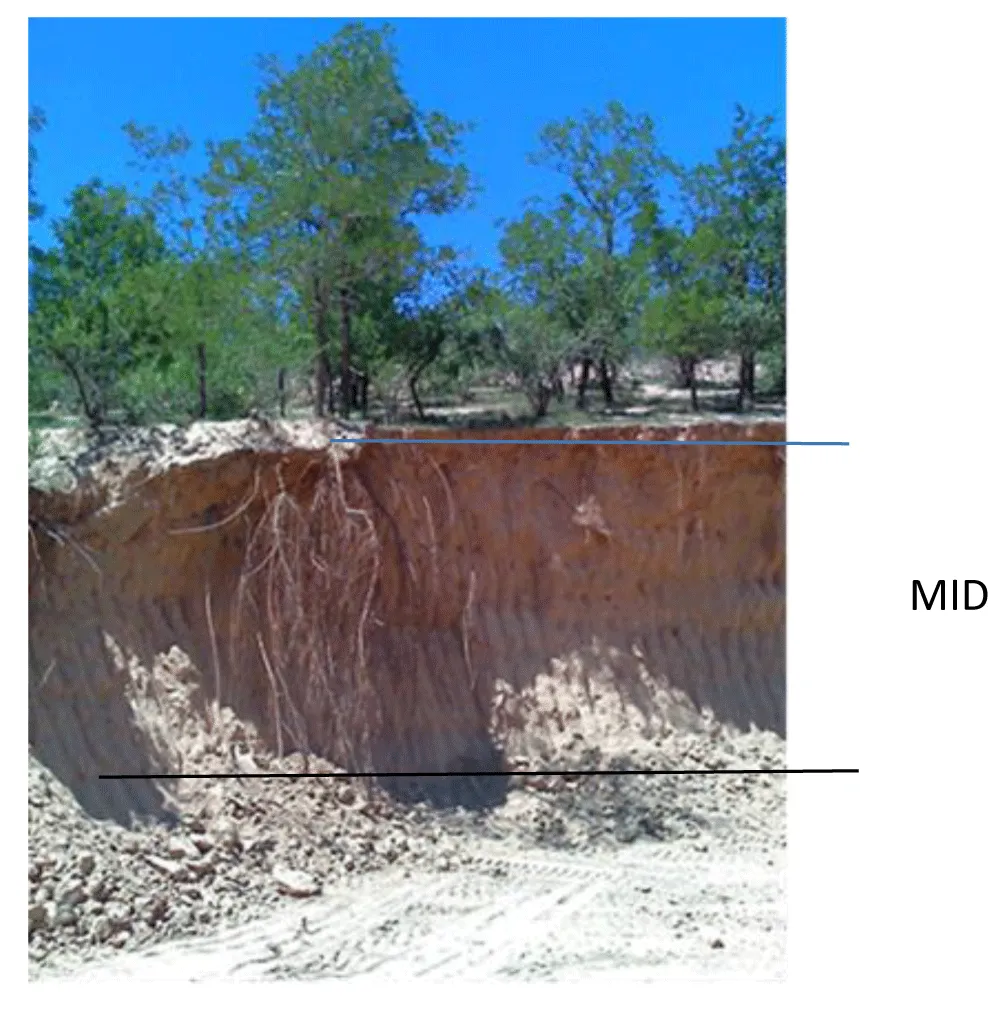
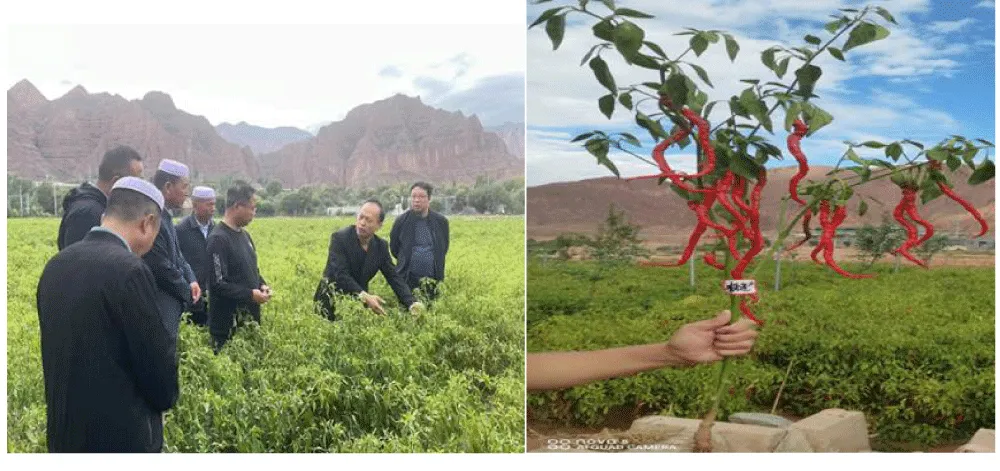
Firstly, the better plant species and varieties have to be selected according to site condition and cultivation goal [1,5], such as red plum apricot, see figure 3 and then suitable initial planting density has to be taken, see figure 2. Figure 2 demonstrates the flowering and fruiting performance of red plum apricot under specific planting densities, providing visual evidence of how appropriate initial density contributes to optimal growth and yield in semiarid regions. The initially planting density is more than vegetation carrying capacity such as soil water vegetation carrying capacity in water-limited regions. If the existing plant density is more than soil water carrying capacity for vegetation in the critical period of plant-water relationship regulation, showing plant overuse soil water and plant density exceeds soil water carrying capacity, which will cause soil degradation, vegetation decline, fruit and crop failure if plant-water relationship should not be regulated. At this stage, we should regulate the plant-water relationship by reducing the plant density. The reducing amount of plant density is equal to the different between the existing plant density and soil water carrying capacity for vegetation. When the soil water resources decrease to the utilization limit of soil water resources by plants in the range of maximum infiltration depth, plant-water relationship enters the critical period of plant-water relationship regulation. The relationship between root distribution depth and maximum infiltration depth in semiarid regions is illustrated in Figure 4. If the existing plant density is more than soil water carrying capacity for vegetation in the critical period of plant-water relationship regulation, plant-water relationship should be regulated by estimating the soil water carrying capacity for vegetation in the critical period of plant-water relationship regulation, and the maximum yield and benefit of non-commercial forest and grass can be obtained by determining and controlling the plant-water relationship according to the soil water vegetation carrying capacity in the critical period of plant-water relationship regulation. The high-quality development can be achieved in water-limited regions [1,14,15-29] (Figures 5,6).


Conclusion
The most important work of forest restoration is the plant-resources relationship regulation in the process of vegetation according to the cultivated goal, especially plant-resources relationship regulation in the critical period of plant- resources relationship regulation because it determines the maximum yield and benefit of a population or plant community. The foundation of plant-resources relationship regulation is resources use limit by plants. When resources amount in crown or root zone reduced to utilization limit of resources by plants, such as the soil water resources within the range of the maximum infiltration depth descend to the utilization limit of soil water resources, plant- resources relationship enters the critical period of plant- resources relationship regulation in which the resources severe influence the plant growth and decides the maximum yield and ecological, economic and social benefits. At this time, the plant resources relationship should be regulated to obtain the maximum yield and benefit and carry out sustainable use of nature resources and agriculture high quality development.
This research was once supported by the National Science Fund of China (Project Nos 42077079, 41071193 and 41271539) and Study on high quality sustainable development of soil and moisture conservation (A2180021002)
- Guo ZS. “Innovation China” agricultural high-quality production industry service group. Chinese Scientific and Technological Achievements. 2025; doi:10.3772/j.issn.1009-5659.2025.04.003
- Guo Z, Shao M. Impact of afforestation density on soil and water conservation of the semiarid Loess Plateau. J Soil Water Conserv. 2013;68:401-10. Available from: https://doi.org/10.2489/jswc.68.5.401
- Guo Z. Soil water carrying capacity for vegetation. Land Degrad Dev. 2021;32(14):3801-11. Available from: https://doi.org/10.1002/ldr.3950
- Chen H, Shao M, Li Y. Soil desiccation in the Loess Plateau of China. Geoderma. 2008;143:91-100. Available from: https://doi.org/10.1016/j.geoderma.2007.10.013
- Guo ZS, Wu QX, Si LM. A study on selecting trees and grasses species of woodland for fuel, fodder and manure using fuzzy mathematics method in the loess hilly area. J Biomathmatics. 1990;5(3):69-76.
- Guo Z. Rice carrying capacity and sustainable produce of rice in resource-limited regions. Int J Agric Sci Food Technol. 2019;5(1):54-7. Available from: https://www.agriscigroup.us/articles/IJASFT-5-142.php
- Guo Z, Shao M. Effect of artificial Caragana korshinskii forest on soil water in the semiarid area of Loess hilly region. Chin Forest Sci. 2010;46:1-8. Available from: https://www.cabidigitallibrary.org/doi/full/10.5555/20113358423
- Guo Z. Theory and practice on soil water carrying capacity for vegetation. Beijing: Chinese Scientific Press; 2014. p. 45-100. Available from: http://www.geobooks.com.cn
- Guo Z. Estimating method of maximum infiltration depth and soil water supply. Sci Rep. 2020;10(1):9726. Available from: https://doi.org/10.1038/s41598-020-66859-0
- Guo Z. Limit of vegetation rehabilitation for soil and water conservation in semi-arid region of Loess Plateau. Chin J Soil Water Conserv Sci. 2009;7:49-54. Available from: http://en.cnki.com.cn/Article_en/CJFDTOTAL-STBC200904010.htm
- Guo Z, Zhang W. Impact of initial planting density on soil water resource uses limit by plants. Geoinfor Geostat. 2016;4:1. Available from: https://doi.org/10.4172/2327-4581.1000137
- Guo Z, Shao M, Zhang Y, Wu Q. A layer-dividing approach to the soil water in forest land. In: Shao M, editor. Proceedings of Soil Physics and Ecological Environmental Construction. Xi’an: Shanxi Science and Technology Press; 2002. p. 74-9. Available from: http://ir.igsnrr.ac.cn/handle/311030/4789
- Guo Z, Shao M. Vegetation carrying capacity of soil water and soil desiccation in artificial forestry and grassland in the semiarid regions of Loess Plateau. Chin J Ecol. 2003;23:1640-7. Available from: http://en.cnki.com.cn/Article_en/CJFDTOTAL-STXB200308023.htm
- Guo Z. Agriculture high-quality development. Encyclopedic Forum (Chinese). 2022;01:64-6. Available from: https://sns.wanfangdata.com.cn/sns/perio/bkltdzzz/?tabId=article
- Guo Z. Forest restoration, resources sustainable use and high-quality sustainable management. Glob J Ecol. 2023;8(1):7-10. Available from: https://doi.org/10.17352/gje.000075
- Budagovski AI. Soil water resources and available water supply of the vegetation cover. Water Resources. 1986;12(4):317-25. Available from: https://www.cabidigitallibrary.org/doi/full/10.5555/19871916301
- Cohen JE. Population growth and earth’s human carrying capacity. Science. 1995;269:341-6. Available from: http://www.docin.com/p-190920361.html ; Available from: https://doi.org/10.1126/science.7618100
- Guo Z, Shao M. Mathematical model for determining vegetation carrying capacity of soil water. J Hydr. 2004;35(10):95-9. Available from: https://www.researchgate.net/publication/280643619_Mathematical_model_for_determining_vegetation_carrying_capacity_of_soil_water
- Guo Z, Li Y. Initiation stage to regulate caragana growth and soil water in the semiarid Loess hilly region, China. Chin J Ecol. 2009;29:5721-3. Available from: http://www.oalib.com/paper/1402580#.XhRXA_ZuKUk
- Guo Z. Soil water resource use limit in semi-arid loess hilly area. Chin J Appl Ecol. 2010;21:3029-35. Available from: https://pubmed.ncbi.nlm.nih.gov/21442986/
- Guo Z. Soil hydrology process and sustainable use of soil water resources in desert regions. Water. 2021;13(17):2377. Available from: https://doi.org/10.3390/w13172377
- Guo ZS. Agriculture high-quality development in semiarid Loess hilly regions. J Adv Agron Crop Sci. 2023;2:1-16. Available from: https://jscholaronline.org/articles/JACS/Agriculture-High-Quality-Development-in-Semiarid-Loess-Hilly-Regions.pdf
- Guo ZS. Agricultural development has entered a new stage. JOJ Hortic Arboric. 2025;5(5):555672. Available from: https://doi.org/10.19080/JOJHA.2025.05.555672
- Guo ZS. Estimation method of suitable initial planting density. J Plant Sci Crop Protect. 2025;8(1):101. Available from: https://www.annexpublishers.com/articles/JPSCP/8101-Estimation-Method-of-Suitable-Initial-Planting-Density.pdf
- Guo Z. Introduction and selection of fine plant species and varieties. J Integrated Health. 2025;4(1):356-8. Available from: https://urfjournals.org/open-access/introduction-and-selection-of-fine-plant-species-and-varieties.pdf
- Julia J, et al. Forest Ecology and Management. 2022;520:120342. Available from: https://doi.org/10.1016/j.foreco.2022.120342
- Lvovich MI. Soil trend in hydrology. Hydrological Sciences Bulletin. 1980;25:33-45. Available from: https://dx.doi.org/10.1080/02626668009491902
- Price D. Carrying capacity reconsidered. Popul Environ. 1999;21:5-26. Available from: https://ui.adsabs.harvard.edu/abs/1999PopEn..21....5P/abstract
- Young CC. Defining the range: the development of carrying capacity in management. J Hist Biol. 1998;31:61-83. Available from: https://link.springer.com/article/10.1023/A:1004205522191

 Save to Mendeley
Article Alerts
Subscribe to our articles alerts and stay tuned.
 This work is licensed under a Creative Commons Attribution 4.0 International License.