Open Journal of Environmental Biology
Impact of Inorganic Pollution on the Wood Structure and Infradensity of Avicennia germinans Wood from the Gabon Estuary
1Phytotechnie et Sciences Forestières, University of Institut de Recherches Agronomiques et Forestières (IRAF) Gabon
2Laboratoire de Recherche et de Valorisation du Matériau Bois (LaReVa Bois). Institut de Recherches Technologiques (IRT)/CENAREST. BP 2246, Libreville, Gabon
3Lermab, Faculté des Sciences et Technologies Boulevard des Aiguillettes BP 70239.54506 Vandoeuvre lès Nancy Cedex-France
4Laboratoire des Substances Naturelles et de Synthèses Organométalliques. Université des Sciences et Techniques de Masuku. BP. 941, Franceville, Gabon
5Laboratoire de Recherche en Chimie Appliquée (LACRA). Ecole Normale Supérieure (ENS). Université Marien Ngouabi. Brazzaville, Congo
Author and article information
Cite this as
Saint Bickolard MI, et al. Impact of Inorganic Pollution on the Wood Structure and Infradensity of Avicennia germinans Wood from the Gabon Estuary. Open J Environ Biol. 2026; 11(1): 15-21. Available from: 10.17352/ojeb.000054
Copyright License
© 2026 Saint Bickolard MI, et al. This is an open-access article distributed under the terms of the Creative Commons Attribution License, which permits unrestricted use, distribution, and reproduction in any medium, provided the original author and source are credited.Mangroves grow in saline environments and tropical climates, both along coastlines and inland. However, inland mangroves, or urban mangroves, are exposed to pollution from various sources, as is the case with the Alénakiri mangroves, which are exposed to an open-air landfill. Thus, the impact of heavy metal pollution on the wood structure and specific gravity of A. germinans wood in Gabon’s Estuaire Province was studied. The data were compared with those from samples collected at the unpolluted site in Ayémé maritime. The results show that the sapwood and heartwood of the polluted wood from Alénakiri have a higher ash content than those from the unpolluted site at Ayémé maritime. Despite the high salinity of the sediments, pollution has altered the internal structure of the wood, notably resulting in unadjoined vessels and wide growth rings. Furthermore, the specific gravity of the sapwood (0.7 ± 0.02 g/cm³) from the unpolluted wood at Ayémé maritime was significantly higher (p ˂0.05) than that of the polluted wood from Alénakiri (0.66 ± 0.01 g/cm³). This indicates that heavy metal pollution has a greater impact than salinity, as it alters the internal structure of A. germinans wood and reduces its infradensity.
Mangroves are trees and shrubs that grow in saline environments at the interface between land and sea (estuaries and deltas) in tropical climates. Mangroves also grow inland, particularly in lagoons and rivers [1]. This position at the interface gives mangroves an important ecological role. Among other things, they stabilise coastlines against coastal erosion while protecting coastal populations from floods, storms, and tsunamis. They also serve as habitat for numerous wildlife species, including fish and crustaceans (crabs and shrimp). Finally, they act as carbon sinks; mangrove forests sequester five times more carbon dioxide than other tropical forests, thereby helping to combat climate change [2].
Urban mangroves account for 52% of Gabon’s mangroves, and these mangroves are unfortunately subject to pollution from various sources (heavy metals, household waste, plastic waste, etc.). This is the case for the Alénakiri mangroves located in the municipality of Owendo, which border an open-air landfill. These mangroves are subject to mineral pollution. Numerous studies have shown that these plants possess proven bioremediation capabilities [3]. A comparative study determining the concentration of metals in the leaves and wood of the genera Avicennia and Rhizophora showed that the wood of Avicennia concentrated significant quantities of metals compared to that of Rhizophora, with respective values: Zn (12.5 µg/dry wt); Cu (13.2 µg/dry weight); Cr (26.5 µg/dry weight) versus Zn (0.0 µg/dry weight); Cu (0.0 µg/dry weight); Cr (11.4 µg/dry weight). Thus, mangroves purify aquatic ecosystems and help ensure clean water downstream. Mangroves can be used to purify wastewater [4]. However, high concentrations of pollutants can compromise their growth or even cause their death. In fact, since heavy metals are not degraded biologically or chemically, mangrove ecosystems are able to trap heavy metals (Cu, Zn, Cd, Ni, Cr, etc.) by accumulating them in their tissues or sequestering them in the mud [5]. Their effects are very rapidly cumulative, and once certain thresholds are reached, mangroves begin to decline [4].
As mentioned above, mangroves grow in saline environments. Salinity is a key factor in mangrove growth, but hypersalinity impairs their growth. There is therefore a coexistence of two abiotic factors: heavy metal pollution and salinity. Hence the importance of decoupling salinity from pollution to identify the factor that influences the wood properties of this species specifically, the wood structure and the infradensity of A. germinans wood.
Despite the work carried out by the aforementioned authors, no study has been conducted on the impact of inorganic pollution on the woody tissue and infradensity of Avicennia germinans . Thus, the objective of this study was to highlight the impact of inorganic pollution on the woody tissue and the infradensity of Avicennia germinans wood from the Gabon Estuary.
Materials and methods
Experimental sites and sampling
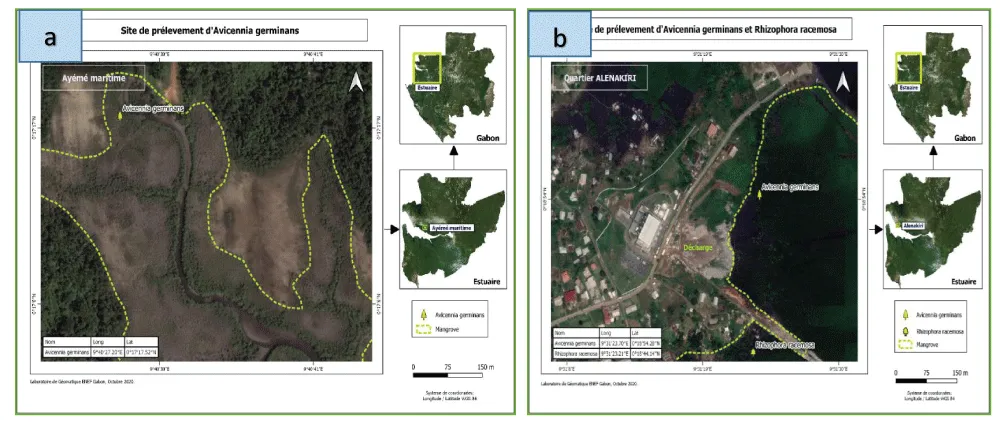
Wood from Avicennia germinans (A. germinans) was collected from two separate experimental sites located in the Gabon Estuary region. The Alénakiri site (00°18.6927 N; 009°31.3063’ E), located in the municipality of Owendo, was selected as the polluted site because it lies in the heart of an urban area and near an open-air landfill characterised by heavy metal pollution, among other contaminants [6]. The Ayémé maritime site (00°28.8516’ N; 009°30.9994’ E), located in a peri-urban area, is distant from neighbouring communities. At each site, three vigorous A. germinans trees of similar diameter (70 to 80 cm) were sampled (Figure 1). Trunk discs 5 centimetres thick were collected at a height of 1.3 m above the ground.
Salinity measurement
Salinity and pH were measured in situ at a depth of 15 cm in the soil using a multiparameter pH meter (a portable device capable of measuring 15 parameters).
Ash content
The ash content analyses were performed according to the protocol described by Sluiter et al. [7]. Two jars, one small and one large, were cleaned and then dried in a desiccator at 105 °C for 30 minutes. We then weighed the pots and recorded the mass as M0. Next, we placed 2 g of sawdust in the small pots and 5 g in the large pots, dried them in a desiccator at 105°C until a constant mass was reached, and recorded the mass as M1. Finally, we placed the jars in an oven at 550±25°C for 4 hours until light grey or white ash was obtained. At the end of this time, we let them cool for one (1) hour. We weighed the test specimens and recorded the mass M2.
Calculation of the ash content
T(%) = (M2 – MO) / (M1-MO) X 100 (1)
With :
T(%) : Ash content
M0: Mass of the container
M1: Mass of the container + anhydrous sample
M2: Mass of the container + ash
Vessel density
The episcopic microscope coupled to a camera allows images to be obtained on wood samples (100 x to 700 x) using normal reflected light. The light is directed onto the sample by conical beams through the objective, providing an adjustable image of the structural details. To determine vessel density, about twenty blocks of wood from each sapwood and heartwood compartment (1cm3) were prepared in the heartwood compartment. To obtain good surface quality, the transverse face of the sample was sanded with 4000-grit sandpaper (5µm average grain size) and cleaned with compressed air. The wood blocks were then placed under a Leica DM2700M optical microscope equipped with a reflected light source and a digital camera for acquisition. A script was developed under FIJI software [8] for quantitative anatomy analysis. Some twenty wood samples were analysed for each sample type.
Analysis of infradensity
Infradensity analysis was assessed according to Bakour (2003). Twenty-two 1 cm3 wood blocks from the Oveng and Mamboumba wood samples were machined from each sapwood and heartwood compartment, then oven-dried for 48 h at 103°C. After vacuum saturation of the samples in a vacuum pump, they were weighed on a balance (Denver Instrument, max=400g, d=0.001 g) using Archimedes’ buoyancy. Infradensity is the ratio between the mass of wood in its anhydrous state and its water-saturated volume or “green volume”:
where:
ρ= is the infradensity in g/cm3
M0 = oven-dry mass of the wood,
Vs = saturated volume.
Data analysis
All data were analysed using a one-way analysis of variance (ANOVA), followed by Fisher’s test, with a significance level of α = 0.05, using the Rr643.0.2 software.
Result and discussion
Measurement of salinity and pH
pH and salinity were measured at the contaminated site in Alénakiri and the uncontaminated site in Ayémé; the results are shown in Table 1. This table shows that the salinity at the polluted site in Alénakiri (39.75 g/l) is higher than that at the unpolluted site in Ayémé (38.5 g/l). Regarding pH, the pH at the polluted site is acidic (4.78), while the pH at the unpolluted site is slightly basic (8.5).
Ash content of A. germinans wood
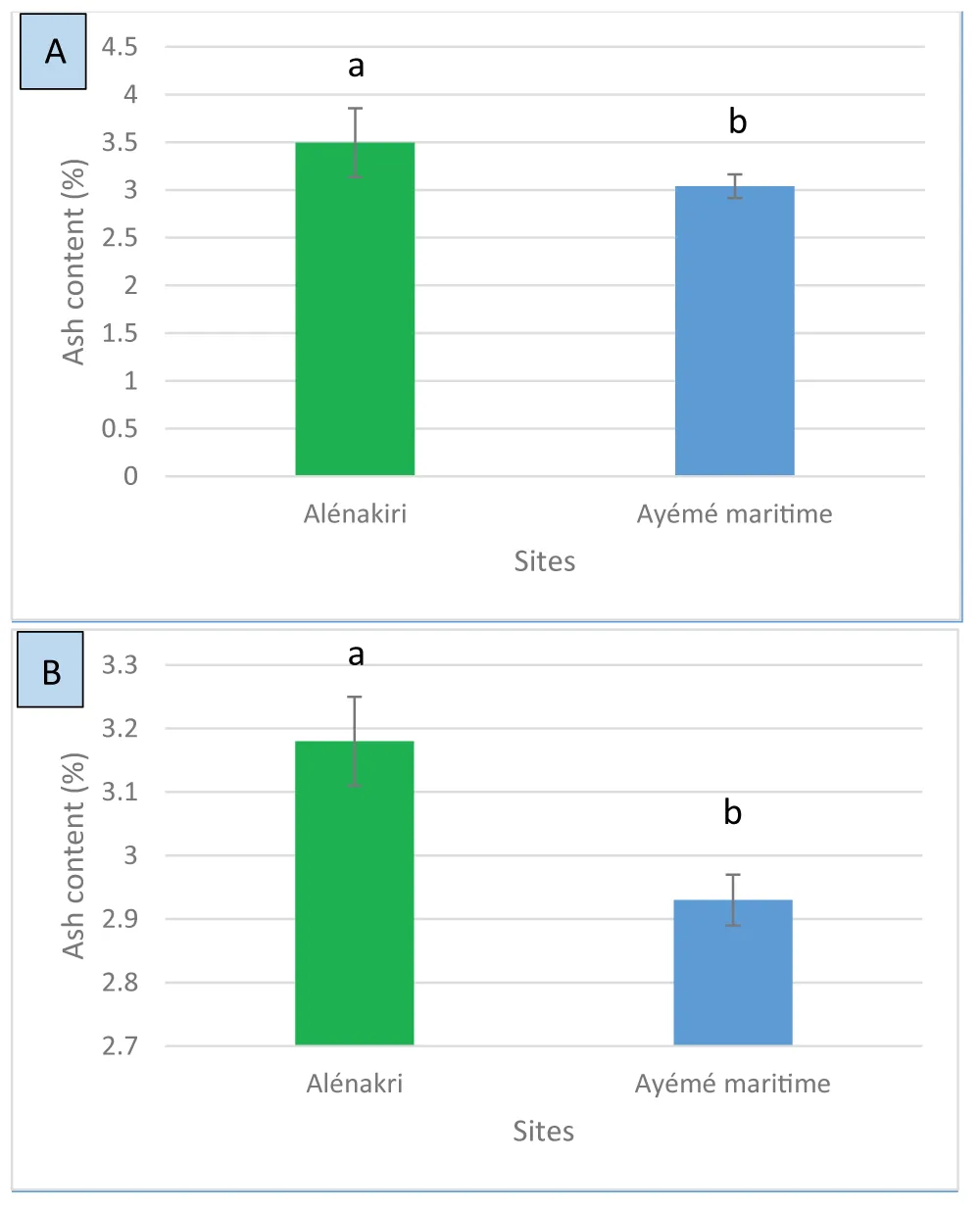
Figure 2 shows the ash content of the sapwood and heartwood compartments of A. germinans wood collected from the contaminated site at Alénakiri and the uncontaminated site at Ayémé maritime. This figure reveals that ash content is significantly higher (p < 0.05) in the sapwood and heartwood compartments of wood from the contaminated Alénakiri site. This higher ash content in the contaminated wood from Alénakiri can be explained by the presence of heavy metals in the wood [6].
Effect of Salinity on the Density of Sapwood Vessels in A. germinans
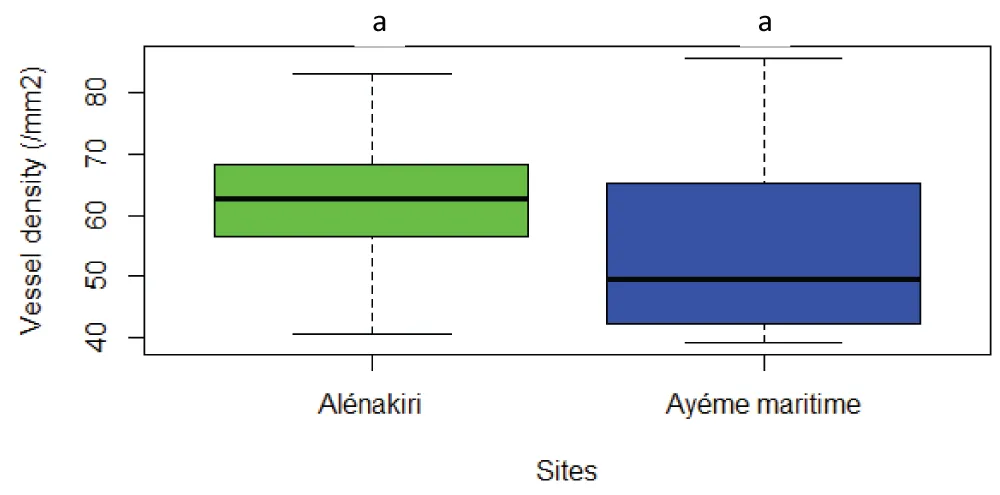
Figure 3 shows that the vessel density in the sapwood of Alénakiri (62.62 ± 11.36 mm⁻²) is higher than that of Ayémé maritime (55.32 ± 15.4 mm⁻²), which is related to the salinity values at the different sites. The results showed that vessel density and sediment salinity were correlated. However, this difference is not statistically significant (p ⸖ 0.05). This non-significant difference can be explained by the fact that, in addition to the high soil salinity at these two sites, the sapwood compartment plays an important role. Indeed, sapwood is the living part of the wood, as it is through the sapwood vessels that water and mineral salts circulate and are transported to the leaves. Some of these vessels lack thylli and therefore have cavities that can facilitate the transport of these substances to the leaves [9,10]. Thus, salinity influences vessel density in the sapwood. Robert et al. [11] reported that vessel density in mangrove forests increased under conditions of high salinity.
Furthermore, one of the physiological mechanisms by which Avicennia adapts to this fragile environment is the accumulation of salts in the leaf vacuoles. High concentrations of salt accumulate in the leaf vacuoles. To maintain osmotic balance, the leaves then become succulent. The salt concentration in the sap can also be reduced by transferring salt to senescent leaves, the bark, and the wood [12]. Thus, if the sapwood of Alenakiri wood has a higher salt concentration, a significant portion of the salt will be transferred to the heartwood or other organs, which could increase the density of the vessels in the heartwood of its wood.
Effect of salinity on the vessel density of the heartwood of A. germinans
Salinity is one of the abiotic factors that influence mangrove growth. This salinity affects vessel density. Figure 4 shows the vessel density in the heartwood of A. germinans from two sites: Alénakiri and Ayemé maritime.
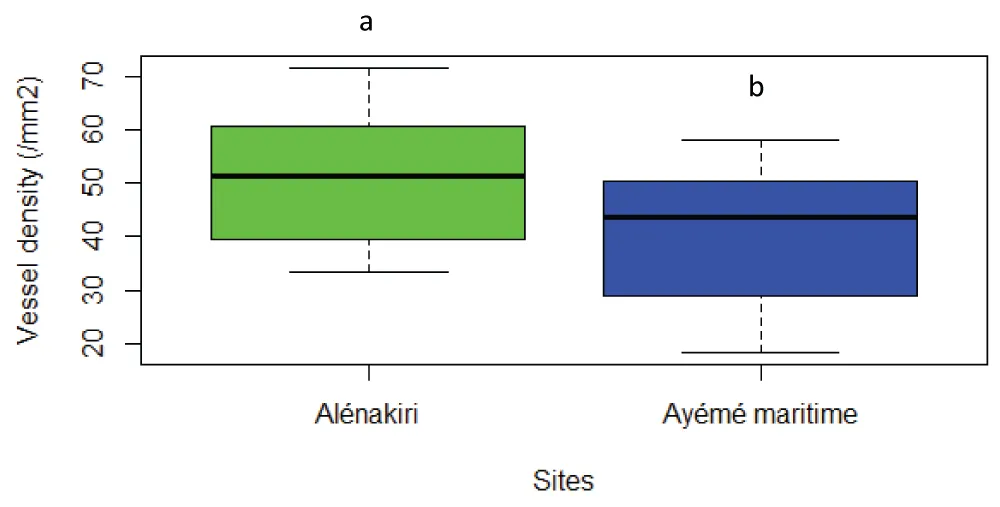
This figure shows that the vessel density in the heartwood of Alénakiri (50.82 ± 12.91 mm⁻²) is significantly higher (p < 0.05) than that in the heartwood of Ayémé maritime (40.01 ± 12.34 mm⁻²), which is related to the salinity values at the different sites. The Ayémé and Alénakiri sites have salinity levels of 38.5 g/l and 39.75 g/l, respectively. Indeed, vessel density is linked to salinity levels. In areas with high salinity, there is an increase in vessel density; conversely, under low-salinity conditions, mangroves of the species A. marina, R. mucronata, and L. racemosa exhibit low vessel density [13,14]. It is important to note that the Alénakiri site is contaminated with heavy metals, among other pollutants [6]; therefore, despite heavy metal contamination, salinity takes precedence over pollution, thereby influencing the vessel density in the heartwood of A. germinans.
Impact of pollution on the wood structure
Wood is a material whose internal structure comprises several tissues, including vessels, parenchyma, and growth rings. Figure 5 shows cross-sections of the sapwood and heartwood of A. germinans from the Alénakiri (polluted site) and Ayémé maritime (unpolluted site) locations.
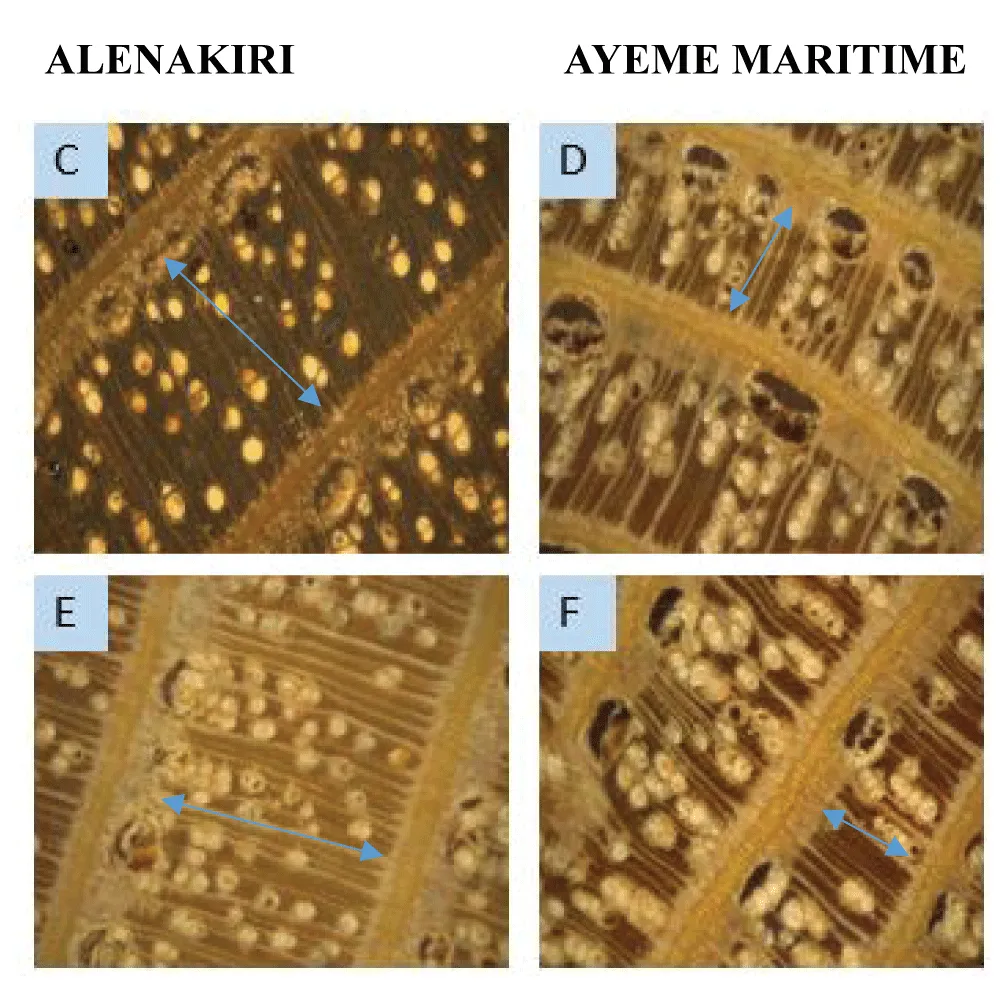
This figure shows that there is a difference in colour between the wood (sapwood and heartwood) of A. germinans collected in Alénakiri and that (sapwood and heartwood) collected in Ayémé maritime. Generally speaking, heartwood is darker than sapwood. However, upon comparison, the heartwood from Alénakiri is darker than that from Ayémé maritime. However, the sapwood from Ayémé is darker than that from Alénakiri. This colour difference can be explained by the nature of the substrate, among other factors. Indeed, edaphic conditions influence the phenotype of the wood, both macroscopically and microscopically [19].
Furthermore, the spacing between the growth rings in A. germinans wood from the two sites is not the same. Cross-sections of the contaminated wood from Alénakiri show wider growth rings than those of the uncontaminated wood from Ayémé maritime. Despite the high soil salinity at the Alénakiri site, the spacing between two growth rings is greater there. However, salinity does indeed influence the distance between two growth rings. Mabicka Iwangou et al. [16] demonstrated that areas with low salinity increased the distance between growth rings of A. germinans growing at a site contaminated with hydrocarbons. In this case, heavy metal pollution appears to affect the distance between two growth rings; this is an area that warrants further study. Excessive heavy metal pollution causes a series of physiological and biochemical changes affecting plant growth, metabolism, and cellular structure [17]. The diameter of the vessels in the polluted wood from Alénakiri appears to be larger than that in the unpolluted wood from Ayémé; furthermore, the polluted wood from Alénakiri contains fewer clustered vessels. However, given its high salinity, it should have small vessels and appressed vessels. According to [18] and [19], who report, respectively, that high salinity conditions result in small vessels and adjacent vessels. This suggests that heavy metal pollution affects the diameter and arrangement of the vessels.
Impact of pollution on the infradensity of A. germinans sapwood exposed to high salinity
Figure 6 shows the lower density of the sapwood of A. germinans from different sites. The infradensity of the sapwood of A. germinans from the Ayémé maritime site (0.7±0.02 g/cm³) is significantly higher (P < 0.05) than that of A. germinans wood from the polluted Alénakiri site (0.66 ± 0.01 g/cm³). The decrease in the underdensity of the sapwood of A. germinans from the Alénakiri site can be explained by the increase in voids within the wood, which is closely linked to environmental conditions, particularly pollution. Indeed, as mentioned above, A. germinans wood from Alénakiri has wide growth rings and wider, non-cohesive vessels. This demonstrates that pollution has a greater impact than salinity. In fact, in areas of high salinity, the growth rings of A. germinans wood are narrow, the vessels are mostly clustered, and the vessel diameter is small [11]. This leads to an increase in the underdensity and density of A. germinans wood. Areas of high salinity result in narrow growth rings and, consequently, an increase in both the underdensity and density of A. germinans wood [16,19].
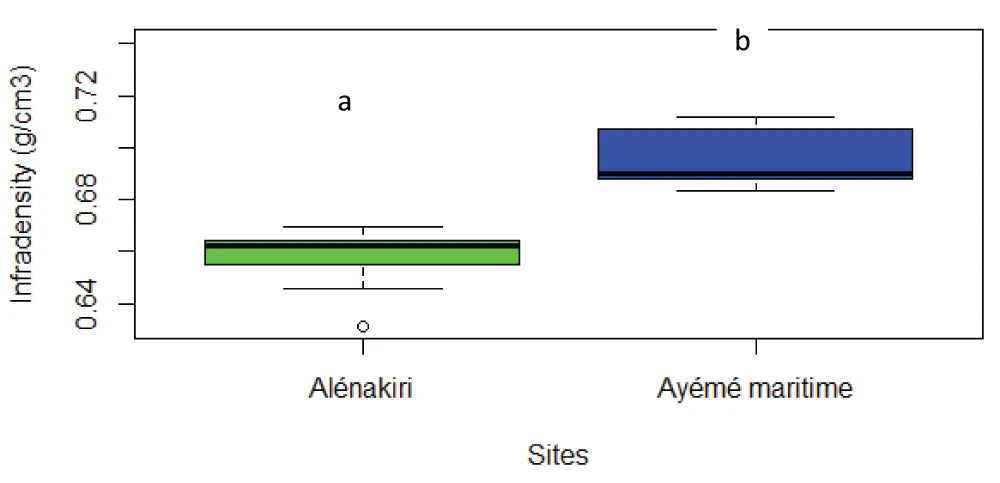
Salinity also influences the density of mangrove wood, which is related to fibre wall thickness and a reduction in the lumen diameter of the vessels. Both factors (diameter and fibre wall thickness) depend on salinity levels. Yáñez Espinosa et al. [20] reported that in low-salinity areas, A. germinans has thin fibre walls; and wood collected from sites with salinities of 30.09 and 12.57 g/l exhibited fibre wall thicknesses of approximately 4.8 µm (with a vascular lumen diameter of 3.2 µm) and 3.8 µm (with a vascular lumen diameter of 5.5 µm), respectively.
Impact of pollution on the infradensity of A. germinans heartwood exposed to high salinity
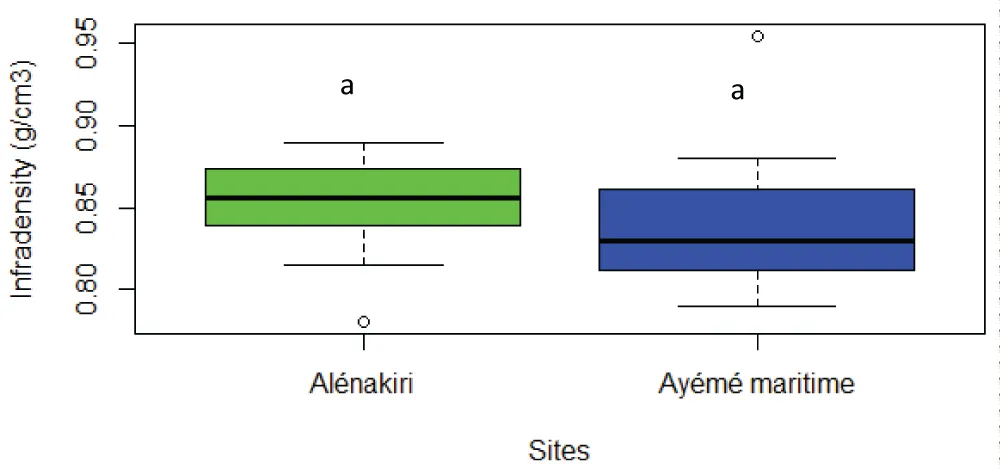
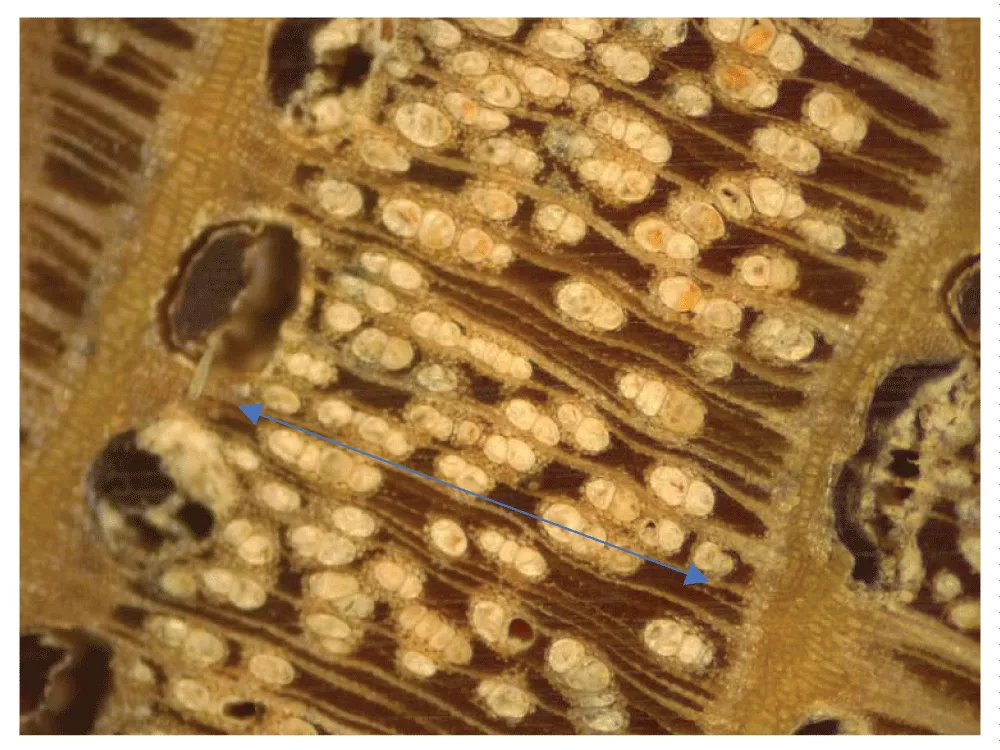
Unlike Figure 6, which showed that the sapwood of A. germinans from the Ayémé maritime site had significantly lower density than that of the sapwood from the Alénakiri site (p < 0.05), Figure 7, on the other hand, shows that there is no significant difference in the infradensity of the heartwood of A. germinans from the different sites (p < 0.05). The infradensity of the heartwood of A. germinans from the Ayémé maritime site is 0.84 ± 0.046 g/cm³, while that of the heartwood of A. germinans from the Alénakiri site is 0.85 ± 0.032 g/cm³. We observe that the standard deviation of the heartwood underdensity at the Ayémé maritime site is higher, indicating greater variation. This can be explained by physiological conditions, particularly high concentrations of salts that accumulate in the vacuoles. In fact, to cope with high salinity and maintain osmotic balance, the leaves become succulent. The salt concentration in the sap can also be reduced by the transfer of salt to senescent leaves, the bark, and the wood [12]. Thus, it is possible that a significant amount of salt was transferred to other parts of the aforementioned plant, leading to a decrease in salt content in the heartwood and wider growth rings (Figure 8), and consequently a reduction in infradensity.
Conclusion
Thus, the objective of this study was to highlight the impact of inorganic pollution on the woody tissue and the reduced density of Avicennia germinans wood from the Gabon Estuary.
Two abiotic factors, namely salinity and heavy metal pollution, were studied to determine their impact on the properties of A. germinans wood. This study shows that the sapwood and heartwood of polluted wood from the Alénakiri site have a higher ash content than those from the unpolluted Ayémé maritime site. Salinity has a more pronounced effect than pollution, but only on the increase in vessel density in the sapwood and heartwood of A. germinans wood from the Alénakiri site. In contrast, the polluted wood from Alénakiri exhibited changes in its internal structure, notably: wide growth rings, non-adjoining vessels, and large vessels in the heartwood. This led to a decrease in the wood’s infradensity, particularly in the sapwood. Thus, inorganic pollution had a greater impact than salinity.
We plan to expand this study to understand the physiological process that led to wide growth rings and non-adjoining vessels in the polluted wood of A. germinans despite the high soil salinity.
Acknowledgements
This research was possible as a result of the RIFFEAC (Réseau des Institutions de Formation Forestière et Environnementale en Afrique centrale) Master of Science degree in Wood Sciences scholarship program. Authors thank also the Sylvatech imaging technical platform of INRAe for the mineral analysis. The EDGE (École Doctorale des Grandes Écoles de Libreville) is thanked for its administrative support and facilities. LaReVa Bois (Laboratoire de Recherche et de Valorisation du Matériau Bois) and ENEF Gabon (École Nationale des Eaux et Forêts) are thanked for the technical and scientific support brought to this research. LERMAB is thanked for its scientific and technical support, and the wood scientists network mobilised for the fulfilment of this PhD thesis program.
Author contributions
Saint Bickolard MABICKA IWANGOU acted as PhD student who worked on this subject since his Master of Science degree in Wood Sciences; he wrote this publication. Dr Christ Stone Arnaud BOPENGA BOPENGA has read and corrected the paper. Dr Arnaud BESSERER was the co-PhD thesis director who monitored and supervised this work; he read and corrected the paper. Pr Rodrigue SAFOU TCHIAMA was the initiator of this project that he supervised as Master thesis director and co-PhD thesis director; he read and corrected the paper. Professors Timoléon ANDZI BARHE and Philippe GERARDIN were the PhD thesis directors; they supervised the PhD thesis work and read and corrected the publication.
- Ngom Sow F. Les fonctions de la mangrove dans la structuration et la biologie des peuplements de poissons de l'Estuaire du Sine-Saloum (Sénégal-Afrique de l'Ouest) [dissertation]. Dakar (Senegal): Université Cheikh Anta Diop de Dakar; 2005. 148 p.
- Donato DC, Kauffman JB, Murdiyarso D, Kurnianto S, Stidham M, Kanninen M. Mangroves among the most carbon-rich forests in the tropics. Nat Geosci. 2011;4:293-297. Available from: https://doi.org/10.1038/ngeo1123
- Cyril M. Origine et devenir de la matière organique des sédiments de mangrove de Guyane française. 2003. p. 521-523.
- Herteman M. Évaluation des capacités bioremédiatrices d'une mangrove impactée par des eaux usées domestiques. Application au site pilote de Malamani, Mayotte [dissertation]. Toulouse (France): Université de Toulouse; 2010. Available from: https://theses.hal.science/tel-00563802v1
- Tam NFY, Wong YS. Mangrove soils as sinks for wastewater-borne pollutants. Hydrobiologia. 1995;295:231-241. Available from: https://link.springer.com/article/10.1007/BF00029130
- Mabicka Iwangou SB, Soulounganga P, Besserer A, Safou Tchiama R, Ndoutoume C, Andzi Barhé T, et al. Investigation of the anatomical variability of the trunk and root tissues of Rhizophora racemosa (G. Mey) and Avicennia germinans (Linné): a bioaccumulation of heavy metals and pollution effects on mangrove trees study. Curr Perspect Chem Sci. 2020;2:144-155.
- Sluiter A, Hames B, Ruiz R, Scarlata C, Sluiter J, Templeton D. Determination of ash in biomass. Golden (CO): National Renewable Energy Laboratory; 2005.
- Schindelin J, Arganda-Carreras I, Frise E, Kaynig V, Longair M, Pietzsch T, et al. Fiji: an open-source platform for biological-image analysis. Nat Methods. 2012;9:676-682. Available from: https://doi.org/10.1038/nmeth.2019
- Tatjana S, Dominique P. Chimie du bois. Lausanne: Presses Polytechniques et Universitaires Romandes; 2009.
- Trouy MC. Anatomie du bois: formation, fonctions et identification. Paris: Éditions Quae; 2015. Available from: https://www.quae.com/produit/1310/9782759223510/anatomie-du-bois
- Robert EMR, Koedam N, Beeckman H, Schmitz N. A safe hydraulic architecture is a wood anatomical explanation for the difference in distribution of the mangroves Avicennia and Rhizophora. Funct Ecol. 2009;23:649-657. Available from: https://doi.org/10.1111/j.1365-2435.2009.01551.x
- Tomlinson PB. The botany of mangroves. Cambridge: Cambridge University Press; 1986. Available from: https://www.scirp.org/reference/referencespapers?referenceid=1676453
- Vidali M. Bioremediation: an overview. Pure Appl Chem. 2001;73(7):1163-1172.
- Verheyden A, De Ridder F, Schmitz N, Beeckman H, Koedam N. High-resolution time series of vessel density in Kenyan mangrove trees reveal a link with climate. New Phytol. 2005;167:425-435. Available from: https://doi.org/10.1111/j.1469-8137.2005.01415.x
- Schmitz N, Robert EMR, Verheyden A, Kairo JG, Beeckman H, Koedam N. A patchy growth via successive and simultaneous cambia: key to success of the most widespread mangrove species Avicennia marina? Ann Bot. 2008;101:49-58. Available from: https://doi.org/10.1093/aob/mcm280
- Mabicka Iwangou SB, Safou Tchiama R, Besserer A, Ndoutoume C, Andzi Barhé T, Gérardin P. Modification of the chemical composition and the natural durability of Avicennia germinans mangrove tree of the Estuary region of Gabon exposed to marine hydrocarbon pollution. Mar Pollut Bull. 2024. Available from: https://doi.org/10.1016/j.marpolbul.2024.116196
- Mabicka Iwangou SB, Safou Tchiama R, Besserer E, Andzi Barhé T, Gérardin P. Impact of salinity on density and mechanical strength of Avicennia germinans wood exposed to marine oil pollution in the Gabon Estuary. J Toxicol Stud. 2025;3(1):192.
- Nguyen A, Richter O, Le BVQ, Phuong NTK, Dinh KC. Long-term heavy metal retention by mangroves and effect on its growth: a field inventory and scenario simulation. Int J Environ Res Public Health. 2020;17:9131. Available from: https://doi.org/10.3390/ijerph17239131
- Mabicka Iwangou SB. Impact of salinity on the growth of Avicennia germinans wood in Gabon. Moldova: Gereris Publishing; 2026.
- Yáñez Espinosa L, Ángeles G, López Portillo J, Barrales S. Variación anatómica de la madera de Avicennia germinans en la Laguna de la Mancha, Veracruz, México. Bot Sci. 2009;85:7-15. Available from: https://doi.org/10.17129/botsci.2298



 Save to Mendeley
Article Alerts
Subscribe to our articles alerts and stay tuned.
 This work is licensed under a Creative Commons Attribution 4.0 International License.